C-level turnover rarely happens without warning. The warning signs are usually there, but they are often buried under strong performance, busy calendars, and leaders who appear committed until they are already halfway out the door.
When a senior leader leaves, the cost is not limited to replacing one person. The business can lose strategic context, customer trust, team confidence, execution speed, and institutional knowledge. One departure can also create uncertainty across the people who depended on that leader.
Most companies assume leadership retention is stable because executives are still showing up, still delivering, and still saying the right things. That is why they miss the risk building underneath.
This guide shows how to assess leadership turnover risk, identify the real drivers of retention, act earlier with better data, and protect business continuity before a key resignation forces the company into reaction mode.
Table of Contents
Quick Summary
| Key Point | Explanation |
|---|---|
| C-level retention is a business continuity issue | Losing a senior leader can disrupt strategy, execution, customer relationships, and team confidence. |
| Leadership risk can look invisible | Executives may appear stable while disengagement, misalignment, or outside opportunities are already pulling them away. |
| Generic retention programs are not enough | Senior leaders need targeted support based on their role, influence, goals, pressure points, and alignment with the business. |
| Data creates earlier visibility | Leaders need more than intuition, check-ins, and annual engagement results to see where risk is building. |
| Retention strategy must be monitored | Leadership retention is not a one-time initiative. It requires ongoing visibility, action, and adjustment. |
Step 1: Assess turnover risks across leadership and teams
The first step is to identify where leadership turnover risk may already be forming.
Do not assume your strongest leaders are secure because they are performing well. High performers often carry more pressure, more external options, and more organizational knowledge. If they become misaligned, frustrated, or disconnected, the business may not notice until the resignation conversation has already happened.
Start by mapping critical roles across the company. Identify which leaders carry the most institutional knowledge, customer relationships, decision authority, or team influence. Then look at where the business would be most exposed if that person left.
Assess risk across several areas:
– Manager and executive alignment
– Workload and pressure
– Career path clarity
– Compensation satisfaction
– Relationship with the CEO or senior team
– Team friction
– Values alignment
– External market demand
– Recent changes in engagement or behavior
Two diagnostic questions matter here:
1. Which leader would create the most disruption if they resigned in the next 90 days?
2. Which leader looks stable mainly because no one has asked the harder questions?
What looks like stability is often just a lack of visibility. A leader can keep performing while privately questioning whether the company is still the right place for them.
According to research from NC State Enterprise Risk Management, talent related challenges will be among the top enterprise concerns in 2025. This means executives need a structured approach to understanding turnover risks. Start by conducting comprehensive leadership assessments that go beyond traditional performance reviews. Create a detailed matrix that tracks key indicators like engagement levels, career progression opportunities, compensation satisfaction, and external market opportunities for each leadership team member.
Your assessment should include both quantitative and qualitative data points. Conduct confidential interviews, anonymous surveys, and analyze historical turnover patterns. Pay special attention to high performers and critical roles where institutional knowledge is concentrated. Harvard Corporate Governance emphasizes the importance of scenario planning in leadership assessment to preemptively address potential executive departures.
Pro tip: Create a ‘flight risk’ ranking system where each leadership team member is scored based on multiple retention indicators. This allows you to develop targeted intervention strategies for individuals most likely to consider leaving.
By systematically assessing turnover risks, you transform potential organizational vulnerabilities into strategic retention opportunities.
Step 2: Identify key retention drivers and pain points
Once you know where the business is most exposed, identify what actually keeps leaders committed.
C-level and senior leaders do not stay only because of compensation. They stay when they believe their work matters, their influence is real, their relationship with the company is strong, and their future still makes sense inside the business.
The most important leadership retention drivers often include:
– Strategic influence
– Trust with the CEO or founder
– Clear decision authority
– Alignment with company direction
– Growth and ownership opportunities
– Fair compensation and incentives
– Respect from peers and teams
– Manageable workload
– Belief in the company’s future
This is where many companies get lazy. They assume a senior leader is engaged because the leader is experienced, well-paid, or loyal. That assumption is dangerous.
A realistic scenario: a Head of Sales is still hitting targets, still leading meetings, and still supporting the CEO publicly. But privately, they feel excluded from strategy, tired of constant pressure, and unconvinced that the company is addressing team friction. From the outside, the role looks stable. Underneath, the resignation risk is already forming.
Retention strategy starts with seeing that gap before it becomes visible to everyone else.
Research from University of New Hampshire Scholars reveals that employee retention is not a one size fits all proposition. Leadership style, compensation, workplace culture, and career development opportunities are interconnected elements that significantly impact employee engagement. Begin by conducting comprehensive listening sessions with employees at all levels. These conversations should explore their professional aspirations, current workplace satisfaction, and potential barriers to long term commitment.
Your retention driver assessment should include multiple data collection methods. Develop confidential surveys that capture both quantitative metrics and qualitative insights. According to Walden University Scholarworks, effective leaders recognize that employee morale is a complex ecosystem requiring nuanced understanding. Map out the key emotional and professional touchpoints that influence an employee’s decision to remain with your organization.
Pro tip: Create a visual ‘retention ecosystem’ diagram that highlights the interconnected factors driving employee satisfaction. This mapping helps you see potential intervention points and develop holistic retention strategies.
By systematically identifying retention drivers, you transform employee feedback into actionable insights. The next step will focus on designing targeted intervention strategies based on your comprehensive assessment.
Step 3: Implement data-driven retention initiatives
Retention initiatives should not be generic. A senior engineering leader, sales leader, operations leader, and finance leader may all stay or leave for different reasons.
Use data to understand where each leader is aligned, where friction exists, and where support is needed. The goal is not to collect more information for the sake of reporting. The goal is to make better decisions before the company loses someone important.
Effective data-driven retention initiatives may include:
– Targeted leadership development
– Role clarity and decision-rights review
– Manager or executive alignment conversations
– Compensation and incentive review
– Team friction intervention
– Workload and resource adjustment
– Succession planning
– Career path planning
– Peer support or mentorship
The mistake is waiting until the risk is obvious. By the time a leader openly expresses serious doubt, interviews elsewhere, or signals withdrawal from strategic conversations, the window to retain them may already be closing.
Data should help leaders answer a practical question:
Where should we intervene now, before this becomes expensive?
Wharton Executive Education suggests using data to craft individualized retention strategies. Start by segmenting your workforce into distinct groups based on performance, potential, and personal motivations. For each segment, design tailored initiatives that speak directly to their professional aspirations and personal development goals. This might mean creating unique growth pathways, customized reward structures, or specialized mentorship programs that demonstrate your commitment to their individual success.
Research from Walden University Scholarworks emphasizes the importance of understanding generational nuances in retention strategies. Develop a multi dimensional approach that considers different employee cohorts needs and preferences. Use your collected data to build predictive models that help you anticipate potential turnover risks before they become critical. Implement a continuous feedback loop that allows you to quickly adapt and refine your retention initiatives based on real time insights.
Pro tip: Create a dynamic retention dashboard that tracks key metrics and provides immediate visibility into the effectiveness of your initiatives. This allows for rapid iteration and precise targeting of retention efforts.
By implementing these data-driven retention initiatives, you create a proactive talent management system that feels responsive and supportive. The next step will focus on monitoring and continuously improving your retention strategies.
Step 4: Engage high-risk leaders with tailored support
High-risk leaders need direct, thoughtful engagement. They do not need generic appreciation messages or broad retention programs that could apply to anyone.
Start with a serious conversation about alignment, pressure, ambition, and friction. The goal is not to convince the person to stay at all costs. The goal is to understand what may be weakening their commitment and whether the business can address it before the relationship breaks.
Tailored support may include:
– Clearer strategic involvement
– A stronger relationship with the CEO or founder
– More decision authority
– Better resourcing for the team
– A revised growth path
– Executive coaching
– Mentorship
– Compensation review
– Support resolving team friction
– A role redesign if the current structure is creating unnecessary strain
The conversation should be specific. Avoid vague questions like “How are things going?” They usually produce vague answers.
Ask instead:
– What part of your role feels most misaligned with where you want to grow?
– If you became less committed six months from now, what would probably be the reason?
Those questions expose risk. Comfortable questions hide it.
Research from Walden University Scholarworks reveals that employee focused strategies are crucial in reducing leadership turnover. Begin by conducting deep dive individual conversations with each high risk leader. These discussions should go beyond surface level performance reviews and explore their professional aspirations, current challenges, and potential roadblocks to their long term engagement. Pay close attention to both professional and personal factors that might influence their decision to stay or leave.
According to Fort Hays State University Scholars, understanding the unique challenges faced by leaders is essential for developing effective retention strategies. Create a personalized development plan for each high risk leader that includes targeted professional development opportunities, meaningful stretch assignments, and clear career progression pathways. This approach demonstrates your organization’s investment in their individual growth and potential.
Pro tip: Implement a confidential mentorship program that pairs high risk leaders with senior executives who can provide guidance, perspective, and strategic career counseling. This creates an additional layer of organizational support and engagement.
By engaging high risk leaders with intentional and personalized support, you transform potential turnover risks into opportunities for deeper organizational commitment. The next step will focus on continuous monitoring and adaptive retention strategies.
Step 5: Monitor retention outcomes and optimize strategies
C-level retention is not fixed after one conversation or one intervention. Leadership needs change as the company changes.
Monitor whether your retention efforts are actually reducing risk. Look at whether leaders are more aligned, more connected, clearer on their path, and better supported in the parts of the role that create pressure or friction.
Track signals such as:
– Changes in engagement
– Team stability
– Leadership alignment
– Participation in strategic discussions
– Manager and peer friction
– Workload pressure
– Development progress
– Succession risk
– Voluntary turnover trends
– Confidence in company direction
This should not become a dashboard exercise with no action. If the data shows a risk pattern, leaders need to respond quickly.
By the time leadership turnover is visible across the company, it is often too late to prevent the disruption. The point of monitoring is to act before the resignation creates instability.
In this final critical step, you will establish a robust system for continuously tracking, analyzing, and refining your retention strategies. The objective is to transform retention management from a reactive process to a proactive, data driven approach that evolves with your organization’s changing dynamics.
Educause emphasizes the importance of creating a culture of continuous improvement in leadership retention. Develop a comprehensive retention dashboard that tracks key performance indicators such as voluntary turnover rates, employee engagement scores, career progression metrics, and satisfaction levels across different leadership segments. This dashboard should provide real time insights that enable quick and targeted interventions.
According to Cornell University Courses, leveraging data is crucial in driving strategic human resource decisions. Implement a quarterly review process where you analyze retention data, identify emerging trends, and adjust your strategies accordingly. This might involve recalibrating compensation packages, redesigning career development programs, or addressing specific pain points uncovered through your ongoing assessments. Create a feedback mechanism that allows leaders to provide candid input about their experience and the effectiveness of current retention initiatives.
Pro tip: Establish a cross functional retention task force that meets regularly to review data, share insights, and collaboratively develop innovative retention strategies. This approach ensures a holistic and dynamic approach to talent management.
By systematically monitoring and optimizing your retention strategies, you create a responsive and adaptive organizational culture that values and retains top talent. Your journey to reducing leadership turnover is an ongoing process of listening, learning, and evolving.
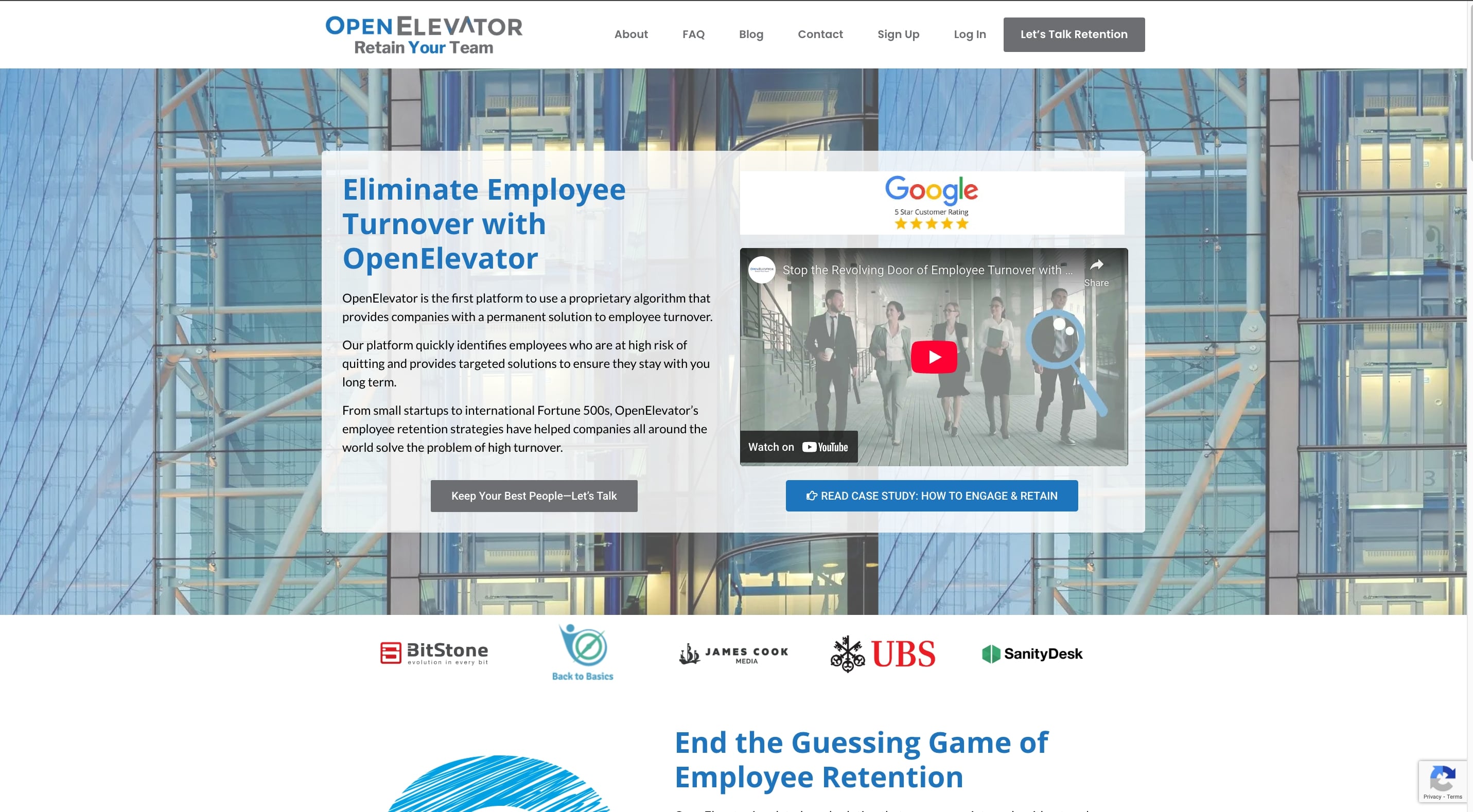
Leadership turnover is expensive because the real damage starts before the resignation. A senior leader may look committed while misalignment, friction, pressure, or disengagement is already building beneath the surface.
OpenElevator helps CEOs, founders, senior leaders, and managers detect retention risk, team misalignment, and hidden friction before they become costly resignations.
The platform uses a short, bias-complimentary Key Team Stay Survey and a proprietary algorithm to reveal values alignment, interpersonal alignment, and risk signals leaders can act on earlier.
If you are relying only on gut instinct, performance reviews, or late-stage conversations, you may be seeing the risk too late.
Start with a complimentary Key Team Stay Survey for up to 10 team members and see what may be hidden inside your leadership team.
Get your complimentary Key Team Stay Survey
Frequently Asked Questions
What are effective C-level retention strategies to reduce turnover?
Effective C-level retention strategies include identifying leadership turnover risk early, understanding what keeps each leader engaged, improving executive alignment, creating clear growth paths, addressing role friction, and monitoring risk before it becomes a resignation.
How can I assess turnover risks within my leadership team?
Assess leadership turnover risk by looking at role criticality, engagement, workload, compensation satisfaction, career path clarity, team friction, values alignment, and relationship quality with the CEO or senior team.
What should I include in a personalized retention plan for high-risk leaders?
A personalized retention plan should include targeted development, clearer decision authority, executive support, mentorship, compensation review, workload support, and direct action on the specific friction points that may weaken commitment.
How do I monitor the effectiveness of C-level retention strategies?
Monitor retention effectiveness by tracking leadership engagement, alignment, team stability, workload pressure, manager or peer friction, voluntary turnover trends, and whether leaders feel clear about their future inside the company.
How can I engage high-risk executives before they leave?
Engage high-risk executives through direct conversations about alignment, ambition, pressure, and friction. Ask specific questions about what could weaken their commitment instead of relying on general check-ins.
What data should I collect to identify key retention drivers?
Collect data on engagement, manager and executive alignment, values alignment, team friction, compensation satisfaction, career path clarity, workload, and confidence in company direction.
How does OpenElevator help with leadership retention?
OpenElevator helps leaders detect retention risk, team misalignment, and hidden friction before they become costly resignations. It gives CEOs, founders, senior leaders, and managers clearer visibility into where to act earlier.
Is there a free way to try OpenElevator?
Yes. OpenElevator offers a complimentary Key Team Stay Survey for up to 10 team members so leaders can see retention risk, alignment gaps, and hidden friction inside their own team.