
More than one in four American employees consider leaving their job each year, putting real pressure on companies of all sizes. Understanding why people choose to resign is crucial for leaders who want to keep top performers and avoid costly disruptions. By looking at what drives voluntary turnover, organizations can start to address the underlying issues and make better decisions that support long-term success.
Table of Contents
- Defining Voluntary Turnover In Organizations
- Common Causes And Real-World Examples
- Distinguishing Voluntary And Involuntary Turnover
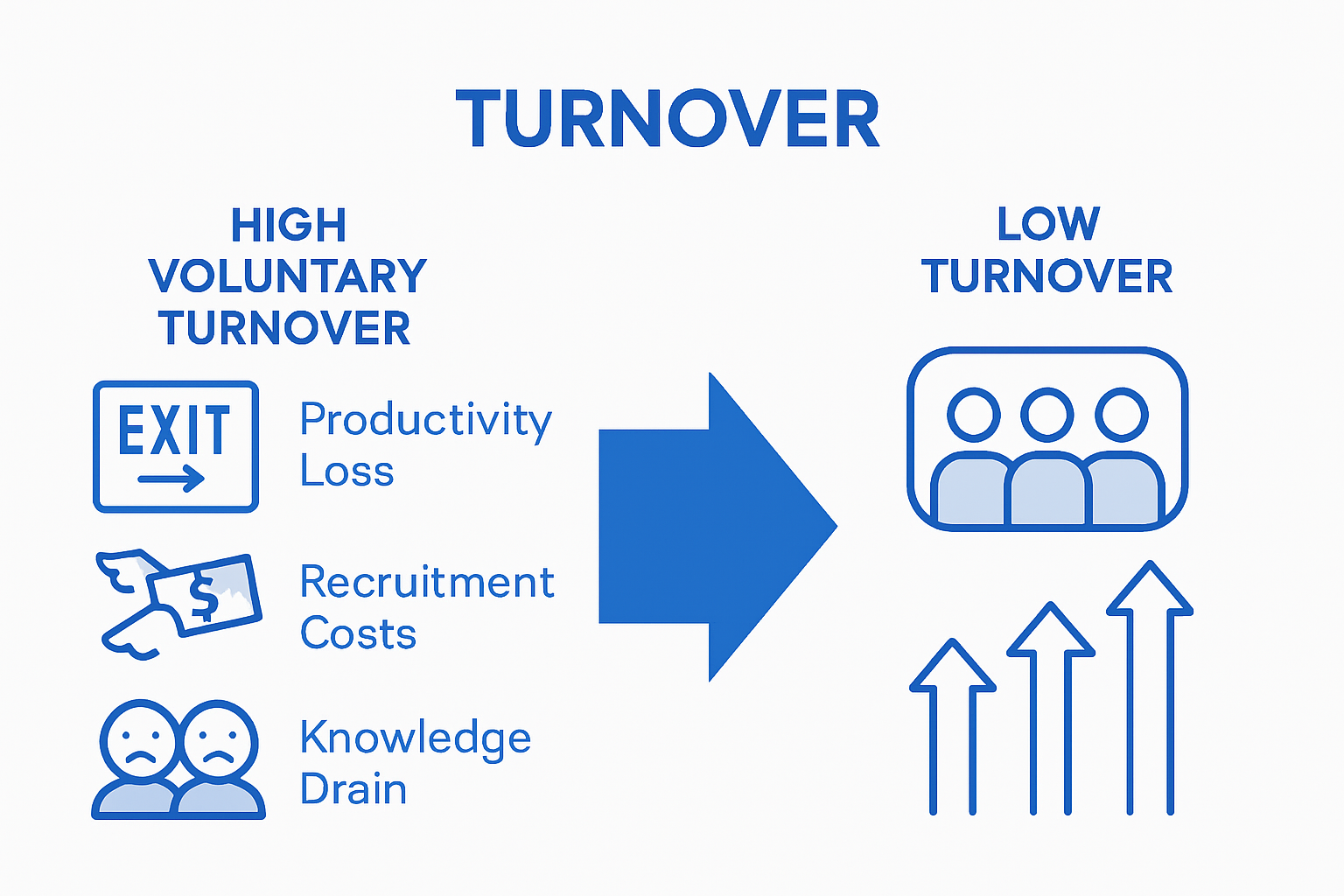
- Risks And Costs Of High Voluntary Turnover
- Data-Driven Strategies To Reduce Turnover
Key Takeaways
| Point | Details |
|---|---|
| Understanding Voluntary Turnover | Voluntary turnover is driven by employee-initiated departures, reflecting deeper organizational health issues and employee satisfaction. |
| Identifying Causes | Key factors include career stagnation, poor management, and cultural misalignment, which can guide targeted retention strategies. |
| Costs of Turnover | High voluntary turnover can lead to significant financial losses and disrupt organizational stability, necessitating proactive engagement efforts. |
| Data-Driven Strategies | Implementing predictive analytics and personalized development plans can help mitigate turnover by addressing employee needs effectively. |
Defining Voluntary Turnover in Organizations
Voluntary turnover represents a critical organizational phenomenon where employees independently decide to terminate their employment relationship. The Quality Improvement Center for Workforce Development defines voluntary turnover as employee-initiated departures, distinguishing this process from involuntary separations triggered by organizational actions.
At its core, voluntary turnover encompasses complex human dynamics beyond simple job transitions. Employees choose to leave for multifaceted reasons ranging from career advancement opportunities and workplace culture dissatisfaction to personal life changes. Research published in the American College of Radiology emphasizes that these departures carry significant financial implications for organizations, making understanding their root causes paramount.
Comprehensive voluntary turnover analysis typically involves examining multiple dimensions:
- Internal Mobility: Transfers within the same organization
- External Departures: Complete separation from the current employer
- Planned Exits: Strategic career moves
- Unplanned Resignations: Sudden, unexpected job changes
Leaders must recognize that voluntary turnover isn’t just a transactional event but a nuanced reflection of organizational health. Tracking these patterns provides invaluable insights into employee engagement, satisfaction, and potential systemic workplace challenges that might be driving talented professionals away.
Common Causes and Real-World Examples
Employee turnover stems from complex interpersonal and professional dynamics that extend far beyond simple job dissatisfaction. Research from the United States demonstrates that organizational characteristics significantly influence voluntary turnover rates, particularly within high-stress professional environments like healthcare, where workplace social structures play a critical role in retention strategies.
Studies by the American College of Radiology highlight burnout and disengagement as primary catalysts for employees voluntarily leaving their positions. These systemic challenges manifest through several identifiable patterns:
- Career Stagnation: No clear advancement opportunities
- Compensation Misalignment: Wages not matching market standards
- Poor Management Relationships: Ineffective leadership interactions
- Cultural Misfit: Disconnect between personal values and organizational culture
- Work-Life Balance Challenges: Excessive workload and limited flexibility
Real world examples illustrate these dynamics vividly. Tech companies frequently lose talented software engineers who feel constrained by limited growth potential. Similarly, healthcare professionals often transition between institutions seeking environments that provide better support, competitive compensation, and meaningful professional development opportunities. Understanding these nuanced motivations allows leaders to design targeted retention strategies that address root causes of voluntary turnover, transforming workplace dynamics from reactive management to proactive engagement.

Distinguishing Voluntary and Involuntary Turnover
The Quality Improvement Center for Workforce Development highlights critical distinctions between voluntary and involuntary turnover that leaders must understand to effectively manage workforce dynamics. Voluntary turnover represents an employee-initiated departure, where workers independently choose to terminate their employment relationship, while involuntary turnover occurs when the organization initiates separation through terminations, layoffs, or restructuring.
Research from the International Journal of Human Resource Studies emphasizes the nuanced differences between these two turnover types, revealing that each carries unique organizational implications. Voluntary departures often signal deeper workplace challenges, such as:
- Misalignment with organizational culture
- Limited career advancement opportunities
- Inadequate compensation structures
- Poor management relationships
- Lack of professional development
Involuntary turnover, by contrast, stems from organizational decisions driven by performance issues, economic constraints, or strategic realignment. While voluntary turnover reflects employee satisfaction and engagement, involuntary turnover represents strategic workforce management. Understanding these distinctions enables leaders to develop targeted retention strategies, address systemic workplace issues, and create environments that minimize undesired employee departures.
Risks and Costs of High Voluntary Turnover
Voluntary turnover represents a significant financial and operational challenge for organizations across industries. Research from the American College of Radiology reveals the staggering economic impact, with burnout-related turnover costing the U.S. healthcare sector approximately $4.3 billion annually, demonstrating the profound monetary consequences of employee departures.
The American Productivity & Quality Center highlights multiple dimensions of voluntary turnover risks, which extend far beyond immediate financial losses. These risks include:
- Intellectual Capital Loss: Departure of skilled professionals with critical institutional knowledge
- Productivity Disruption: Reduced team performance during transition periods
- Recruitment Expenses: Significant costs associated with hiring and training replacements
- Morale Deterioration: Negative impact on remaining team members
- Reputation Damage: Potential perception of workplace instability
The compounding effect of these risks can create a destructive cycle where high turnover breeds further instability. Organizations experiencing persistent voluntary turnover often find themselves trapped in a spiral of declining performance, increased recruitment costs, and diminished competitive advantage. Proactive workforce management and strategic employee engagement become critical in interrupting this potentially devastating organizational pattern.
Data-Driven Strategies to Reduce Turnover
Organizational leaders can significantly mitigate voluntary turnover by implementing scientifically validated, data-driven retention approaches. Research published in the Journal of Applied Psychology demonstrates that biodata and retention scales during hiring can effectively predict and reduce avoidable employee departures, providing a strategic foundation for talent management.
The American College of Radiology recommends targeted interventions addressing employee burnout and disengagement to combat voluntary turnover. Effective data-driven strategies include:
- Predictive Analytics: Utilizing advanced workforce modeling to identify potential flight risks
- Engagement Surveying: Implementing regular, comprehensive employee satisfaction assessments
- Behavioral Profiling: Matching individual motivational patterns with organizational roles
- Performance Tracking: Monitoring key indicators of workplace satisfaction and potential disengagement
- Personalized Development Planning: Creating individualized career progression pathways
Successful implementation requires a holistic approach that combines quantitative metrics with qualitative understanding. Organizations must move beyond traditional retention tactics, leveraging sophisticated data analysis to create adaptive, responsive workplace environments that proactively address employee needs and minimize voluntary turnover risks.
Take Control of Voluntary Turnover with Data-Driven Insights
Voluntary turnover creates serious challenges for organizations by draining valuable intellectual capital and disrupting productivity. As detailed in the article, factors like values misalignment, poor management relationships, and burnout can drive motivated employees to leave. To truly reduce turnover, leaders need actionable insights into who is at risk and why.
OpenElevator is your strategic partner in addressing these complex challenges. Our proprietary algorithm quickly identifies employees facing a high risk of quitting by measuring values alignment and interpersonal fit based on a simple 5-minute bias-free survey. This means you gain precise knowledge of which team members need engagement and tailored support long before they decide to walk away.
Don’t let guesswork dictate your retention efforts. Discover how OpenElevator transforms employee turnover from an unpredictable threat into a manageable opportunity. Visit https://openelevator.com to learn more and start building a workforce that stays, grows, and thrives. Explore our platform now and take the first step toward lasting employee engagement and retention.
Frequently Asked Questions
What is voluntary turnover?
Voluntary turnover refers to the employee-initiated decision to leave an organization. It encompasses a range of reasons, including career advancement opportunities, dissatisfaction with workplace culture, or personal life changes.
What are the common causes of voluntary turnover?
Common causes include limited career advancement opportunities, compensation misalignment with market standards, poor management relationships, cultural misfit, and challenges with work-life balance.
How does voluntary turnover impact organizations financially?
Voluntary turnover can significantly affect organizations by resulting in intellectual capital loss, productivity disruptions, increased recruitment expenses, lowered team morale, and damage to the organization’s reputation, with costs potentially reaching billions annually in certain sectors.
What strategies can leaders implement to reduce voluntary turnover?
Leaders can employ data-driven strategies such as predictive analytics to identify flight risks, regular employee engagement surveys, behavioral profiling, performance tracking, and personalized development planning to address employee needs and enhance retention.