
Most american companies lose over $1 trillion every year due to voluntary employee turnover. It is a staggering cost that often goes unnoticed until it starts damaging productivity and morale. Whether you lead a growing startup or a large enterprise, understanding why people leave and what keeps them loyal shapes the future of your business. This guide offers practical steps grounded in real data and proven strategies, helping you create a workplace where your best talent chooses to stay.
Table of Contents
- 1. Identify Turnover Drivers With Data And Analytics
- 2. Improve Employee Selection Using The Goldilocks Approach
- 3. Craft Clear Career Paths And Growth Opportunities
- 4. Foster A Culture Of Belonging And Engagement
- 5. Implement Effective Onboarding And Support Systems
- 6. Provide Timely Recognition And Meaningful Feedback
- 7. Use Targeted Retention Solutions For At-Risk Employees
Quick Summary
| Key Message | Explanation |
|---|---|
| 1. Utilize Data to Understand Turnover | Implement analytics to identify factors driving employee departures for strategic retention. |
| 2. Apply the Goldilocks Approach in Hiring | Seek candidates who are the right fit in terms of experience and skills for optimal team integration. |
| 3. Foster Clear Career Development Paths | Create transparent growth opportunities to motivate employees and reduce turnover. |
| 4. Build a Culture of Belonging | Establish an inclusive environment where every employee feels valued and connected. |
| 5. Provide Real-Time Feedback and Recognition | Consistently offer actionable feedback to support employee growth and engagement. |
1. Identify Turnover Drivers with Data and Analytics
Understanding why employees leave is like solving a complex puzzle. Data and analytics transform employee turnover from an unpredictable challenge into a manageable, strategic process.
Most organizations operate blindly when it comes to retention, relying on gut feelings or exit interviews. Advanced data analytics reveal the hidden patterns behind employee departures. By systematically collecting and analyzing workforce data, you can pinpoint exactly what triggers employees to seek opportunities elsewhere.
Start by implementing comprehensive tracking mechanisms across several key dimensions:
- Performance metrics: Track individual and team performance trends
- Engagement survey results: Monitor employee sentiment and satisfaction levels
- Compensation comparisons: Analyze salary benchmarks within your industry
- Career progression patterns: Examine internal mobility and promotion rates
The goal is not just collecting data but transforming it into actionable insights. Modern HR technologies can help you build predictive models that identify potential flight risks before they become real turnover problems. Employee Retention Solutions can provide advanced tools for this precise analysis.
Consider creating a “retention dashboard” that consolidates these metrics, allowing leadership to proactively address potential issues. This approach shifts your strategy from reactive to preventative, potentially saving significant recruitment and training costs.
Remember. Not all turnover is bad. Strategic data analysis helps you understand which departures are natural career progression and which represent genuine organizational challenges you need to address.
2. Improve Employee Selection Using the Goldilocks Approach
Think of employee selection like finding the perfect recipe for your organization. The Goldilocks Approach means selecting candidates who are not too experienced or too inexperienced but just right for your specific team and role.
Traditional hiring practices often fail because they treat candidates as generic replacements rather than unique individuals with precise skill matches. According to research from occupational health studies, work environments are most productive when tasks and employee capabilities are perfectly balanced.
Key elements of the Goldilocks Selection Strategy include:
- Detailed job profiling beyond standard job descriptions
- Comprehensive skills assessment that evaluates potential not just past performance
- Cultural fit evaluation that goes deeper than surface level interactions
- Potential for growth and adaptability within your organizational ecosystem
This approach requires a nuanced understanding of your team dynamics. You are not just hiring a person you are integrating a new team member who can contribute uniquely while growing with your organization.
Practically speaking, implement multi stage interview processes that test not just technical skills but problem solving approaches. Use scenario based assessments that reveal how candidates think and adapt rather than relying solely on resume credentials.
The goal is finding employees who are neither overqualified and likely to get bored nor underqualified and struggling to contribute. Your ideal candidate sits in the sweet spot where their skills challenge them while your environment supports their continued development.
3. Craft Clear Career Paths and Growth Opportunities
Employees are not chess pieces to be moved around randomly. They are ambitious professionals seeking meaningful progression and development within your organization.
Career pathing is not just a human resources checkbox it is a strategic retention tool. Research from organizational development studies consistently demonstrates that clear growth opportunities dramatically reduce employee turnover and increase engagement.
The most successful organizations treat career development as a collaborative journey. Your job is to create a transparent roadmap that shows employees exactly how they can advance their professional goals while contributing to company objectives.
Critical components of effective career path design include:
- Individualized development plans tailored to each employee
- Transparent promotion criteria and skill requirements
- Regular career coaching and mentorship programs
- Cross functional training opportunities
- Skill based progression models
Instead of waiting for annual reviews, implement quarterly career conversations. These discussions should focus on understanding an employee’s long term aspirations and how they intersect with organizational needs.
Think of career paths like personal GPS systems. Employees want to know not just their current location but potential routes to reach their desired professional destination. Your role is to provide the map and occasional navigation assistance.
Remember. When employees see a future with your organization they are far less likely to start browsing job boards. Invest in their growth and they will invest their talent and commitment in return.
4. Foster a Culture of Belonging and Engagement
Culture is the invisible heartbeat of your organization. Belonging transforms workplaces from mere employment locations into communities where people genuinely want to invest their energy and talents.
Engagement is not about pizza parties or annual team building events. It is about creating an environment where every employee feels psychologically safe, valued, and connected to something larger than their individual role.
Key strategies for building a culture of true belonging include:
- Creating transparent communication channels
- Celebrating diverse perspectives and backgrounds
- Implementing inclusive decision making processes
- Recognizing individual contributions meaningfully
- Developing mentorship and support networks
Think about belonging like building a team ecosystem. Each person should feel their unique strengths are not just tolerated but actively appreciated. This means moving beyond surface level diversity initiatives and creating genuine opportunities for every team member to contribute and grow.
Leaders play a critical role in this process. Your actions communicate more powerfully than any corporate mission statement. When you demonstrate genuine curiosity about your team members personal and professional aspirations you signal that they are more than just resources.
Employee Retention Solutions can provide advanced tools to help you measure and improve organizational belonging. But the most powerful interventions start with authentic human connection.
Remember. People do not leave companies. They leave cultures that make them feel invisible or undervalued.
5. Implement Effective Onboarding and Support Systems
Onboarding is not a one day orientation. It is a strategic process that transforms new hires from outsiders to fully integrated team members who understand your organizational DNA.
Effective onboarding goes far beyond paperwork and basic job training. It is about creating a comprehensive experience that helps new employees feel welcomed, understood, and equipped to succeed from day one.
Essential components of world class onboarding include:
- Personalized welcome packages
- Structured mentorship programs
- Clear 30 60 90 day performance expectations
- Regular check in meetings
- Comprehensive resource access
Think of onboarding like planting a seedling. The first few weeks are critical for establishing strong roots. New employees need consistent nurturing support and clear guidance to grow into productive team members.
Design your onboarding process with empathy. Consider the emotional journey of someone starting a new job. They are likely feeling a mix of excitement and anxiety. Your systems should provide psychological safety and practical support simultaneously.
Employee Retention Solutions can help you build sophisticated onboarding frameworks that transform new hires into long term contributors. But the most powerful interventions start with genuine human connection.
Remember. Great onboarding is not about overwhelming new employees with information. It is about making them feel they have made the right choice in joining your organization.
6. Provide Timely Recognition and Meaningful Feedback
Feedback is the oxygen of professional growth. Without consistent meaningful communication employees slowly suffocate in a vacuum of uncertainty.
Traditional annual performance reviews are dinosaurs in modern workplace environments. Employees crave real time insights that help them understand their impact and trajectory within the organization.
Effective recognition and feedback strategies involve:
- Immediate specific praise for concrete achievements
- Balanced constructive conversations
- Regular micro feedback sessions
- Transparent performance metrics
- Personalized development recommendations
Think about feedback like a GPS navigation system for professional development. Employees want to know not just where they are but how to reach their destination more efficiently.
Leaders who master the art of timely recognition create environments where people feel seen valued and motivated. This is not about constant cheerleading but providing genuine meaningful insights that support individual and organizational growth.
Employee Retention Solutions can help you design sophisticated feedback frameworks. But the most powerful interventions start with authentic human connection and genuine curiosity about your team members potential.
Remember. People do not just want to hear they are doing well. They want to understand how their work connects to larger organizational goals and their personal growth trajectory.
7. Use Targeted Retention Solutions for At-Risk Employees
Not all employee flight risks look the same. Identifying and addressing potential turnover requires a heat seeking missile approach rather than a shotgun strategy.
Some employees are quietly disengaging long before they submit a resignation letter. These are your hidden flight risks individuals who might seem productive on the surface but are mentally checking out of your organization.
Proactive retention strategies for at risk employees include:
- Early warning signal detection
- Personalized intervention plans
- Confidential career satisfaction discussions
- Tailored professional development opportunities
- Compensation and role adjustment evaluations
Think about retention like preventive healthcare. You are not waiting for a crisis to emerge but constantly monitoring organizational health and addressing potential issues before they become critical.
Leaders who master this approach understand that every employee interaction is an opportunity to rebuild commitment. Sometimes a single meaningful conversation can transform someone from a potential flight risk to a long term organizational champion.
Employee Retention Solutions can provide advanced tools to help you identify and support at risk talent. But the most powerful interventions start with genuine human curiosity and a commitment to understanding individual professional aspirations.
Remember. Retention is not about keeping people trapped. It is about creating environments so compelling that employees choose to stay and grow with your organization.
Below is a comprehensive table summarizing the strategies and key elements for enhancing employee retention as discussed in the article.
| Strategy/Element | Description | Key Actions & Considerations |
|---|---|---|
| Data & Analytics | Utilizing data to understand turnover drivers. | Implement tracking of performance, engagement, and compensation; develop retention dashboards. |
| Goldilocks Approach | Selecting the right level of talent for roles. | Use detailed job profiling and scenario-based assessments; focus on cultural fit and growth potential. |
| Career Paths & Growth | Building clear advancement opportunities. | Create individualized development plans, transparent promotion criteria, and regular coaching. |
| Culture of Belonging | Fostering an inclusive and engaging environment. | Encourage diverse perspectives, inclusive decision-making, and strong mentorship networks. |
| Effective Onboarding | Creating a smooth integration process for new hires. | Develop structured mentorship programs and clear performance expectations; ensure consistent support. |
| Recognition & Feedback | Providing timely and meaningful employee feedback. | Implement immediate praise and balanced conversations; use regular micro-feedback sessions. |
| Targeted Retention | Proactively supporting at-risk employees. | Detect early warning signals, offer personalized interventions, and adjust roles and compensation as needed. |
Take Control of Employee Turnover with Proven Retention Solutions
Employee turnover can feel like a constant battle that drains your resources and dims your team’s potential. This article highlights the importance of understanding turnover drivers through data analytics and crafting personalized retention strategies that truly engage your workforce. If you recognize the urgency to spot flight risks early and create meaningful growth and belonging opportunities for your employees you are ready for a lasting solution.
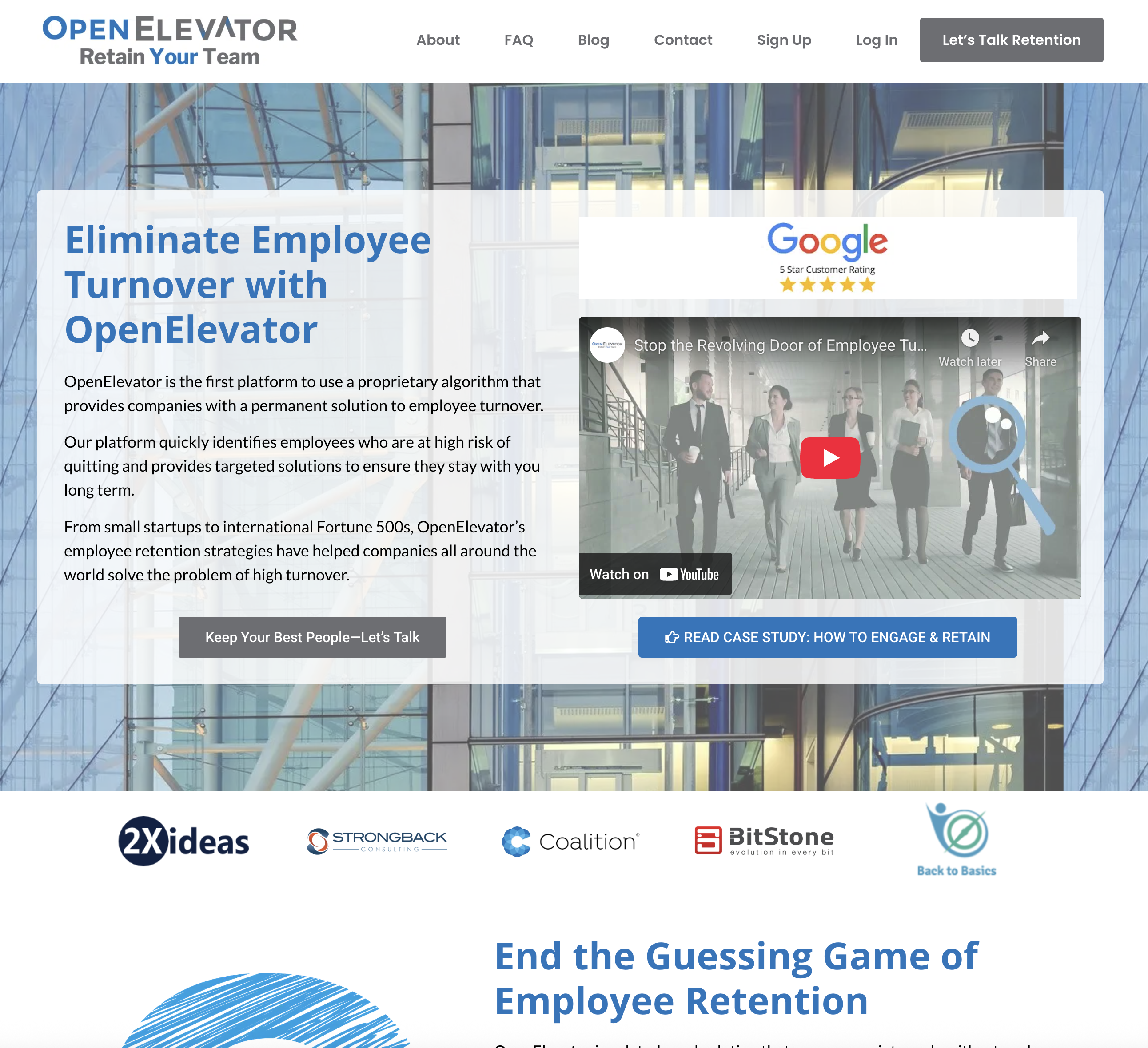
OpenElevator is uniquely designed to address these critical challenges by using a proprietary algorithm that quickly identifies employees at risk of quitting and delivers targeted solutions to keep them engaged and committed. From improving onboarding experiences to fostering a culture of belonging and providing real-time feedback OpenElevator empowers your leadership to shift from reactive to proactive retention. Don’t wait until turnover impacts your organization’s success. Visit OpenElevator today to discover how our advanced employee retention strategies can transform your workforce stability. Start building a stronger team with Employee Retention Solutions that truly work.
Frequently Asked Questions
How can data and analytics help reduce turnover in my organization?
Advanced data and analytics can identify turnover drivers by revealing hidden patterns behind employee departures. Start by collecting and analyzing key workforce metrics to build a retention dashboard that addresses potential issues proactively.
What is the Goldilocks Approach to employee selection?
The Goldilocks Approach focuses on hiring candidates who are the right fit for your organization—neither overqualified nor underqualified. Implement detailed job profiling and multi-stage interviews to ensure candidates possess the necessary skills and cultural fit for your team.
How can I create clear career paths for employees to improve retention?
Create clear career paths by developing individualized development plans and transparent promotion criteria. Schedule regular career conversations to align employee aspirations with organizational goals, which can significantly boost retention rates.
What strategies can I use to foster a culture of belonging in my workplace?
To build a culture of belonging, establish transparent communication channels and recognize individual contributions. Engage employees in decision-making processes and develop mentorship networks to ensure everyone feels valued and connected to the organization.
What are some effective onboarding practices for new employees?
Effective onboarding includes personalized welcome packages, structured mentorship programs, and clear performance expectations. Focus on providing consistent support during the first few months to help new hires integrate smoothly into the team.
How can I identify and support at-risk employees before they leave?
Implement early warning signal detection to identify potential flight risks, such as decreased engagement or performance. Initiate personalized intervention plans, such as confidential career satisfaction discussions, to address concerns and reinforce their commitment to the organization.