
Turnover is disruptive, draining both time and resources while destabilizing even well-performing teams. For C-level executives and department heads in American SMEs, understanding long-term retention means more than just preventing exits. It calls for a strategic approach that weaves leadership, culture, and development into daily practice. This guide uncovers how an intentional focus on professional growth, meaningful engagement, and supportive leadership can drive employee loyalty and create a resilient, high-performing workforce.
Table of Contents
- Defining Long-Term Retention In The Workplace
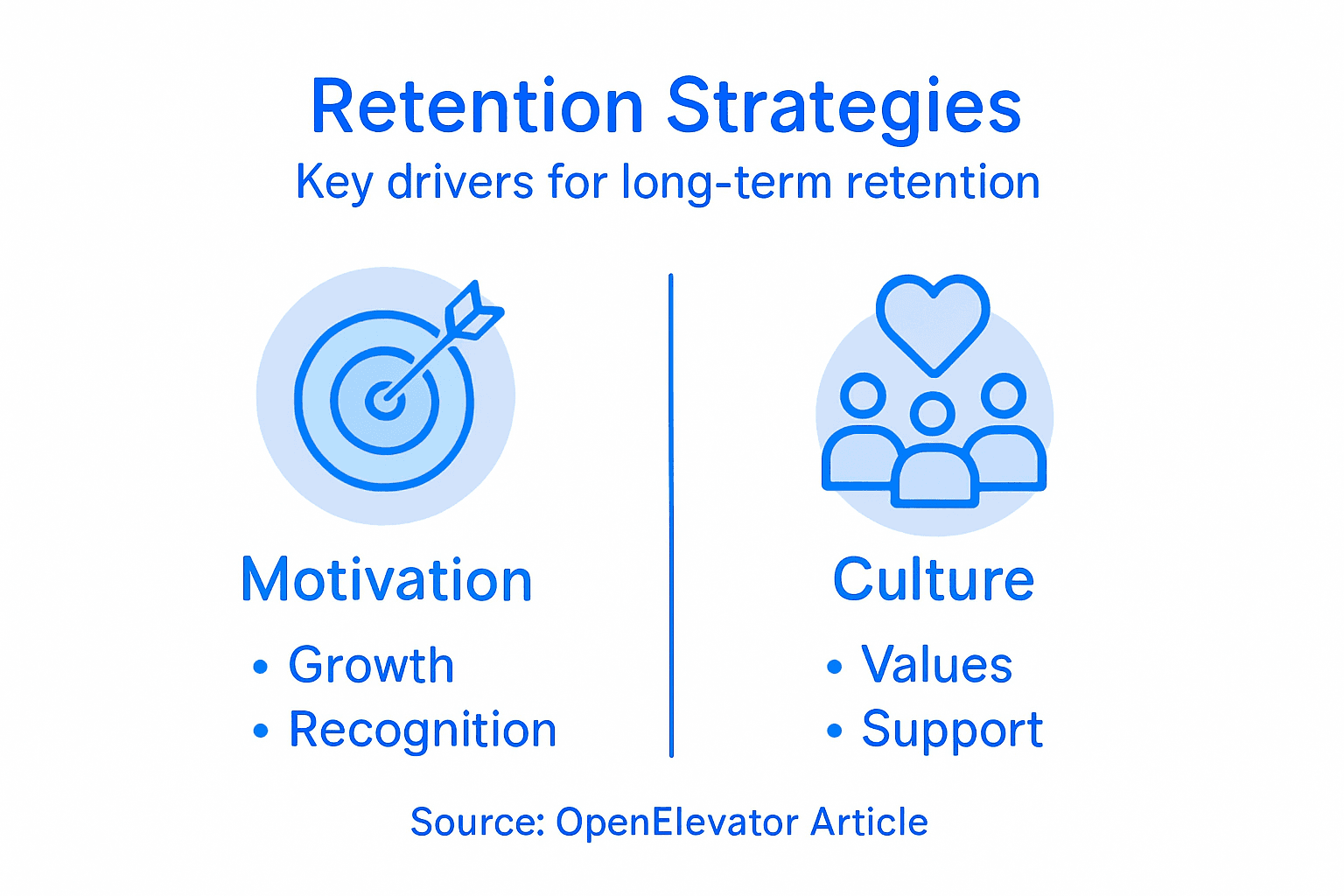
- Key Drivers Of Employee Motivation And Loyalty
- Impact Of Company Culture And Leadership Behaviors
- Role Of Recognition, Growth, And Compensation
- Leveraging Analytics And Technology For Retention
- Common Pitfalls And How To Avoid Turnover
Key Takeaways
| Point | Details |
|---|---|
| Long-Term Retention Requires Strategic Efforts | Organizations should implement holistic approaches that address both professional and personal employee needs to foster long-term retention. |
| Impact of Company Culture | A supportive organizational culture, characterized by active listening and transparent communication, strongly influences employee loyalty and motivation. |
| Importance of Professional Development | Offering meaningful growth opportunities not only enhances employee satisfaction but also plays a crucial role in retaining top talent. |
| Use of Data-Driven Strategies | Leveraging analytics can help organizations identify potential retention risks and proactively implement targeted interventions to maintain employee engagement. |
Defining Long-Term Retention in the Workplace
Long-term retention represents an organization’s capacity to maintain talented employees over an extended period, creating sustainable workforce stability. Unlike short-term employment metrics, long-term retention involves strategic efforts to keep exceptional talent engaged, motivated, and committed to the organization’s mission.
Understanding long-term retention requires examining multiple interconnected factors. Employee retention research demonstrates that successful strategies extend far beyond competitive salaries. They encompass holistic approaches addressing employees’ professional and personal needs.
Key components of long-term retention include:
- Meaningful professional development opportunities
- Robust internal career progression pathways
- Supportive organizational culture
- Competitive compensation packages
- Work-life balance initiatives
- Regular performance feedback
Organizations committed to long-term retention recognize that employees are not simply replaceable resources, but valuable strategic investments. By implementing comprehensive retention strategies, companies can reduce turnover costs, maintain institutional knowledge, and build a more stable, productive workforce.
Here’s a comparison of common retention strategies and their organizational impact:
| Retention Strategy | Immediate Benefit | Long-Term Outcome |
|---|---|---|
| Career progression planning | Boosts motivation | Builds institutional expertise |
| Flexible work initiatives | Increases daily satisfaction | Improves overall retention |
| Culture health checks | Identifies issues early | Reduces turnover rates |
| Personalized recognition | Raises employee morale | Fosters sustained loyalty |
Pro tip: Conduct regular stay interviews with high-performing employees to proactively understand their professional aspirations and potential retention risks.
Key Drivers of Employee Motivation and Loyalty
Employee motivation and loyalty represent complex psychological dynamics that extend far beyond traditional compensation models. Modern organizations recognize that intrinsic motivational factors play a critical role in creating sustainable workforce engagement and commitment.
Professional development opportunities emerge as a fundamental driver of employee loyalty, demonstrating that workers are increasingly seeking growth and meaningful career progression within their organizations. Employees want more than just a job; they desire a pathway for continuous learning and personal advancement.
Key drivers of employee motivation include:
- Meaningful work with clear purpose
- Recognition and appreciation
- Opportunities for skill enhancement
- Transparent communication
- Supportive management relationships
- Autonomy in decision-making
- Personal and professional growth potential
Research indicates that workplace relationships and organizational culture significantly influence an employee’s decision to stay. Leaders who foster inclusive environments, provide equitable opportunities, and demonstrate genuine investment in their team’s success are more likely to cultivate deep, lasting employee loyalty.
Pro tip: Create individualized development plans that align employee personal career aspirations with organizational goals to enhance long-term motivation and retention.
Impact of Company Culture and Leadership Behaviors
Company culture represents the invisible architecture that either supports or undermines organizational success. Organizational climate fundamentally determines whether employees feel valued, engaged, and committed to their workplace or view their role as merely transactional.

Leadership retention conversations play a critical role in understanding and shaping workplace dynamics. Effective leaders recognize that meaningful engagement extends far beyond periodic performance reviews, requiring consistent, authentic dialogue about employee experiences, aspirations, and potential challenges.
Key leadership behaviors that positively impact company culture include:
- Active listening and genuine empathy
- Transparent communication
- Consistent and fair performance evaluation
- Recognition of individual and team contributions
- Promoting psychological safety
- Demonstrating commitment to employee growth
- Creating inclusive decision-making processes
Successful organizations understand that culture is not a static concept but a dynamic ecosystem requiring continuous nurturing. Leaders who intentionally cultivate environments of trust, respect, and mutual development create powerful retention mechanisms that transcend traditional motivational strategies.
Pro tip: Implement quarterly culture health checks that solicit anonymous, comprehensive feedback to identify and address potential retention risks before they escalate.
Role of Recognition, Growth, and Compensation
Employees today seek more than competitive salaries; they desire holistic professional advancement that encompasses meaningful recognition, continuous learning, and opportunities for personal development. Modern workforce dynamics have transformed compensation from a simple transactional relationship to a comprehensive engagement strategy.
Professional development opportunities represent a critical driver of employee retention and satisfaction. Organizations that invest in structured growth pathways demonstrate a genuine commitment to their employees’ long-term career trajectories, which often matters more than incremental salary increases.
Effective recognition and growth strategies include:
- Personalized career development plans
- Regular skill enhancement workshops
- Transparent promotion criteria
- Performance-based non-monetary rewards
- Mentorship and coaching programs
- Cross-departmental rotation opportunities
- Clear communication about advancement potential
Compensation remains an important factor, but it is no longer the sole determinant of employee loyalty. Sophisticated leaders understand that creating a holistic value proposition involving meaningful work, personal growth, and genuine appreciation can significantly outweigh pure financial incentives in maintaining a committed, motivated workforce.
Pro tip: Design individualized compensation packages that blend financial rewards with targeted professional development opportunities to create a more compelling retention strategy.
Leveraging Analytics and Technology for Retention
The landscape of workforce management has fundamentally transformed, with data-driven retention strategies emerging as a critical competitive advantage for forward-thinking organizations. Technology now enables leaders to move beyond intuitive guesswork and implement precise, targeted interventions to maintain top talent.
Employee retention analytics represent a sophisticated approach to understanding workforce dynamics. By systematically collecting and analyzing behavioral patterns, communication signals, and performance metrics, organizations can predict and proactively address potential retention risks before they escalate.
Key technological approaches for retention analytics include:
- Predictive turnover modeling
- Sentiment analysis of internal communications
- Performance trajectory tracking
- Network interaction mapping
- Skills gap identification
- Employee engagement pulse surveys
- Real-time retention risk scoring
Successful implementation requires more than just collecting data; it demands nuanced interpretation and strategic action. Leaders must view these technological tools as collaborative insights that complement human judgment, not as replacements for empathetic leadership and genuine employee engagement.
Below is a summary of how technology enhances employee retention efforts:
| Technology Tool | Primary Function | Business Value |
|---|---|---|
| Predictive analytics | Flags potential turnover risks | Supports proactive interventions |
| Pulse surveys | Gauges team engagement frequently | Enables rapid strategy updates |
| Network mapping | Tracks relationship dynamics | Strengthens collaboration |
| Skills gap analysis | Identifies learning opportunities | Directs targeted development |
Pro tip: Develop a cross-functional team that combines data scientists, HR professionals, and frontline managers to translate analytics insights into meaningful retention strategies.
Common Pitfalls and How to Avoid Turnover
Employee turnover is rarely a sudden event. Organizational disengagement typically develops through a series of unaddressed workplace challenges that gradually erode employee motivation and commitment. Leaders who remain proactive can intercept these potential departure signals before they become irreversible.
Employee retention strategies demand a holistic approach that goes beyond superficial interventions. Understanding the complex social and systemic factors contributing to workforce instability is crucial for developing meaningful retention approaches that address root causes.
Common turnover pitfalls include:
- Ignoring workplace relationship dynamics
- Failing to provide clear career progression paths
- Neglecting employee professional development
- Maintaining rigid, inflexible work structures
- Inconsistent performance feedback
- Limited recognition of employee contributions
- Tolerating toxic workplace behaviors
Successful organizations recognize that retention is an ongoing, intentional process requiring continuous attention and adaptive strategies. By creating environments that prioritize employee well-being, professional growth, and genuine organizational commitment, leaders can significantly reduce involuntary turnover and build more resilient teams.
Pro tip: Implement quarterly stay interviews with team members to proactively identify and address potential retention risks before they escalate.
Gain Clear Visibility Into Long-Term Retention Challenges
The article highlights how long-term retention depends on proactive strategies that address hidden workplace dynamics before disengagement turns into unexpected turnover. Leaders often struggle with identifying the early warning signs of retention risk, lacking clear insight into team morale, talent fit, and professional growth opportunities. If you want to move beyond guesswork and anecdotes to confidently understand what drives employee loyalty and motivation, you need tools that reveal what is happening below the surface.
OpenElevator gives leaders quantifiable, actionable insight into employee retention risks, team dynamics, and hiring fit, empowering you to act early and with precision. Instead of reacting to turnover after the fact, you can now detect subtle changes in engagement and receive clear recommendations on how to intervene effectively. This aligns perfectly with the article’s emphasis on continuous nurturing of company culture and leveraging predictive analytics for sustaining a committed workforce.
Stop waiting until it is too late. Discover how OpenElevator transforms employee experience data into defensible insights so you can reduce costly turnover and build a thriving team. Start turning retention from a lagging indicator into a competitive advantage today at https://openelevator.com.
Frequently Asked Questions
What are the key drivers of long-term employee retention?
Key drivers include meaningful work, recognition, opportunities for skill enhancement, transparent communication, supportive management relationships, and personal growth potential. These factors significantly influence employee motivation and loyalty.
How can leaders effectively use analytics to improve employee retention?
Leaders can leverage analytics tools such as predictive turnover modeling and employee engagement pulse surveys to identify retention risks, improve workplace dynamics, and implement targeted interventions to retain top talent.
What role does company culture play in retaining employees?
Company culture is crucial as it shapes an employee’s experience and feelings of belonging within an organization. A positive culture fosters trust, engagement, and commitment, making employees more likely to stay long-term.
What are common pitfalls that lead to high employee turnover?
Common pitfalls include ignoring workplace relationship dynamics, failing to provide clear career progression paths, neglecting employee development, and tolerating toxic behaviors. Addressing these issues proactively can help reduce turnover.