
Most American companies lose nearly a third of their new employees within the first year, yet many still overlook the power of a well crafted onboarding process. When onboarding is aligned with retention goals, it can transform uncertain new hires into confident long term contributors. Discover how clear objectives, smart customization, data driven insights, and authentic connections combine to raise retention rates and set American organizations up for success right from day one.
Table of Contents
- Step 1: Define Onboarding Objectives Aligned With Retention Goals
- Step 2: Customize Onboarding Journey for Team and Role Fit
- Step 3: Integrate OpenElevator Analytics to Assess Alignment
- Step 4: Facilitate Early Connections and Support Networks
- Step 5: Validate Onboarding Success With Retention Metrics
Quick Summary
| Key Insight | Explanation |
|---|---|
| 1. Define Clear Onboarding Objectives | Align onboarding goals with retention strategies using SMART criteria to drive engagement from the start. |
| 2. Customize the Onboarding Experience | Personalize the onboarding journey to align with specific roles and team cultures, ensuring relevance and impact. |
| 3. Utilize Data Analytics for Alignment | Leverage analytics to understand employee dynamics and adjust onboarding strategies based on actionable insights. |
| 4. Foster Early Connections Among Employees | Create structured opportunities for new hires to build relationships, enhancing their sense of belonging and support. |
| 5. Measure Onboarding Success with Metrics | Continuously track diverse metrics to assess onboarding effectiveness and proactively improve the employee experience. |
Step 1: Define onboarding objectives aligned with retention goals
Defining clear onboarding objectives is your strategic roadmap to transforming new hires into committed long term employees. By carefully mapping retention goals through precise performance metrics, you create a targeted approach that dramatically increases employee engagement from day one.
Start by breaking down your broad retention targets into specific, measurable objectives. For instance, if your overarching goal involves reducing early turnover, translate that into concrete onboarding milestones like decreasing new hire departure rates by 30% within the first six months. Each objective should follow the SMART framework creating actionable targets that connect directly to your organizational retention strategy. This might include quantifiable goals such as reducing time to full productivity, increasing new hire engagement scores, or establishing clear performance benchmarks that signal successful integration.
One crucial tip when defining these objectives is maintaining transparency. Communicate these goals clearly with new team members during their initial onboarding, helping them understand exactly how their individual performance connects to broader organizational success. This approach transforms onboarding from a transactional process into a collaborative journey where employees feel genuinely invested in their professional growth and the company’s mission.
As you move forward, remember that well defined onboarding objectives are not static documents but living frameworks that should evolve with your organization’s changing needs and workforce dynamics.
Step 2: Customize onboarding journey for team and role fit
Customizing your onboarding journey requires a nuanced approach that transforms generic training into a personalized experience tailored to specific team dynamics and individual role requirements. Next generation intelligence tools now enable sophisticated personalization strategies that dramatically improve employee engagement by creating adaptive workflows uniquely suited to each new hire.
The key to effective customization lies in analyzing individual role requirements and team culture comprehensively. This means moving beyond standard orientation checklists and developing targeted content that speaks directly to the unique challenges and expectations of each position. Consider creating role specific multimedia modules, interactive training scenarios, and personalized milestone tracking that help new team members quickly understand their specific responsibilities and how they contribute to broader organizational objectives.

One critical insight is recognizing that customization is not a one time event but an ongoing process. Implement feedback mechanisms that allow new employees to provide input about their onboarding experience, enabling continuous refinement of your approach. This adaptive strategy ensures that your onboarding journey remains dynamic, responsive, and genuinely supportive of individual professional development.
As you progress, remember that a truly effective onboarding experience feels less like a standardized procedure and more like a personalized professional welcome that signals your organization values each team member as a unique contributor.
Step 3: Integrate OpenElevator analytics to assess alignment
Mastering employee retention requires moving beyond intuition and embracing data driven insights that reveal the true dynamics of team compatibility and individual potential. Employee retention solutions offer sophisticated analytics platforms that transform complex interpersonal data into actionable strategic intelligence, enabling leaders to understand precisely how team members align with organizational goals.
The integration process involves systematically mapping employee values, collaboration patterns, and performance potential through comprehensive surveying and analysis. By collecting nuanced data points that go beyond traditional performance metrics, you can create a holistic view of each team member understanding not just their technical skills but their intrinsic motivations, communication styles, and potential for long term engagement. This approach allows you to identify potential friction points proactively and design targeted interventions that support individual and collective success.
One critical recommendation is to treat these analytics as living insights rather than static reports. Regularly review and update your understanding of team dynamics, recognizing that alignment is an ongoing process of mutual adaptation. Create feedback loops that allow employees to contribute to this understanding, transforming analytics from a top down assessment to a collaborative exploration of workplace potential.
As you continue refining your approach, remember that the ultimate goal of these analytics is not just measurement but meaningful connection creating workplace environments where every team member feels genuinely understood and strategically supported.
Step 4: Facilitate early connections and support networks
Building meaningful workplace connections requires intentional strategies that go beyond traditional networking approaches. Creating psychological safety helps new employees feel empowered to reveal their authentic selves, transforming initial interactions from transactional encounters into genuine relationship building opportunities.
Start by designing structured yet organic connection opportunities that allow new team members to interact naturally across different organizational levels. This might include implementing mentorship programs, cross functional team lunches, collaborative project assignments, and scheduled informal social interactions that break down hierarchical barriers. The goal is creating an environment where new employees feel welcomed, supported, and genuinely integrated into the broader organizational ecosystem.
One critical insight is recognizing that support networks are not one size fits all. Some employees thrive with direct mentorship, while others prefer peer learning groups or digital collaboration platforms. Pay attention to individual preferences and create multiple pathways for connection, ensuring that each new team member can find their unique comfort zone for professional engagement and personal growth.
As you move forward, remember that authentic connections cannot be manufactured they must be cultivated with genuine intention, empathy, and a commitment to understanding each individual’s unique professional journey.
Step 5: Validate onboarding success with retention metrics
Transforming onboarding from a passive administrative process into a strategic retention initiative requires sophisticated measurement approaches that go beyond traditional tracking. Implementing continuous feedback loops and data analytics provides real time insights into onboarding effectiveness allowing organizations to proactively address potential engagement challenges before they escalate.
Develop a comprehensive metrics framework that captures multiple dimensions of employee integration and satisfaction. This means tracking key performance indicators beyond simple retention rates such as time to full productivity, engagement scores, skill acquisition rates, and qualitative sentiment indicators. Create multiple touchpoint surveys that capture nuanced feedback during critical transition periods like 30 60 and 90 day milestones, enabling you to understand the evolving employee experience and identify potential intervention points.
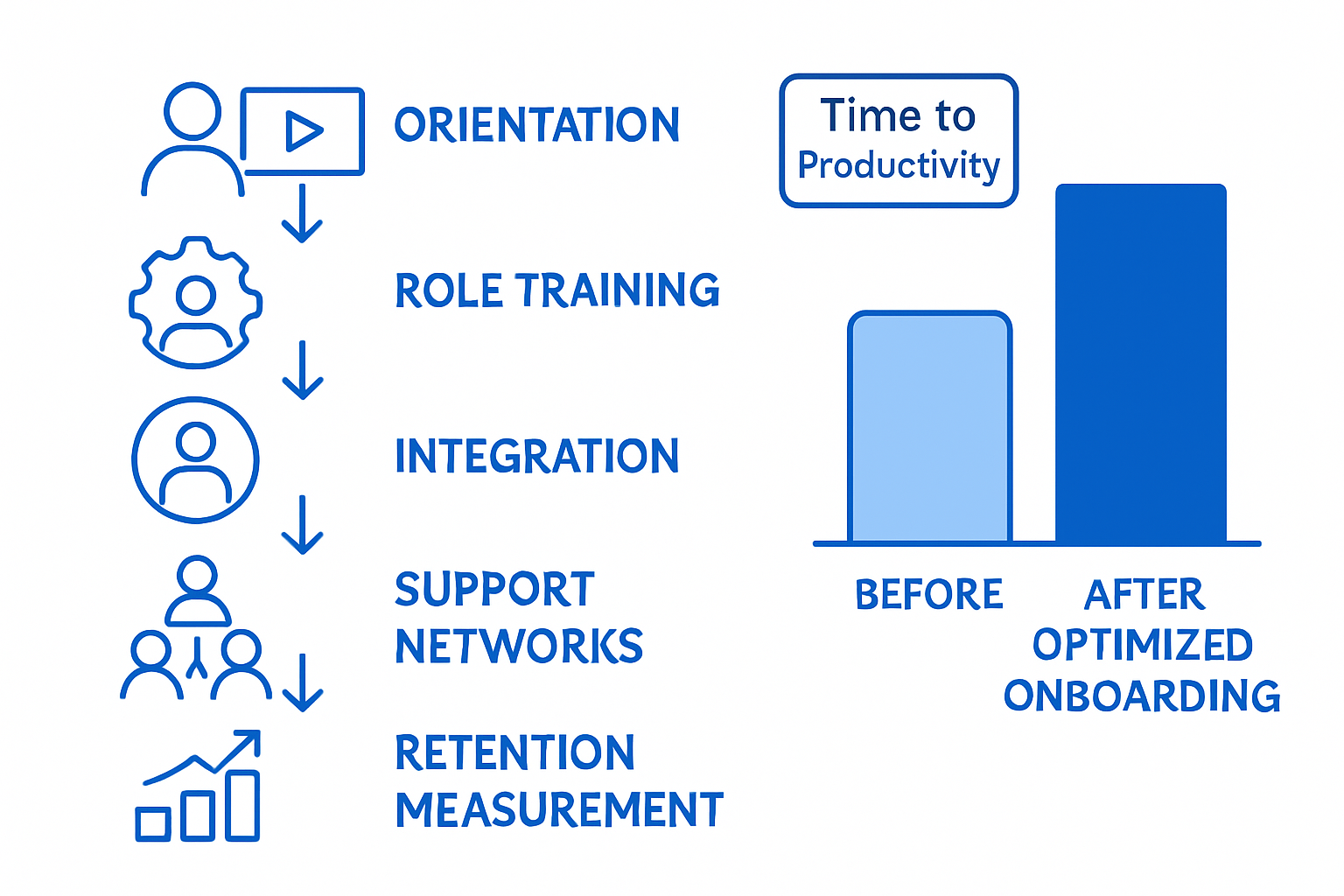
One critical recommendation is treating these metrics as dynamic insights rather than static reports. Regularly analyze trends, look for emerging patterns, and be prepared to adjust your onboarding approach based on actual employee experiences. This approach transforms retention metrics from a retrospective assessment to a predictive tool that helps you continuously refine your talent development strategies.
As you move forward, remember that truly effective retention metrics are not just about numbers they are about understanding the human experience behind those data points and creating workplace environments where employees feel genuinely supported and valued.
Strengthen Employee Retention with Data-Driven Onboarding Insights
The article highlights key challenges in the onboarding process including aligning new hires with your company’s values and team culture to boost long-term retention. Pain points like unclear retention goals, lack of personalized onboarding journeys, and difficulty in measuring early engagement signals often lead to costly turnover. OpenElevator addresses these issues by leveraging a proprietary algorithm that identifies high-risk employees through a simple 5-minute bias-free survey. Our platform uncovers vital data on values alignment and interpersonal fit—two powerful predictors of who is likely to stay and thrive.
Take control of your employee retention strategy today with OpenElevator, the first platform designed specifically to translate onboarding analytics into actionable insights. Discover how to customize onboarding experiences based on real data, validate alignment early on, and support employee success with predictive tools proven across startups and Fortune 500 companies. Don’t wait until disengagement surfaces. Visit OpenElevator now to empower your hiring and retention decisions and build a resilient workforce committed for the long term.
Frequently Asked Questions
How can I define effective onboarding objectives for long-term employee retention?
To define effective onboarding objectives, start by aligning them with your retention goals. Break down broad targets into specific, measurable objectives using the SMART framework, such as aiming to reduce new hire turnover by 30% within their first six months.
What should be included in a customized onboarding journey for new employees?
A customized onboarding journey should include role-specific training content that addresses individual responsibilities and team dynamics. Incorporate multimedia modules and personalized tracking to ensure new hires feel connected to their roles and organizational objectives.
How can I assess the effectiveness of my onboarding process in enhancing employee retention?
To assess your onboarding process, develop a metrics framework to track key indicators such as time to full productivity and employee engagement scores. Regularly analyze these metrics to identify patterns and make adjustments that improve the onboarding experience.
What role do analytics play in optimizing the onboarding process?
Analytics help you understand team dynamics and employee potential by mapping values and collaboration patterns. Implement data-driven insights to proactively identify challenges and tailor your onboarding strategies for better alignment with organizational goals.
How can I facilitate meaningful connections for new hires during onboarding?
Facilitate meaningful connections by designing structured social events, mentorship programs, and collaborative projects. Encourage informal interactions among new employees and existing team members to foster genuine relationships and support networks.
What metrics should I track to validate onboarding success over time?
Track metrics such as retention rates, engagement scores, and skill acquisition rates at critical milestones like 30, 60, and 90 days. This ongoing analysis allows you to continuously refine your onboarding approach based on real employee experiences.