
More than 40 percent of American companies now use data-driven techniques to predict and prevent employee turnover. The need to keep talented workers has never been more urgent, especially as turnover costs continue to climb. With predictive retention strategies, organizations can spot potential problems before employees decide to leave, helping leaders make smarter decisions about engagement and workplace satisfaction.
Table of Contents
- What Are Predictive Retention Strategies?
- How Predictive Algorithms Identify Risk
- Variants: Data Sources And Analytical Approaches
- Real Applications: Preventing Employee Turnover
- Key Factors Driving Retention And Engagement
- Mistakes To Avoid In Predictive Retention Initiatives
Key Takeaways
| Point | Details |
|---|---|
| Predictive Approaches Shift | Organizations are moving from traditional, reactive retention strategies to proactive, data-driven methods for anticipating employee turnover. |
| Integration of Data Sources | Successful predictive retention strategies leverage diverse data sources to create comprehensive employee profiles and insights into workforce dynamics. |
| Holistic Engagement Factors | Effective retention is driven by addressing fundamental employee needs, including meaningful work and career progression opportunities. |
| Avoiding Common Pitfalls | Organizations must balance quantitative data with qualitative insights to avoid blind spots in understanding employee motivations and retention risks. |
What Are Predictive Retention Strategies?
Predictive retention strategies represent a sophisticated approach to workforce management that transforms how organizations understand and address employee turnover. By leveraging advanced data analysis and machine learning techniques, these strategies allow companies to anticipate potential employee departures before they happen.
At their core, predictive retention strategies involve collecting and analyzing comprehensive data about employee behaviors, performance metrics, engagement levels, and workplace satisfaction. Using data mining and machine learning techniques, HR departments can now develop nuanced profiles that reveal which employees might be at higher risk of leaving. This method goes far beyond traditional retention approaches by providing actionable insights based on quantitative evidence rather than reactive guesswork.
The key components of predictive retention strategies typically include analyzing factors such as job performance history, compensation patterns, career progression opportunities, interpersonal dynamics, and individual engagement indicators. By understanding these complex interconnections, organizations can design targeted interventions that address specific risk factors for each employee. These interventions might range from personalized development plans and mentorship programs to strategic compensation adjustments and workplace culture enhancements.
Pro Tip – Strategic Data Collection: Implement a comprehensive employee survey system that captures both quantitative metrics and qualitative feedback, ensuring you gather holistic insights about workforce sentiment and potential retention challenges.
Here’s a comparison of traditional retention strategies versus predictive retention strategies:
| Aspect | Traditional Retention | Predictive Retention |
|---|---|---|
| Approach | Reactive | Proactive and data-driven |
| Data Use | Limited historical metrics | Advanced analytics and machine learning |
| Intervention Timing | After issues arise | Before disengagement is visible |
| Personalization | Broad programs | Tailored to individual risk factors |
| Decision Basis | Manager intuition | Quantitative, evidence-based insights |
Key Predictive Retention Strategy Elements:
- Comprehensive data collection
- Advanced analytical techniques
- Personalized intervention design
- Proactive employee engagement monitoring
- Continuous feedback integration
How Predictive Algorithms Identify Risk
Predictive algorithms represent a sophisticated technological approach to understanding employee turnover risks by transforming raw workforce data into actionable insights. These advanced systems go far beyond traditional human resource management techniques by leveraging complex mathematical models that can detect subtle patterns indicating potential employee disengagement.
Statistical classification and survival models enable these algorithms to analyze multiple interconnected variables simultaneously. By examining comprehensive datasets that include performance ratings, attendance records, engagement survey responses, and behavioral indicators, predictive algorithms can estimate the probability of an employee potentially leaving with remarkable precision.
The risk identification process typically involves several sophisticated analytical techniques. These include machine learning algorithms that assess behavioral patterns, demographic information, job satisfaction metrics, and historical workforce trends. Analyzing behavioral and demographic data allows these systems to create nuanced employee profiles that reveal underlying risk factors for potential turnover, enabling organizations to develop targeted retention strategies before talented workers consider leaving.

Pro Tip – Algorithmic Insight Preparation: Design your employee data collection processes with predictive analysis in mind, ensuring comprehensive and consistent information gathering across all relevant workforce dimensions.
Key Components of Risk Identification Algorithms:
- Performance trend analysis
- Engagement survey interpretation
- Behavioral pattern recognition
- Demographic correlation assessment
- Predictive statistical modeling
Variants: Data Sources and Analytical Approaches
The landscape of predictive retention strategies has evolved dramatically, with organizations now leveraging an increasingly sophisticated array of data sources to gain deeper insights into workforce dynamics. Employee records and performance metrics combined with emerging technologies like IoT-enabled sensor data are transforming how companies understand potential employee turnover risks.
Analytical approaches have become more nuanced and powerful, moving beyond simple statistical analysis to incorporate advanced machine learning techniques. Feature selection optimization and complex machine learning models such as decision trees and neural networks now enable more accurate and granular predictions of employee retention potential. These sophisticated algorithms can detect intricate patterns that traditional analysis methods might overlook, providing HR departments with unprecedented insights into workforce behavior.
Modern predictive retention strategies integrate multiple data streams, including traditional HR metrics, digital interaction logs, performance evaluations, engagement survey results, and even passive data collection methods like communication frequency and collaboration patterns. This holistic approach allows organizations to build comprehensive employee profiles that reveal not just surface-level indicators of potential turnover, but deep, contextual understanding of workforce sentiment and individual career trajectories.
Pro Tip – Multidimensional Data Integration: Develop a cross-departmental data collection strategy that breaks down organizational silos, ensuring a comprehensive and integrated approach to workforce analytics.
Below is a summary of how different data sources contribute unique value to predictive retention models:
| Data Source | Role in Prediction | Example Application |
|---|---|---|
| HR Records | Track basic demographics and tenure | Identify high-risk cohorts by age or role |
| Engagement Surveys | Gauge real-time sentiment and morale | Spot dips signaling rising turnover risk |
| Digital Interaction Logs | Capture collaboration and network strength | Detect decreases in internal communication |
| Performance Reviews | Assess productivity and growth | Flag declining trends for intervention |
| IoT/Sensor Data | Monitor physical presence and activity | Reveal patterns in workspace usage linked to satisfaction |
Key Variants in Predictive Retention Data Sources:
- Traditional HR records
- Performance management systems
- Employee engagement surveys
- IoT and digital interaction tracking
- Communication and collaboration metrics
Real Applications: Preventing Employee Turnover
Predictive retention strategies have moved from theoretical concepts to practical, actionable solutions that organizations are actively implementing across multiple industries. Organizations are now using predictive models to systematically identify employees at high risk of leaving, transforming traditional reactive human resource management into a proactive, data-driven approach.
Data analytics and machine learning algorithms enable precise predictions of employee turnover in both public and private sector environments. These sophisticated systems analyze complex workforce data points, including performance metrics, engagement levels, compensation satisfaction, career progression opportunities, and interpersonal workplace dynamics. By creating comprehensive employee profiles, organizations can now anticipate potential departures months before traditional indicators would reveal underlying dissatisfaction.
Real-world applications of these predictive retention strategies span diverse sectors, from technology and healthcare to government and manufacturing. HR professionals are now equipped with advanced tools that provide early warning signals, allowing them to design targeted interventions. These might include personalized career development plans, compensation adjustments, workplace culture improvements, or targeted engagement initiatives designed to address specific employee concerns before they escalate into resignation decisions.
Pro Tip – Intervention Precision: Design a rapid response protocol that allows immediate, personalized engagement with employees flagged by predictive models, ensuring swift and meaningful intervention.
Key Application Areas for Predictive Retention:
- Performance trend analysis
- Workplace satisfaction measurement
- Career progression tracking
- Compensation alignment
- Interpersonal dynamics assessment
Key Factors Driving Retention and Engagement
Employee engagement represents the critical foundation of successful organizational retention strategies, extending far beyond simple job satisfaction. Performance metrics, engagement levels, and demographic variables combine to create a comprehensive understanding of workforce dynamics, revealing the complex tapestry of factors that influence an employee’s decision to stay or leave.
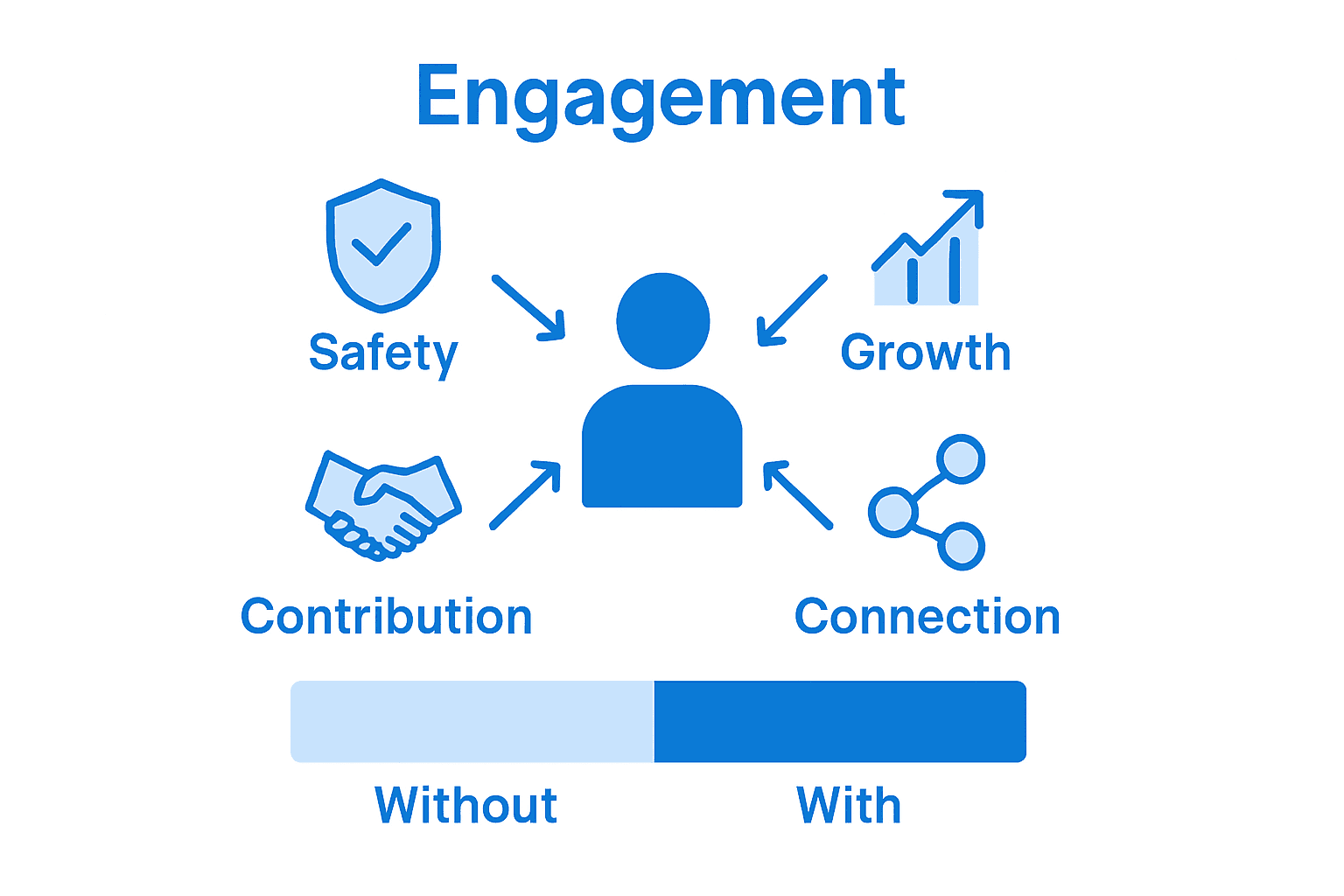
At the core of effective retention are four fundamental human needs: safety, growth, contribution, and connection. Organizations that successfully address these needs create environments where employees feel valued, challenged, and intrinsically motivated. This means providing not just competitive compensation, but also clear career pathways, meaningful work assignments, opportunities for professional development, and a sense of belonging within the organizational ecosystem.
Modern workforce analytics have revealed that engagement is a dynamic, multidimensional construct influenced by numerous interconnected factors. These include leadership quality, organizational culture, individual role alignment, professional growth opportunities, compensation fairness, workplace relationships, and personal value alignment with the company’s mission. By understanding these nuanced interactions, organizations can design targeted strategies that speak directly to individual employee motivations and potential retention risks.
Pro Tip – Holistic Engagement Assessment: Implement regular, confidential pulse surveys that capture both quantitative metrics and qualitative insights, allowing for continuous, real-time understanding of workforce sentiment.
Critical Engagement and Retention Drivers:
- Meaningful work assignments
- Clear career progression paths
- Leadership transparency
- Competitive compensation
- Strong interpersonal workplace relationships
Mistakes to Avoid in Predictive Retention Initiatives
Predictive retention strategies demand sophisticated, nuanced approaches that go beyond simplistic data interpretation. Organizations frequently undermine their retention efforts by relying solely on quantitative data without considering critical qualitative insights, creating a dangerous blind spot in understanding workforce dynamics.
Predictive talent management requires comprehensive integration of financial forecasting and comprehensive employee sentiment analysis, addressing not just statistical indicators but the complex human elements driving workforce engagement. Common pitfalls include treating employees as mere data points, neglecting individual contextual nuances, and failing to recognize the multidimensional nature of workplace satisfaction and potential turnover risks.
Successful predictive retention initiatives demand a holistic approach that balances rigorous data analysis with empathetic human understanding. This means moving beyond surface-level metrics to develop deep, contextual insights into employee motivations, career aspirations, workplace relationships, and personal growth trajectories. Organizations must create adaptive strategies that can respond dynamically to evolving workforce needs, recognizing that retention is not a static problem but a continuously shifting organizational challenge.
Pro Tip – Holistic Retention Modeling: Develop cross-functional retention assessment teams that combine data scientists, HR professionals, and organizational psychologists to create more comprehensive and nuanced workforce retention strategies.
Critical Mistakes in Predictive Retention:
- Overreliance on quantitative metrics
- Ignoring qualitative employee feedback
- Neglecting individual contextual factors
- Failing to address ‘silent quitting’
- Treating employees as generic data points
Take Control of Employee Turnover with Predictive Retention Insights
Understanding who is at risk of leaving your company before disengagement becomes visible is one of the toughest challenges HR leaders face today. This article highlights how predictive retention strategies use advanced data and machine learning to move from reactive guesswork to proactive, personalized intervention. You know that workforce engagement depends on meeting basic human needs like safety, growth, contribution, and connection while aligning values and interpersonal fit within teams.
OpenElevator tackles these exact pain points with a proprietary algorithm that assesses values alignment and interpersonal dynamics in just a short 5-minute, bias-free survey. This means you can stop guessing and start knowing exactly which employees need support to stay engaged and committed. Whether you lead a small startup or a Fortune 500 company, our platform turns complex predictive analytics into simple, actionable insights so you can prevent high turnover faster and smarter.
Discover how predictive retention strategies come alive in your daily workforce management by visiting OpenElevator. Explore our solutions designed to identify risk early, boost engagement, and build stronger teams. Don’t let valuable talent slip away. Act now to transform your retention approach with data-driven confidence at OpenElevator and learn more about how our platform can power your success today.
Frequently Asked Questions
What are predictive retention strategies?
Predictive retention strategies are advanced workforce management approaches that use data analysis and machine learning to anticipate potential employee turnover, allowing organizations to take proactive steps to retain talent.
How do predictive algorithms identify turnover risks?
Predictive algorithms analyze various employee data points, including performance metrics and engagement survey responses, to estimate the likelihood of staff departures, identifying patterns that indicate disengagement.
What types of data sources are used in predictive retention strategies?
Common data sources include HR records, engagement surveys, performance evaluations, and digital interaction logs, as well as IoT data to provide a holistic view of employee dynamics and potential turnover risks.
What are the common mistakes to avoid when implementing predictive retention initiatives?
Organizations often make mistakes by relying solely on quantitative data, neglecting qualitative insights, and failing to consider individual contexts, leading to an incomplete understanding of workforce dynamics.