
Most American companies lose up to 30 percent of their workforce every year, a statistic that reveals the urgent challenge of keeping skilled employees. In a market where talent competition intensifies, organizations cannot afford to treat their staff as disposable. Understanding what makes a retention program effective provides fresh insight for business leaders who want to build lasting teams and minimize talent loss.
Table of Contents
- Core Definition of a Retention Program
- Types of Employee Retention Programs
- How Retention Programs Work in Practice
- Benefits for Reducing Employee Turnover
- Risks and Pitfalls of Poor Retention Strategies
- Best Practices for Implementing Retention Solutions
Key Takeaways
| Point | Details |
|---|---|
| Holistic Retention Strategies | Effective retention programs address various aspects of employee experience, including professional development and workplace culture. |
| Customization is Key | Tailor retention approaches to different employee segments based on unique motivations and career stages for maximum effectiveness. |
| Data-Driven Decision Making | Utilize continuous feedback and analytics to monitor engagement levels and identify retention risks early. |
| Financial and Operational Benefits | Strong retention programs lead to lower recruitment costs, higher employee morale, and greater organizational stability. |
Core Definition of a Retention Program
A retention program represents a strategic approach organizations use to keep talented employees engaged, motivated, and committed to their current workplace. At its core, this initiative aims to reduce unwanted employee turnover by creating an environment where professionals feel valued, supported, and connected to their organization’s mission.
Retention programs go beyond simple salary adjustments. They are comprehensive strategies that address multiple dimensions of employee experience, including professional development, workplace culture, recognition, and personal growth opportunities. In educational contexts, the concept shares similarities with student retention processes, which focus on maintaining consistent participation and engagement.
The most effective retention programs are holistic, recognizing that employees have complex needs beyond financial compensation. These strategies typically involve understanding individual motivations, providing clear career pathways, offering continuous learning opportunities, and creating a workplace culture that promotes psychological safety and mutual respect. By implementing such nuanced approaches, organizations can significantly reduce talent loss and build a more stable, productive workforce.
Pro Tip: Customize Your Approach – Develop retention strategies tailored to different employee segments, considering their unique career stages, professional aspirations, and personal motivations for maximum effectiveness.
To clarify key differences, here’s a comparison of traditional versus modern retention program approaches:
| Aspect | Traditional Approach | Modern Approach |
|---|---|---|
| Focus | Primarily financial incentives | Comprehensive employee experience |
| Customization | One-size-fits-all solutions | Tailored to employee segments |
| Metrics Used | Turnover rates only | Engagement, satisfaction, predictive data |
| Management Style | Reactive problem-solving | Proactive, data-driven decisions |
| Employee Involvement | Minimal feedback, top-down | Regular surveys and involvement |
Types of Employee Retention Programs
Employees retention programs encompass a diverse range of strategic initiatives designed to create an engaging and supportive workplace environment. Comprehensive retention strategies typically include multiple interconnected approaches that address various aspects of employee satisfaction and professional growth.
These programs can be categorized into several key types:
- Financial Incentives: Competitive compensation packages, performance bonuses, equity offerings, and comprehensive benefits plans
- Professional Development: Training programs, mentorship opportunities, career advancement pathways, and skill enhancement workshops
- Work Environment Strategies: Flexible work schedules, remote work options, wellness programs, and inclusive company cultures
- Recognition and Engagement: Regular performance feedback, employee recognition systems, team-building activities, and meaningful reward mechanisms
Organizations are increasingly recognizing that low-cost retention strategies can be equally powerful. These might include alternative work schedules, employee referral programs, casual dress codes, and periodic opinion surveys that demonstrate a commitment to listening and responding to workforce needs.
Modern retention programs are not one-size-fits-all solutions but dynamic, adaptive frameworks that evolve with changing workforce expectations and organizational goals. Successful implementations require continuous assessment, personalization, and a genuine commitment to employee well-being.
Pro Tip: Conduct Regular Pulse Surveys – Implement short, frequent employee satisfaction surveys to continuously monitor engagement levels and quickly identify and address potential retention risks before they escalate.
How Retention Programs Work in Practice
Retention programs transform from theoretical concepts into practical strategies through a systematic, data-driven approach that addresses the complex dynamics of workforce engagement. Targeted retention efforts recognize that managing employee turnover requires nuanced interventions tailored to specific organizational contexts and individual employee needs.
The practical implementation of retention programs typically involves several critical stages:
- Assessment Phase
- Conduct comprehensive employee satisfaction surveys
- Analyze current turnover rates and underlying causes
- Identify key talent segments and potential flight risks
- Strategic Design
- Develop personalized engagement strategies
- Create targeted interventions for different employee groups
- Align retention initiatives with organizational culture and goals
- Execution
- Implement multi-dimensional support mechanisms
- Provide continuous feedback and development opportunities
- Monitor and adjust strategies based on real-time insights
Retention services demonstrate that successful programs go beyond generic approaches, instead offering intentional, individualized support that addresses specific employee challenges and professional aspirations.
Successful retention programs operate as dynamic, adaptive systems. They require continuous refinement, active leadership involvement, and a genuine commitment to understanding and addressing the evolving needs of the workforce. The most effective strategies integrate data analytics, personal touch, and proactive intervention to create a workplace environment that naturally encourages talent to stay and thrive.
Pro Tip: Conduct Predictive Analysis – Leverage advanced analytics to identify potential retention risks before they become critical, allowing for preemptive and targeted intervention strategies.
Benefits for Reducing Employee Turnover
Employee turnover represents a significant financial and operational challenge for organizations, making retention programs a critical strategic investment. Positive workplace environments directly correlate with enhanced employee morale, productivity, and organizational stability.
The financial benefits of effective retention programs are substantial and multifaceted:
-
Direct Cost Savings
- Reduce recruitment expenses
- Minimize training and onboarding costs
- Decrease productivity disruptions during staff transitions
-
Organizational Performance
- Maintain institutional knowledge
- Preserve team cohesion and collaboration
- Sustain consistent operational momentum
-
Talent Quality Preservation
- Retain high-performing employees
- Create a stable, experienced workforce
- Build a reputation as an employer of choice
Performance recognition strategies demonstrate that meaningful incentives like targeted bonuses, professional development opportunities, and personalized career pathways can dramatically reduce voluntary turnover.

Beyond financial metrics, successful retention programs create intangible yet powerful organizational advantages. They foster a culture of loyalty, innovation, and mutual respect, transforming workforce management from a transactional process into a strategic partnership between employers and employees.
Pro Tip: Conduct Comparative Analysis – Regularly benchmark your retention rates and strategies against industry standards to identify improvement opportunities and stay competitive in talent acquisition and management.
Risks and Pitfalls of Poor Retention Strategies
Poor retention strategies can create devastating ripple effects throughout an organization, undermining its competitive potential and long-term sustainability. High attrition rates represent more than just a human resources challenge – they signal fundamental structural weaknesses in workplace culture and employee engagement.
The most critical risks associated with ineffective retention approaches include:
-
Knowledge Erosion
- Permanent loss of institutional memory
- Disruption of critical operational workflows
- Decreased efficiency from constant retraining
-
Financial Consequences
- Exponential recruitment and onboarding expenses
- Productivity losses during transition periods
- Potential revenue disruptions from talent gaps
-
Psychological Impact
- Decreased team morale
- Increased workplace anxiety
- Perception of organizational instability
Organizational adaptability suffers dramatically when retention strategies fail, creating a cascading effect that can undermine an entire company’s strategic capabilities. The most skilled employees are typically the first to recognize and respond to systemic workplace challenges, making their retention paramount.
Systemic retention failures transform workplace dynamics from collaborative ecosystems into transactional, impersonal environments. When employees perceive minimal investment in their professional growth and well-being, their commitment inevitably erodes, accelerating the very turnover organizations seek to prevent.
Pro Tip: Early Warning Detection – Implement quarterly engagement surveys with anonymized feedback mechanisms to identify potential retention risks before they escalate into permanent talent losses.
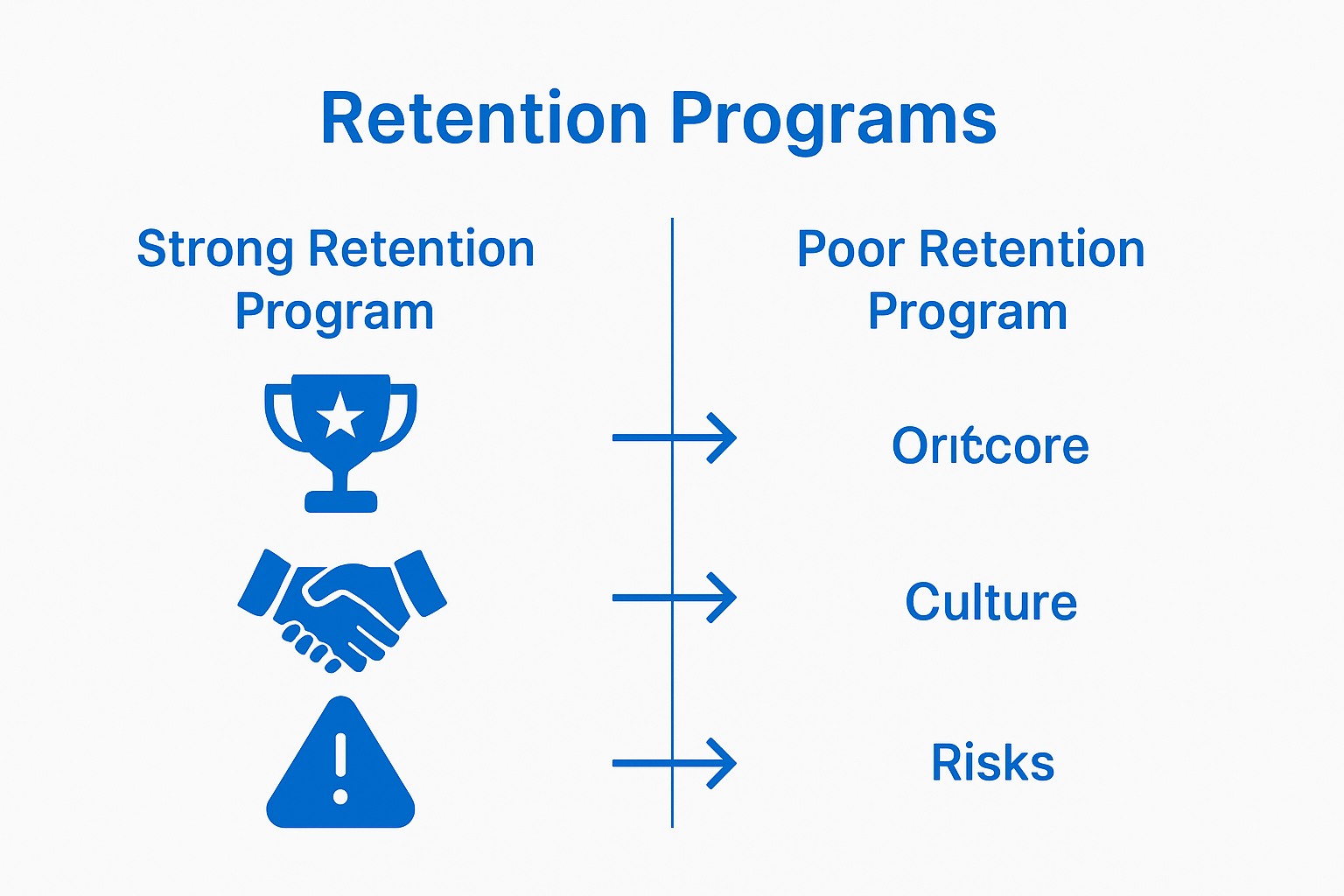
Below is a summary highlighting the main advantages and risks of retention programs:
| Category | Advantages of Strong Programs | Risks of Poor Programs |
|---|---|---|
| Financial Impact | Lower recruiting and error costs | Higher turnover expenses and disruptions |
| Operational Stability | Consistent team performance | Frequent retraining, loss of knowledge |
| Employee Morale | Loyalty and high motivation | Decreased engagement, workplace anxiety |
| Organizational Reputation | Attractive employer branding | Reputation for instability |
Best Practices for Implementing Retention Solutions
Successful retention solutions require a comprehensive, strategic approach that goes beyond traditional human resources management. Staff retention strategies must be intentional, multidimensional, and deeply integrated into organizational culture.
Key implementation strategies include:
- Holistic Compensation Framework
- Competitive base salary
- Performance-based bonuses
- Comprehensive benefits packages
- Transparent salary progression paths
- Professional Development Ecosystem
- Continuous learning opportunities
- Mentorship programs
- Clear career advancement trajectories
- Skill enhancement workshops
- Cultural Engagement Initiatives
- Regular team-building activities
- Open communication channels
- Inclusive decision-making processes
- Psychological safety environments
Formal recognition programs play a crucial role in cultivating a culture of appreciation. These initiatives demonstrate organizational commitment to valuing employee contributions beyond monetary compensation, creating emotional connections that transcend transactional workplace relationships.
The most effective retention solutions are dynamic and personalized, recognizing that each employee has unique motivations, aspirations, and professional development needs. Organizations must move beyond standardized approaches and develop nuanced, data-driven strategies that reflect individual and collective workforce expectations.
Pro Tip: Personalization Strategy – Conduct individual stay interviews to understand each employee’s unique career goals and craft tailored retention approaches that align with their professional aspirations.
Unlock the True Power of Retention Programs with OpenElevator
Employee turnover can undermine your best efforts to build a loyal and productive workforce. This article highlights how strategic retention programs focus on understanding employee motivations, engagement, and personalized support to reduce turnover and strengthen organizational stability. Yet knowing who is truly at risk of quitting remains a challenge many employers face.
OpenElevator solves this critical problem by using a proprietary algorithm that quickly identifies high-risk employees through insights into values alignment and interpersonal fit. Our platform goes beyond guesswork by providing targeted, science-backed retention solutions that help you meet fundamental human needs such as safety, growth, contribution, and connection. Discover how you can transform your retention strategy from reactive to proactive today.
Ready to stop losing top talent and start building a loyal workforce tailored to your unique organizational culture? Explore how OpenElevator delivers precision retention strategies backed by data and trusted worldwide. Learn more about how our platform’s actionable insights can empower you with clear indicators of engagement and retention risk in just five minutes. Don’t wait until turnover costs escalate — visit OpenElevator now to take control of your employee retention future.
Frequently Asked Questions
What is a retention program?
A retention program is a strategic initiative that organizations implement to keep talented employees engaged, motivated, and committed to their workplace, ultimately aiming to reduce unwanted employee turnover.
Why are retention programs important?
Retention programs are crucial because they enhance employee satisfaction, save on recruitment and training costs, maintain operational stability, and foster a positive workplace culture, which can lead to stronger organizational performance.
What types of strategies are included in employee retention programs?
Employee retention programs typically include financial incentives, professional development opportunities, work environment improvements, and recognition and engagement strategies to create a more supportive and engaging workplace environment.
How do retention programs impact employee turnover?
Effective retention programs can significantly reduce employee turnover by addressing key factors such as employee satisfaction, career development needs, and workplace culture, thereby minimizing the disruptions and costs associated with high attrition rates.