
Every leadership team in an American tech company faces tough questions when talented professionals unexpectedly resign. Retaining high-value employees is more than a budget decision. It is a complex challenge where every missed opportunity can ripple through productivity, team morale, and ultimately profitability. Understanding the true scope of retention cost gives C-level executives the clarity needed to design targeted strategies that not only minimize hidden expenses but also strengthen workforce stability and performance.
Table of Contents
- Defining Retention Cost In The Workplace
- Types Of Retention Costs And Key Drivers
- How Retention Cost Impacts Profitability
- Calculating And Tracking Retention Cost Metrics
- Comparing Retention And Turnover Costs For Leaders
- Optimizing Retention Costs In Tech Teams
Key Takeaways
| Point | Details |
|---|---|
| Understanding Retention Cost | Retention cost encompasses both financial and strategic investments needed to maintain employee engagement and organizational health. |
| Holistic Measures | Assessing retention costs requires tracking both tangible and intangible factors that influence employee satisfaction and productivity. |
| Strategic Investment | Viewing retention not as a mere expense but as a crucial investment in human capital can drive profitability and competitive advantage. |
| Proactive Analysis | Regular analysis of retention costs can help organizations identify trends and address potential talent flight risks before they escalate. |
Defining Retention Cost in the Workplace
Retention cost represents the comprehensive financial and strategic investment an organization makes in maintaining a stable, engaged workforce. It goes far beyond simple salary calculations, encompassing complex factors that directly impact team performance and organizational health. Employee retention strategies involve understanding the multifaceted expenses associated with keeping talented professionals committed to your company.
At its core, retention cost includes several critical components:
- Direct financial investments in compensation
- Training and professional development expenses
- Recruitment and onboarding resources
- Cultural and engagement initiatives
- Knowledge transfer and continuity expenses
The complexity of retention cost stems from its dynamic nature. According to research from workplace retention studies, organizations must view these expenses not as static expenses, but as strategic investments in human capital. Every dollar spent on retention potentially saves multiple dollars in replacement and productivity loss.
Moreover, retention cost isn’t just a financial calculation—it’s a holistic measure of organizational health. High turnover signals deeper issues like misaligned culture, inadequate career pathways, or systemic management challenges. By tracking and understanding these costs, leadership can develop targeted interventions that address root causes of employee disengagement.
Pro tip: Conduct quarterly retention cost analyses to identify emerging trends and proactively address potential talent flight risks before they become critical problems.
Types of Retention Costs and Key Drivers
Organizations face a complex landscape of retention costs that extend far beyond simple monetary calculations. Employee retention research reveals a nuanced framework of expenses that significantly impact an organization’s financial and cultural stability.
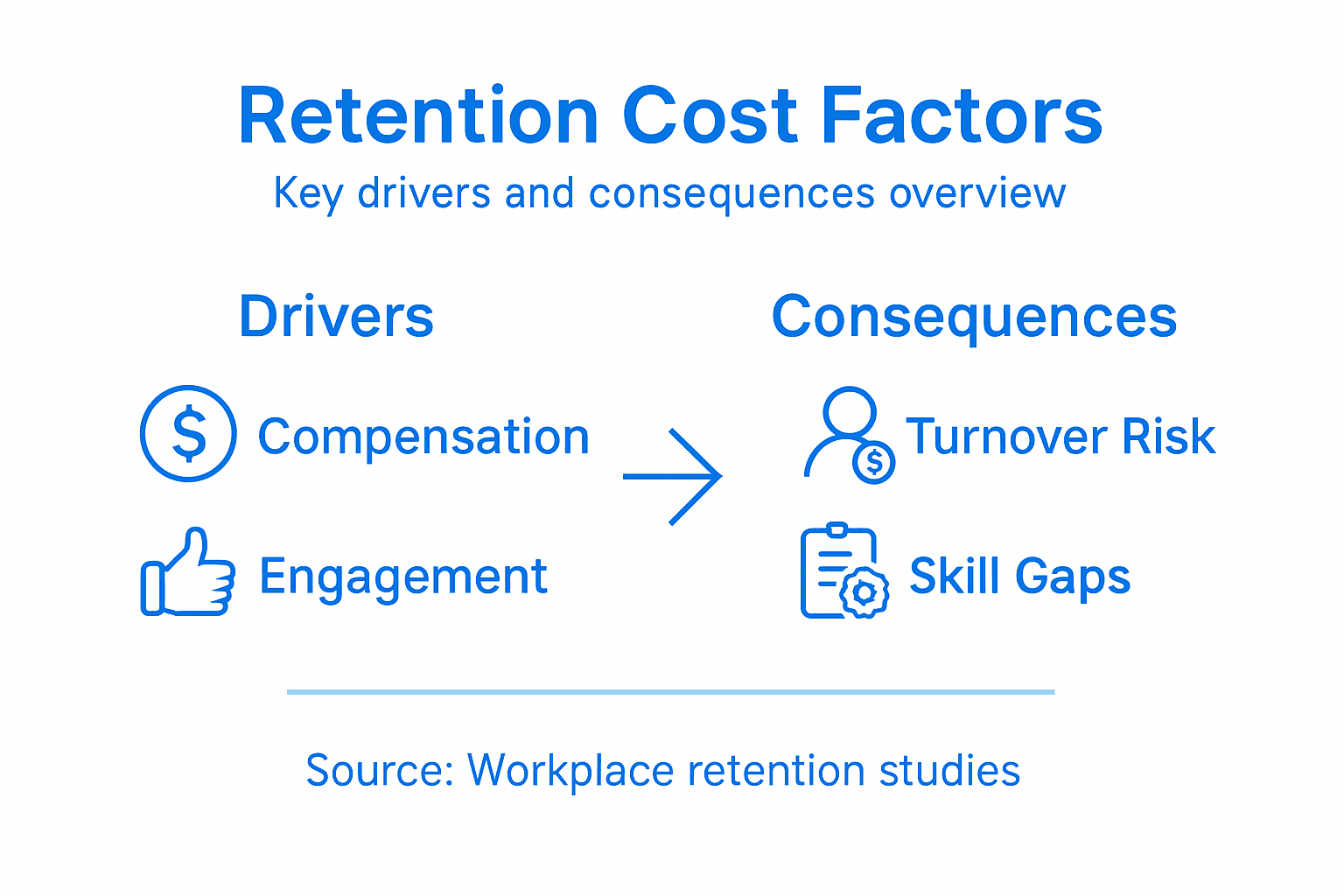
Retention costs can be categorized into two primary types:
Tangible Retention Costs:
- Direct recruitment expenses
- Training and onboarding investments
- Salary and compensation packages
- Relocation and signing bonuses
- Administrative processing costs
Intangible Retention Costs:
- Institutional knowledge loss
- Decreased team morale
- Productivity disruptions
- Cultural momentum erosion
- Reduced team collaboration efficiency
Key drivers of retention costs are multifaceted and interconnected. Leadership must understand that these drivers aren’t isolated factors but a dynamic ecosystem influencing employee commitment. Critical elements include competitive compensation, meaningful work experiences, professional growth opportunities, and a supportive organizational culture.
Retention isn’t about preventing departure—it’s about creating an environment where talented professionals choose to stay and invest their best efforts.
Successful organizations recognize that managing retention costs requires a holistic approach. By systematically addressing both tangible and intangible elements, companies can develop targeted strategies that mitigate financial risks while fostering a compelling workplace environment.
Here’s a summary of how different types of retention costs influence business outcomes:
| Cost Type | Impact on Organization | Example Consequences |
|---|---|---|
| Tangible (Financial) | Direct financial outlay | Increased HR budget |
| Intangible (Cultural) | Reduced team effectiveness | Lower employee engagement |
| Strategic (Long-term) | Loss of competitive edge | Slower innovation rates |
| Operational (Process) | Disruption in workflows | Extended time-to-productivity |
Pro tip: Develop a comprehensive retention dashboard that tracks both financial metrics and qualitative engagement indicators to gain a 360-degree view of your workforce dynamics.
How Retention Cost Impacts Profitability
Retention cost represents more than just an HR expense—it’s a critical financial lever that directly influences an organization’s bottom line. Employee retention research demonstrates that strategic workforce management can significantly transform profitability through proactive talent strategies.
The financial implications of retention costs manifest in several key areas:
- Direct Replacement Expenses
- Recruitment advertising
- Headhunter fees
- Interview and screening processes
- Indirect Productivity Losses
- Knowledge transfer disruptions
- Reduced team performance
- Training time for new employees
- Performance Impact Costs
- Decreased team morale
- Reduced institutional efficiency
- Potential customer relationship disruptions
Empirical studies on organizational performance reveal that companies investing strategically in employee retention can reduce turnover-related expenses by up to 40%. This investment goes beyond compensation, encompassing holistic approaches to workplace engagement, professional development, and cultural alignment.
High-performing organizations understand that retention isn’t an expense—it’s a strategic investment in human capital that directly drives profitability.
Successful companies recognize that every employee departure represents a substantial financial and intellectual loss. By developing comprehensive retention strategies that address both tangible compensation and intangible engagement factors, organizations can create a sustainable competitive advantage that translates directly into improved financial performance.
Pro tip: Conduct annual total cost of turnover analyses to quantify the precise financial impact of your retention strategies and identify targeted improvement opportunities.
Calculating and Tracking Retention Cost Metrics
Accurate measurement of retention costs requires a comprehensive and systematic approach that goes beyond surface-level financial calculations. Organizational retention research emphasizes the importance of developing robust metrics that capture the full spectrum of workforce stability expenses.
Key Retention Cost Metrics to Track:
- Voluntary Turnover Rate
- Percentage of employees leaving by choice
- Segmented by department and tenure
- Direct Replacement Costs
- Recruitment expenses
- Interview and hiring process costs
- Onboarding and training investments
- Indirect Performance Metrics
- Productivity loss during transition
- Knowledge transfer disruptions
- Team morale and engagement impact
Calculating retention costs involves a multifaceted approach that requires detailed financial tracking and holistic organizational analysis. Companies must consider both quantifiable expenses and less tangible performance implications to develop a comprehensive understanding of workforce stability.
Retention cost metrics are not just numbers—they’re a diagnostic tool that reveals the health of your organizational ecosystem.
Successful organizations develop a nuanced framework for tracking retention expenses, moving beyond simple dollar calculations to understand the complex interdependencies between employee satisfaction, performance, and organizational stability. This approach transforms retention metrics from a passive reporting mechanism into an active strategic planning tool.

Pro tip: Create a standardized retention cost scorecard that captures both financial and qualitative metrics, allowing for consistent tracking and comparative analysis across different teams and periods.
Comparing Retention and Turnover Costs for Leaders
Leadership requires a nuanced understanding of the financial dynamics between retention and turnover expenses. Employee retention strategies reveal that these costs are not simply opposing financial calculations, but interconnected components of workforce management.
Comparative Cost Categories:
- Turnover Costs
- Recruitment expenses
- Lost productivity
- Interview and screening processes
- Potential contract termination fees
- Retention Costs
- Salary adjustments
- Professional development programs
- Employee engagement initiatives
- Performance incentive structures
Comprehensive leadership demands recognizing that talent management systems represent more than cost centers—they are strategic investments in organizational stability. The most effective leaders view retention not as an expense, but as a sophisticated approach to maintaining intellectual capital and team performance.
Retention isn’t about preventing departure—it’s about creating an environment where top performers choose to stay and grow.
Successful organizations understand that comparing retention and turnover costs requires a holistic perspective. This means moving beyond simplistic financial calculations to understand the intricate relationship between employee satisfaction, organizational culture, and long-term business performance.
Here’s how retention and turnover strategies differ for leadership analysis:
| Focus Area | Retention Strategy Benefit | Turnover Cost Risk |
|---|---|---|
| Financials | Stable compensation planning | Expensive rehiring process |
| Productivity | Sustained team performance | Loss of momentum |
| Morale | Improved work environment | Declining team motivation |
| Talent Brand | Enhanced employer reputation | Difficulty attracting talent |
Pro tip: Develop a quarterly retention cost dashboard that tracks both financial metrics and qualitative engagement indicators to gain a comprehensive view of workforce dynamics.
Optimizing Retention Costs in Tech Teams
Tech teams face unique challenges in managing workforce retention, requiring sophisticated strategies that go beyond traditional approaches. Career development research reveals that proactive talent management is critical to minimizing costly turnover in competitive technology sectors.
Key Strategies for Retention Cost Optimization:
- Proactive Career Pathing
- Internal promotion opportunities
- Skill development programs
- Clear advancement trajectories
- Competitive Compensation Structures
- Market-aligned salary benchmarks
- Performance-based incentives
- Comprehensive benefits packages
- Workplace Culture Investments
- Flexible work arrangements
- Continuous learning initiatives
- Inclusive team environments
Tech workforce retention strategies demonstrate that organizations must create holistic environments where technical talent feels valued, challenged, and strategically aligned with company objectives. This approach transforms retention from a cost center into a strategic competitive advantage.
Retention in tech isn’t about preventing departure—it’s about creating an ecosystem where top talent chooses to innovate and grow.
Successful tech organizations recognize that optimizing retention costs requires a multidimensional approach. By integrating strategic career development, competitive compensation, and meaningful work experiences, companies can significantly reduce turnover expenses while building high-performance teams.
Pro tip: Implement a quarterly talent mobility review that proactively identifies and addresses potential skill gaps and career progression opportunities within your tech teams.
Take Control of Retention Costs to Strengthen Your Team Stability
Retention costs impact more than just your budget. They reflect deeper challenges like disengagement, knowledge loss, and disruption to productivity. This article highlights how understanding these costs is critical to proactive leadership and sustained organizational health. Common pain points include unpredictable turnover expenses and the difficulty of identifying where to intervene before valuable talent leaves.
OpenElevator gives leaders clear, quantifiable insight so retention problems do not come as a surprise. With early visibility into disengagement and focused insight by team or function, you gain the confidence to act decisively. Replace gut feeling with data-backed recommendations and shared language that fosters productive leadership conversations. Discover how predictive tools help you assess new candidates’ fit to maintain team stability while optimizing retention costs.
Ready to transform retention cost complexities into actionable workforce intelligence Use OpenElevator to detect risks early and safeguard your team’s performance Explore how precise data insights can help you reduce turnover and increase engagement by visiting OpenElevator today. Take the first step toward measured, strategic retention with OpenElevator.
Frequently Asked Questions
What are the main components of retention cost in the workplace?
Retention cost includes direct financial investments in compensation, training and professional development expenses, recruitment and onboarding resources, cultural and engagement initiatives, and knowledge transfer expenses.
How do retention costs influence organizational profitability?
Retention costs directly impact profitability by reducing direct replacement expenses, minimizing indirect productivity losses, and enhancing overall team performance, leading to a sustainable competitive advantage.
What metrics should organizations track to measure retention costs?
Organizations should track the voluntary turnover rate, direct replacement costs (such as recruitment and onboarding expenses), and indirect performance metrics related to productivity and team morale.
What strategies can organizations implement to optimize retention costs?
To optimize retention costs, organizations can focus on proactive career pathing, competitive compensation structures, and investments in workplace culture to create an environment that retains talent and minimizes turnover.