
Over 50 percent of American tech leaders cite employee retention as their top organizational risk. For C-level executives in mid-sized technology companies, turnover means far more than short-term disruption—it signals deeper issues in culture, alignment, and long-term growth. This article unpacks why retention failures occur, what underpins workforce disengagement in American businesses, and how to build a workplace where your top contributors want to stay.
Table of Contents
- Defining Employee Retention Failure
- Types of Retention Challenges in Tech
- Key Drivers of High Turnover
- Impact of Values and Interpersonal Misalignment
- Common Mistakes in Retention Strategies
- Solutions for Sustainable Workforce Engagement
Key Takeaways
| Point | Details |
|---|---|
| Understanding Retention Failure | Employee retention failure is a complex issue driven by unmet needs, misaligned expectations, and workplace challenges, requiring proactive strategies. |
| Critical Human Needs | Addressing fundamental human needs, such as safety, growth, contribution, and connection, is vital for enhancing employee loyalty and reducing turnover. |
| Unique Tech Challenges | Tech organizations face distinct retention issues, including career stagnation and cultural misalignment, necessitating tailored engagement strategies. |
| Holistic Engagement Strategies | Effective workforce engagement must move beyond transactional relationships, focusing on meaningful professional development and a partnership-oriented environment. |
Defining Employee Retention Failure
Employee retention failure represents more than just workers walking out the door. It’s a complex ecosystem of unmet needs, misaligned expectations, and systemic workplace challenges that gradually erode an organization’s human capital. When talented professionals disconnect from their roles, companies experience far more than simple personnel turnover – they suffer strategic disruption.
Understanding retention failure requires examining multiple interconnected factors. Advanced data engineering techniques reveal that employee departure is rarely a sudden decision but a gradual process triggered by cumulative workplace experiences. These experiences encompass four critical human needs: safety, growth, contribution, and connection. When organizations fail to address these fundamental requirements, employees begin mentally checking out long before they physically leave.
The root causes of retention failure often stem from leadership blind spots. Most executives view turnover through a transactional lens – assuming compensation is the primary retention driver. However, research demonstrates that interpersonal dynamics, cultural alignment, and individual value perception play substantially more significant roles. An employee might earn a competitive salary but still feel fundamentally disconnected if their core values and professional aspirations are not genuinely understood or supported.
Modern workforce dynamics demand a nuanced, proactive approach to understanding retention challenges. Companies must shift from reactive hiring and firing models to predictive, human-centric strategies that anticipate and address potential disengagement before it manifests.
Pro Tip: Retention Diagnostic: Conduct quarterly confidential surveys measuring employee sentiment across safety, growth, contribution, and connection dimensions to identify potential retention risks before they become critical.
The table below summarizes critical human needs and their influence on retention:
| Human Need | Effect of Addressing | Effect of Neglecting |
|---|---|---|
| Safety | Loyal, secure employees | Anxiety and high turnover |
| Growth | Motivation and innovation | Stagnation and disengagement |
| Contribution | Strong organizational ties | Lack of ownership, withdrawal |
| Connection | Collaborative team culture | Isolation, lack of cohesion |
Types of Retention Challenges in Tech
Tech organizations face unique retention challenges that transcend traditional workforce dynamics. Unlike other industries, technology professionals operate in an ecosystem driven by continuous learning, innovation, and complex interpersonal dynamics. Comprehensive talent retention frameworks reveal that tech companies struggle with multifaceted retention issues that go far beyond simple compensation models.
The primary retention challenges in tech can be categorized into five critical dimensions. First, career stagnation represents a significant threat – talented tech professionals require constant intellectual stimulation and clear advancement pathways. When engineers or developers perceive their growth potential is limited, they quickly become disengaged. Second, cultural misalignment emerges as another substantial retention risk. Tech workers prioritize workplace environments that foster creativity, autonomy, and meaningful technological impact.

Third, technological companies often encounter retention challenges related to team dynamics and interpersonal compatibility. High-performing tech teams require not just technical skills but also nuanced collaboration abilities. A single disruptive team member or ineffective management approach can trigger cascading retention problems. Fourth, compensation complexity in tech goes beyond base salary – stock options, learning opportunities, cutting-edge project assignments, and flexible work arrangements become critical retention levers.
Finally, the tech industry’s rapid evolution means that retention strategies must be continuously adaptive. Companies that fail to recognize the dynamic nature of technological talent management will consistently struggle to maintain their most valuable human resources. Understanding these intricate retention challenges requires a holistic, proactive approach that considers individual professional aspirations and organizational ecosystem requirements.
Pro Tip: Talent Mapping: Develop comprehensive individual development plans for each tech professional, explicitly outlining potential career trajectories, skill development opportunities, and personalized growth milestones to demonstrate long-term organizational investment.
Here’s a comparison of major retention challenges and recommended solutions in tech environments:
| Retention Challenge | Typical Impact on Workforce | Proactive Solution |
|---|---|---|
| Career stagnation | Loss of top talent, disengagement | Create custom skill development and growth plans |
| Cultural misalignment | Lower job satisfaction, attrition | Foster innovation and strengthen cultural fit |
| Team dynamic issues | Poor collaboration, turnover | Invest in team building and leadership training |
| Compensation complexity | Hiring delays, turnover | Offer diverse benefits, equity, and flexible rewards |
| Rapid industry evolution | Outdated skills, disengagement | Continuous learning and adaptive role structures |
Key Drivers of High Turnover
The contemporary workplace is locked in a perpetual competitive battle for talent, where understanding turnover drivers becomes mission-critical for organizational survival. High employee turnover is not a singular phenomenon but a complex interplay of psychological, professional, and organizational factors that systematically erode workforce stability.
Primary drivers of high turnover can be distilled into several interconnected dimensions. Compensation represents only the surface-level motivation – while competitive salaries matter, employees increasingly prioritize holistic workplace experiences. Meaningful work, professional growth opportunities, cultural alignment, and interpersonal dynamics now carry substantially more weight in retention strategies. When organizations fail to create environments that satisfy these deeper psychological needs, talented professionals rapidly become disengaged and start exploring alternative employment opportunities.
Moreover, corporate knowledge erosion emerges as a critical consequence of persistent high turnover. Each departing employee takes with them institutional memory, specialized skills, and intricate understanding of complex organizational processes. This knowledge drain creates multiplicative challenges – not just replacing a worker, but reconstructing the nuanced expertise that took years to develop. Small to midsize companies are particularly vulnerable, as they lack extensive redundancy mechanisms and rely more heavily on individual contributor expertise.
The most sophisticated organizations recognize that retention is fundamentally about creating human-centric environments. This means moving beyond transactional employment models and developing comprehensive engagement strategies that address individual professional aspirations, personal growth trajectories, and intrinsic motivational patterns. Successful retention requires a holistic approach that treats employees as complex, evolving professionals with multidimensional needs and expectations.
Pro Tip: Retention Diagnostic: Conduct quarterly confidential interviews and sentiment assessments to proactively identify potential disengagement signals before they manifest as resignation, allowing targeted intervention and personalized retention strategies.
Impact of Values and Interpersonal Misalignment
Job embeddedness theory reveals that employee retention transcends simple transactional relationships, diving deep into the intricate psychological landscape of workplace connections. Values and interpersonal alignment represent fundamental cornerstones that determine whether talented professionals choose to remain committed to an organization or seek alternative opportunities.
At the core of retention challenges lies a profound disconnect between individual employee values and organizational culture. When personal professional aspirations clash with workplace expectations, employees experience a sense of alienation that gradually erodes their psychological commitment. This misalignment manifests through multiple channels – from communication styles and decision-making approaches to fundamental beliefs about professional growth, innovation, and workplace collaboration.
Moreover, diversity challenges in organizational structures significantly amplify interpersonal misalignment risks. Workplaces that fail to create inclusive environments where diverse perspectives are genuinely valued inadvertently create friction points that undermine team cohesion. These friction points emerge not just through overt conflicts but through subtle microaggressions, unspoken cultural expectations, and systemic barriers that prevent meaningful cross-cultural collaboration.
The most sophisticated organizations recognize that values alignment requires continuous, intentional effort. This means moving beyond superficial diversity statements and developing robust mechanisms that actively seek to understand, respect, and integrate diverse professional perspectives. Successful retention strategies must create environments where individual differences are not just tolerated but actively celebrated as sources of organizational strength and innovation.
Pro Tip: Values Alignment Assessment: Implement quarterly structured dialogues that explicitly explore individual team members’ professional values, personal growth expectations, and sense of organizational belonging, using these insights to continuously recalibrate engagement strategies.
Common Mistakes in Retention Strategies
Retention strategies often fail due to fundamental misunderstandings about modern workforce dynamics. Corporate approaches to talent management frequently reveal systemic errors that inadvertently push talented professionals toward the exit. These mistakes are rarely intentional but represent deeply ingrained organizational blind spots that progressively undermine workforce stability.
One critical mistake involves treating compensation as the primary retention mechanism. While competitive salaries matter, top performers seek holistic workplace experiences that transcend monetary compensation. They want meaningful work, clear growth trajectories, genuine professional development opportunities, and environments that respect their individual potential. Organizations that reduce retention to a simple financial transaction fundamentally misunderstand the complex psychological needs of contemporary professionals.
Another significant error emerges in management’s approach to workplace flexibility and autonomy. Traditional hierarchical structures that emphasize rigid control and micromanagement directly contradict the professional expectations of skilled knowledge workers. Modern employees – particularly in technology and creative sectors – require environments that prioritize outcomes over prescriptive processes. When organizations fail to provide meaningful autonomy, they create psychological friction that gradually erodes employee engagement and commitment.
Furthermore, many companies mistakenly view retention as a reactive challenge instead of a proactive strategic imperative. They respond to turnover through exit interviews and compensation adjustments, missing the fundamental requirement of continuous engagement. Successful retention demands ongoing, intentional efforts to understand individual professional aspirations, create supportive developmental pathways, and build genuine interpersonal connections that extend beyond transactional employment relationships.
Pro Tip: Engagement Audit: Conduct comprehensive quarterly assessments that measure not just employee satisfaction, but their sense of professional growth, organizational alignment, and perceived future potential within the company.
Solutions for Sustainable Workforce Engagement
Sustainable workforce engagement demands a holistic, proactive approach that transcends traditional human resource management paradigms. Strategic retention methodologies underscore the critical importance of understanding and addressing the nuanced psychological needs of contemporary professionals.
Effective engagement solutions must be multidimensional, targeting four fundamental human needs: safety, growth, contribution, and connection. This requires developing comprehensive organizational strategies that go beyond surface-level perks and monetary compensation. Successful companies create ecosystems where employees feel genuinely valued, professionally challenged, and intrinsically connected to broader organizational missions. This means designing clear career progression pathways, providing meaningful professional development opportunities, and cultivating workplace cultures that prioritize psychological safety and authentic interpersonal relationships.
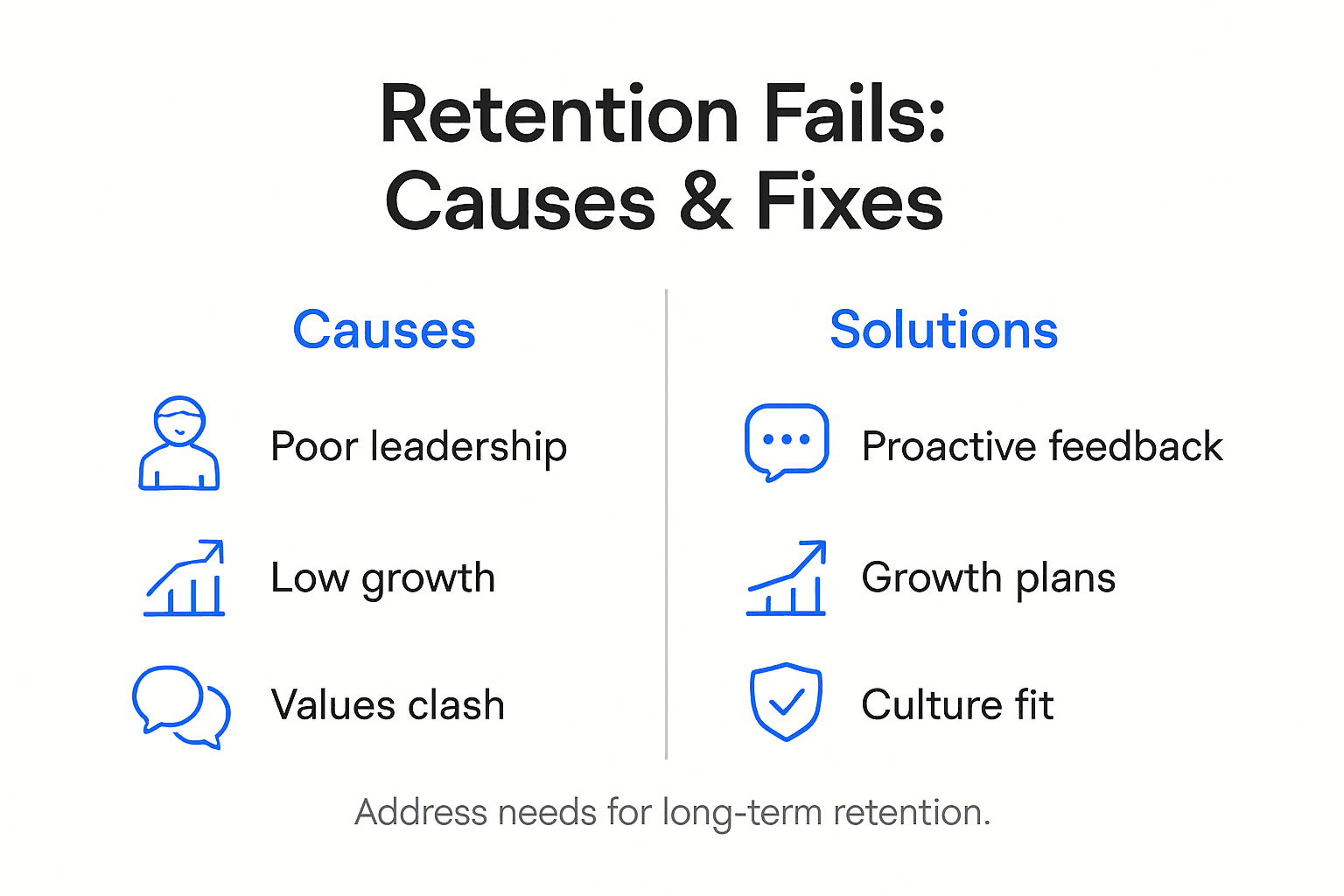
Technology plays a pivotal role in modern engagement strategies. Advanced predictive analytics and sentiment measurement tools enable organizations to move from reactive to proactive talent management. By continuously monitoring employee experiences, companies can identify potential disengagement signals early, allowing targeted interventions before talented professionals contemplate departure. These interventions might include personalized coaching, skills development programs, role realignment, or addressing specific interpersonal team dynamics that could be creating friction.
Ultimately, sustainable workforce engagement requires a fundamental reimagining of the employer-employee relationship. Organizations must transition from transactional employment models to genuine partnership ecosystems that prioritize mutual growth, respect, and continuous learning. This means creating transparent communication channels, offering meaningful autonomy, recognizing individual contributions, and demonstrating a genuine commitment to employee professional and personal development.
Pro Tip: Engagement Mapping: Develop individualized professional development roadmaps that explicitly connect personal career aspirations with organizational opportunities, ensuring employees see a clear, compelling future within the company.
Unlock the True Reasons Behind Employee Turnover and Retain Your Top Talent
Understanding why retention fails requires more than just tracking who leaves your company. It demands insight into values alignment, interpersonal fit, and meeting employees’ fundamental needs for safety, growth, contribution, and connection. As highlighted in the article, overlooking these critical factors leads to disengagement and costly turnover. If your organization struggles with workforce stability or wants to move beyond reactive retention efforts, it is time to embrace a data-driven solution that offers clarity and actionable insights.
Discover how OpenElevator leverages a proprietary algorithm to reveal which employees are truly at risk of quitting by measuring values and interpersonal alignment in just five minutes of bias-free surveying. Our platform empowers leaders to identify retention risks early and implement targeted strategies that satisfy the human needs crucial for engagement. Join startups to Fortune 500 companies that trust OpenElevator to transform retention challenges into long-term workforce success. Take action now and see the difference of knowing versus guessing who will stay and thrive by exploring OpenElevator’s solution today.
Frequently Asked Questions
What are the main reasons for employee retention failure?
Employee retention failure often arises from unmet human needs such as safety, growth, contribution, and connection. When organizations do not address these needs, employees can become disengaged and eventually leave.
How can organizations proactively identify retention risks?
Organizations can conduct quarterly confidential surveys to assess employee sentiment in areas like safety, growth, contribution, and connection. This helps identify potential disengagement early and allows for timely interventions.
What role does workplace culture play in employee retention?
Workplace culture significantly impacts employee retention. A culture that promotes creativity, autonomy, and alignment with personal values tends to enhance job satisfaction and commitment, reducing the risk of turnover.
What are effective strategies to improve employee engagement and retention?
Effective strategies include creating personalized development plans, fostering open communication, providing opportunities for professional growth, and ensuring alignment between employee values and organizational culture.