Employee benefits matter for retention, but they do not fix every retention problem.
A better benefits package can help employees feel supported, secure, and valued. But if someone is misaligned with their manager, disconnected from the team, blocked from growth, or quietly losing trust in leadership, benefits alone will not keep them committed.
That is where many companies get retention wrong. They assume better perks will solve deeper issues. Sometimes they help. Sometimes they only mask the real problem until the employee resigns.
A team can have strong benefits and still carry hidden retention risk.
This guide explains the role of benefits in employee retention, which benefits can support loyalty, where benefits fall short, and why leaders need earlier visibility into the deeper issues that cause good people to leave.
Table of Contents
Key Takeaways
| Point | Details |
|---|---|
| Benefits support retention | Strong benefits can help employees feel valued, secure, and supported. |
| Benefits do not solve everything | Perks cannot fix poor manager relationships, team friction, lack of growth, or values misalignment. |
| Loyalty comes from more than compensation | Employees stay when they feel aligned, recognized, supported, and able to grow. |
| Personalization matters | Different employees value different benefits depending on life stage, goals, and needs. |
| Visibility is still required | Leaders need to see where hidden retention risk is forming before benefits fail to prevent turnover. |
Defining Employee Benefits for Retention
Employee benefits are the non-salary offerings companies provide to support employees’ health, financial security, well-being, growth, and work-life balance.
Common benefits include:
– Health insurance
– Retirement plans
– Paid time off
– Flexible work options
– Wellness programs
– Mental health support
– Professional development
– Parental leave
– Performance incentives
– Financial planning support
Benefits can play an important role in employee retention because they influence whether employees feel supported by the company. Good benefits can reduce stress, improve loyalty, and make it harder for competitors to pull employees away.
But benefits are only one part of retention.
The mistake is treating benefits as a substitute for leadership visibility. A strong benefits package will not solve hidden friction, manager-employee misalignment, lack of purpose, or limited growth.
Most companies assume employees stay because the package is competitive. That is why they miss the deeper question:
Are employees still aligned, engaged, and committed beneath the surface?
Types of Benefits That Drive Loyalty
The benefits that drive loyalty are the ones employees actually experience as valuable.
A generic benefits package may look good on paper but still fail to address what different employees need. A parent may value flexibility. A younger employee may value growth. A senior employee may care more about retirement security. A high performer may value autonomy, recognition, and meaningful advancement.
Benefits that can support retention include:
Health and Wellness Benefits
– Medical, dental, and vision coverage
– Mental health support
– Wellness stipends
– Stress management resources
– Preventive care programs
Financial Security Benefits
– Retirement contributions
– Bonuses
– Equity or profit sharing
– Financial planning resources
– Emergency savings support
Flexibility Benefits
– Remote or hybrid work
– Flexible schedules
– Paid time off
– Caregiver support
– Parental leave
Growth Benefits
– Training budgets
– Coaching
– Mentorship
– Certification support
– Leadership development
Recognition Benefits
– Performance rewards
– Public or private recognition
– Career advancement opportunities
– Meaningful project ownership
The best benefits reinforce a simple message: the company understands what employees need to do good work and build a sustainable future.
But even strong benefits can fail when the real issue is misalignment, friction, or lack of trust.
How Benefits Influence Employee Engagement
Benefits influence engagement when they reduce stress, support growth, and show employees that the company is paying attention to their real needs.
But benefits do not automatically create engagement.
An employee can have excellent health coverage and still feel disconnected from the team. They can have flexible work and still feel unsupported by their manager. They can receive a wellness stipend and still feel their role no longer fits where they want to grow.
Benefits support engagement when they are connected to the employee experience.
They should help employees feel:
– Supported
– Respected
– Recognized
– Secure
– Trusted
– Able to grow
– Aligned with the company’s direction
A realistic scenario: a company offers strong benefits, flexible work, and competitive pay. On paper, the employee experience looks strong. But one key employee feels unseen, underused, and frustrated with their manager. They stay quiet because the benefits are good, but their commitment is weakening.
This feels fine until they resign.
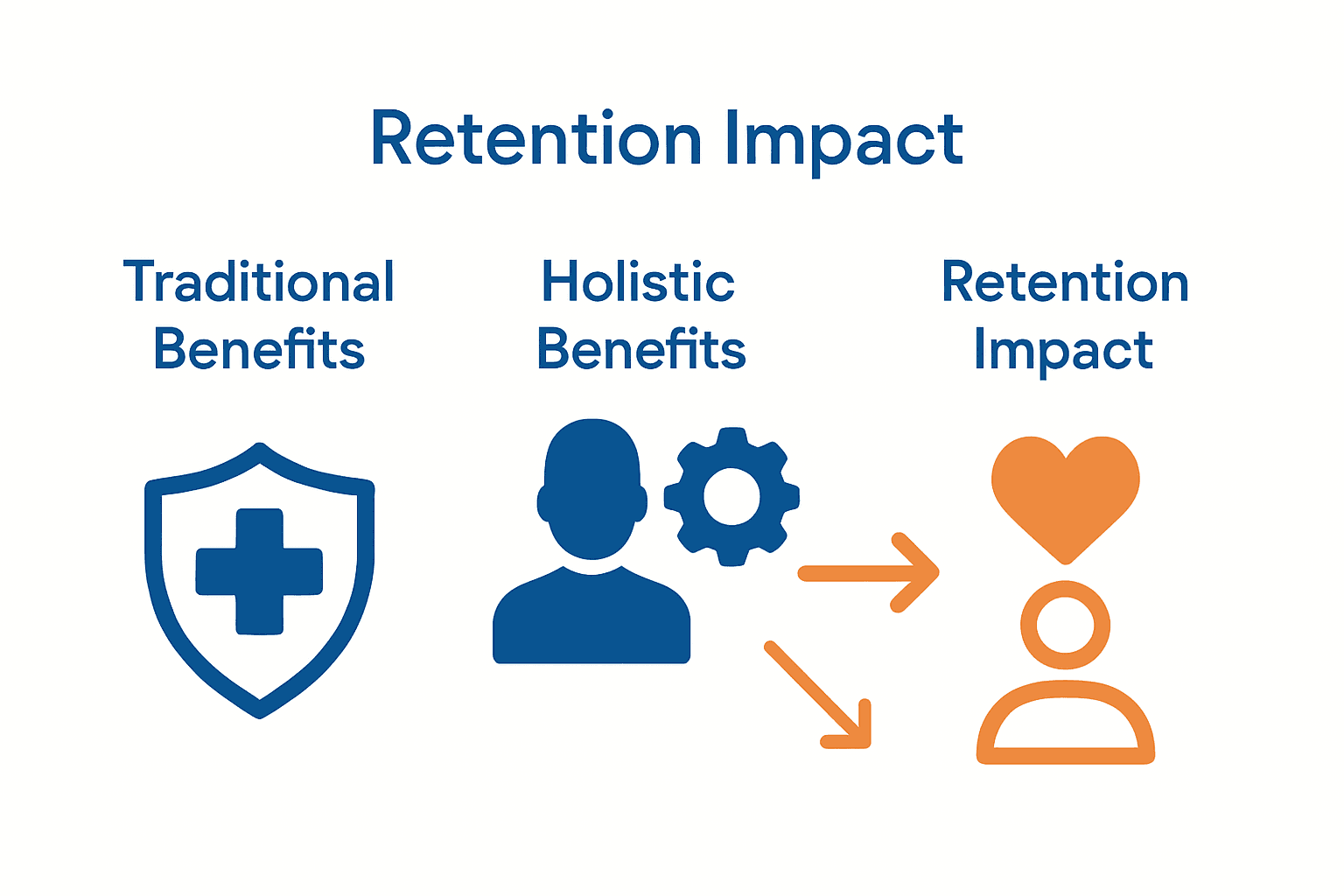
The point is not that benefits do not matter. They do. The point is that benefits should not blind leaders to the deeper retention risks that perks cannot solve.
Best Practices for Implementing Benefits
The best benefits strategy starts with understanding what employees actually value.
Do not assume the same benefits matter equally to everyone. Different employees have different needs, pressures, and motivations. A strong benefits program gives employees support while helping leaders understand whether the broader employee experience is working.
Best practices include:
Ask Employees What They Value
Use surveys, team conversations, and one-on-one discussions to understand which benefits employees use, which they value, and what support they still need.
Segment Needs Where Appropriate
Employees at different life stages may value different benefits. Personalization helps benefits feel relevant instead of generic.
Communicate Clearly
A benefit employees do not understand is a wasted benefit. Make options simple, clear, and easy to access.
Connect Benefits to Retention Goals
Benefits should support the company’s larger retention strategy. They should reduce stress, support growth, improve flexibility, and strengthen loyalty.
Review Benefits Regularly
Employee needs change. Benefits should be reviewed and adjusted as the team, business, and labor market change.
Watch for Hidden Risk
Do not assume benefit satisfaction means retention risk is low. Leaders still need to watch for disengagement, manager friction, team tension, lack of growth, and values misalignment.
The better question is not, “Do we offer good benefits?”
The better question is:
“Are our benefits supporting the real reasons people stay, or are we missing the deeper risks that cause them to leave?”
Common Pitfalls and How to Avoid Them
The biggest mistake companies make with benefits is believing perks can compensate for a broken employee experience.
Benefits can support retention, but they cannot replace strong management, clear expectations, growth, trust, recognition, and team alignment.
Common pitfalls include:
Using Benefits to Avoid Hard Conversations
If employees are frustrated with managers, unclear on expectations, or disconnected from the company’s direction, better perks will not fix the root problem.
Offering Benefits Employees Do Not Value
A benefit that looks impressive but does not match employee needs will not strengthen retention.
Communicating Benefits Poorly
Employees may not appreciate or use benefits if they do not understand what is available or how to access it.
Ignoring Manager-Employee Misalignment
A strong benefits package will not overcome a weak manager relationship.
Assuming Low Turnover Means Benefits Are Working
Low turnover may simply mean people have not left yet. Hidden retention risk may still be building.
Failing to Connect Benefits to Growth
Benefits that support learning, career development, and flexibility can strengthen retention more than surface-level perks.
Benefits are valuable, but they are not a complete retention strategy. They work best when paired with earlier visibility into what employees need, where friction exists, and who may be at risk of leaving.
See the Retention Risks Benefits Alone Cannot Fix
Benefits can support employee retention, but they do not reveal every risk.
A team can have strong benefits while disengagement, manager-employee misalignment, values disconnect, or hidden friction is already building beneath the surface. By the time someone resigns, leaders are often reacting to a problem that started much earlier.
OpenElevator helps CEOs, founders, senior leaders, and managers detect retention risk, team misalignment, and hidden friction before they become costly resignations. The platform uses a short, bias-free team scan and a proprietary algorithm to reveal where leaders may need to act earlier.
Start with a free team scan for up to 10 team members and see what may be hidden inside your own team.
Frequently Asked Questions
What are employee benefits for retention?
Employee benefits for retention are non-salary offerings that help employees feel supported, secure, and valued. They may include health insurance, retirement plans, paid time off, flexible work, wellness support, and professional development.
How do benefits affect employee retention?
Benefits affect employee retention by reducing stress, supporting well-being, improving financial security, and making employees feel valued. But benefits alone cannot fix manager friction, lack of growth, team misalignment, or disengagement.
What benefits help retain employees?
Benefits that can help retain employees include health coverage, retirement contributions, flexible work, paid time off, mental health support, career development, recognition programs, and family support benefits.
Can better benefits reduce turnover?
Better benefits can reduce turnover when they address real employee needs. However, turnover may still happen if employees feel unsupported, misaligned with their manager, disconnected from the team, or blocked from growth.
What are common mistakes companies make with employee benefits?
Common mistakes include offering benefits employees do not value, communicating benefits poorly, assuming perks can fix deeper workplace problems, and treating benefit satisfaction as proof that retention risk is low.
How can leaders know whether benefits are working?
Leaders can assess whether benefits are working by reviewing employee feedback, benefit usage, retention trends, engagement signals, manager-employee alignment, and whether employees feel supported in ways that actually matter to them.
How does OpenElevator help with employee retention?
OpenElevator helps leaders detect retention risk, team misalignment, and hidden friction before they become costly resignations. It gives CEOs, founders, senior leaders, and managers clearer visibility into where they may need to act earlier.
Is there a free way to try OpenElevator?
Yes. OpenElevator offers a free team scan for up to 10 team members so leaders can see retention risk, alignment gaps, and hidden friction inside their own team.