
Employee engagement can look stable while retention risk is already forming.
A team may still be productive. Managers may still say everything is fine. Employees may still answer surveys, attend meetings, and complete work while disengagement, manager-employee friction, values misalignment, or team tension is building beneath the surface.
That is why leaders are looking for platforms that can help predict employee engagement and detect retention risk earlier.
But not every platform solves the same problem.
Some tools focus on engagement surveys. Some focus on performance management. Some are built for frontline listening. Some analyze workforce data across large systems. Others help leaders see where retention risk, team misalignment, and hidden friction may already be forming.
This guide compares six platforms that help predict employee engagement and retention risk: OpenElevator, 15Five, Quantum Workplace, WorkStep, Betterteem AI, and L10 AI. It also explains where each platform is strongest, where it may fall short, and how leaders can choose the right tool for earlier visibility.
Table of Contents
Key Takeaway
| Point | Details |
|---|---|
| Engagement prediction is not the same as retention visibility | A platform may measure sentiment but still miss manager friction, values misalignment, or hidden team tension. |
| Different tools solve different problems | Some platforms focus on performance, some on surveys, some on frontline feedback, and some on workforce analytics. |
| OpenElevator focuses on hidden retention risk | OpenElevator helps leaders detect retention risk, values alignment, interpersonal alignment, and hidden team friction earlier. |
| Actionability matters more than dashboards | The best platform should help leaders know where to act before resignation becomes the signal. |
| The right fit depends on company needs | Growing companies need tools that match their workforce type, data maturity, leadership habits, and retention risk. |
OpenElevator
At a Glance
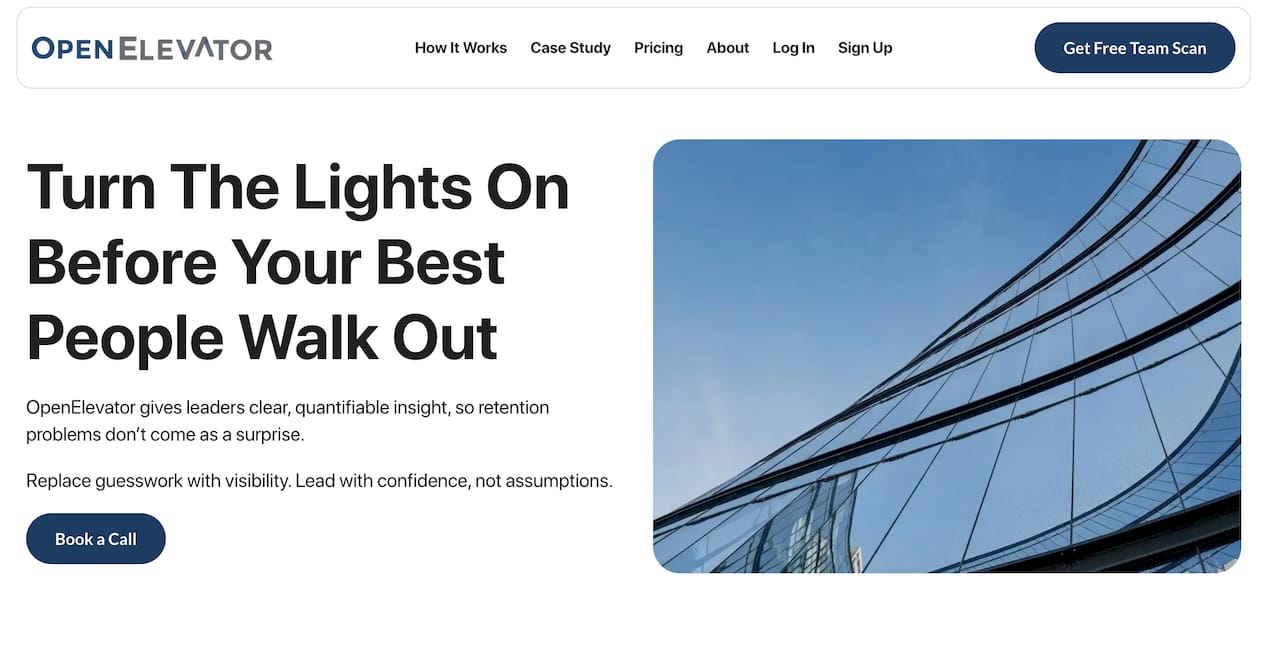
OpenElevator is a leadership visibility platform that helps CEOs, founders, senior leaders, and managers detect retention risk, values misalignment, interpersonal friction, and hidden team tension before they become costly resignations.
Many leaders sense when something is off inside a team, but they lack clear visibility into what is actually happening beneath the surface. Employees may still attend meetings, complete work, and avoid raising concerns while disengagement or misalignment is already building.
OpenElevator helps leaders see those risks earlier.
The platform uses a short, bias-free team scan and a proprietary algorithm to reveal retention risk, values alignment, interpersonal alignment, team dynamics, and hiring fit.
Core Features
| Feature | What It Helps Leaders See |
|---|---|
| Retention risk visibility | Where employees or teams may need earlier attention |
| Values alignment | Whether employees feel aligned with the company environment and direction |
| Interpersonal alignment | Where manager-employee or team fit may be creating friction |
| Team dynamics insight | Where hidden tension, weak connection, or misalignment may be forming |
| Hiring fit support | How well candidates may align with the manager, team, and company culture |
| Free team scan | Gives leaders an easy first look at what may be hidden inside their team |
Pros
| Pro | Why It Matters |
|---|---|
| Focuses on hidden retention risk | Helps leaders see risk before resignation becomes the signal |
| Goes beyond engagement scores | Looks at alignment, team dynamics, and interpersonal fit |
| Built for leadership action | Helps CEOs, founders, senior leaders, and managers know where attention may be needed |
| Supports retention and hiring | Helps reduce avoidable turnover and improve fit before people join the team |
| Practical for growing companies | Gives useful visibility without requiring an enterprise analytics buildout |
Limitations
| Limitation | What to Know |
|---|---|
| Requires leadership follow-through | Insight only matters if leaders act on what they see |
| Not a full HRIS replacement | OpenElevator adds a visibility layer rather than replacing payroll, ATS, or HR administration tools |
| Best for companies with people complexity | Very small teams may not need the same level of retention analytics yet |
Who It’s For
OpenElevator is best for CEOs, founders, senior leaders, managers, and growing companies that want to reduce avoidable turnover by seeing retention risk earlier.
It is especially relevant for companies where manager fit, team dynamics, values alignment, and hiring fit affect performance and retention.
Unique Value Proposition
OpenElevator stands out because it does not just measure engagement. It helps leaders understand where retention risk may be forming and why.
A team can look stable while values misalignment, manager-employee friction, hidden team tension, or disengagement is already forming beneath the surface.
OpenElevator gives leaders clearer visibility into those risks before resignation becomes the first obvious signal.
Pricing
OpenElevator offers a free team scan for up to 10 team members. Broader pricing depends on company size and scope.
Website: https://www.openelevator.com
15Five
At a Glance
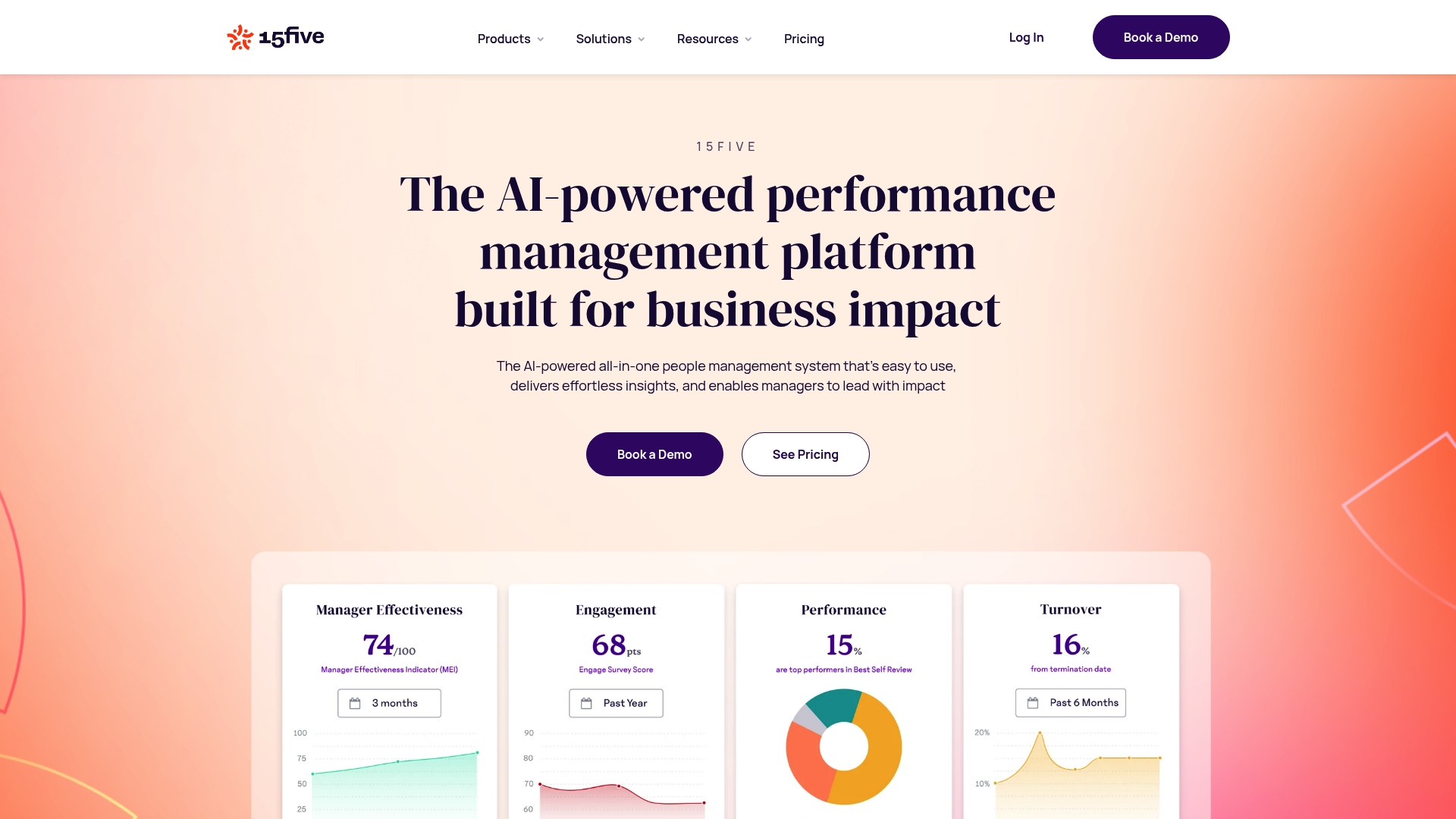
15Five is a performance management and employee engagement platform that combines reviews, one-on-ones, OKRs, surveys, and analytics.
It is useful for companies that want to centralize performance conversations, manager enablement, engagement surveys, and employee development in one platform.
Its strength is broad performance and engagement workflow management. Its limitation is that it may not provide the same specific visibility into values alignment, interpersonal alignment, and hidden team friction that a retention visibility platform provides.
Core Features
| Feature | What It Supports |
|---|---|
| Performance reviews | Helps structure employee performance conversations |
| One-on-ones | Supports regular manager-employee check-ins |
| OKRs and goals | Helps align employee work with company priorities |
| Engagement surveys | Measures employee sentiment and engagement patterns |
| Manager enablement | Provides coaching and development support for managers |
| Analytics | Helps HR leaders identify trends across engagement and performance |
Pros
| Pro | Why It Matters |
|---|---|
| Strong performance management workflow | Helps companies replace fragmented review and feedback processes |
| Combines engagement and performance | Gives HR teams a broader view of employee experience |
| Manager enablement focus | Helps managers improve feedback and coaching habits |
| Integrates with HR systems | Can fit into broader HR workflows |
| Good for structured organizations | Works well when companies want repeatable performance cycles |
Limitations
| Limitation | What to Know |
|---|---|
| Can become complex | Teams may need training to use advanced features well |
| Add-ons can raise cost | Total cost may increase depending on modules |
| Broader than retention visibility | It may measure engagement but not fully reveal hidden friction or alignment risk |
| Depends on manager adoption | Value drops if managers do not use the workflow consistently |
Who It’s For
15Five is best for HR leaders and managers who want a combined performance, engagement, and manager enablement platform.
It is especially useful for organizations that need structured reviews, one-on-ones, OKRs, and engagement surveys in one place.
Pricing
| Plan | Pricing |
|---|---|
| Engage | $4 per user per month billed annually |
| Perform | $11 per user per month billed annually |
| Total Platform | $16 per user per month billed annually |
| Add-ons | Additional costs may apply for coaching, AI, and compensation modules |
Website: https://15five.com
Quantum Workplace HR Platform
At a Glance
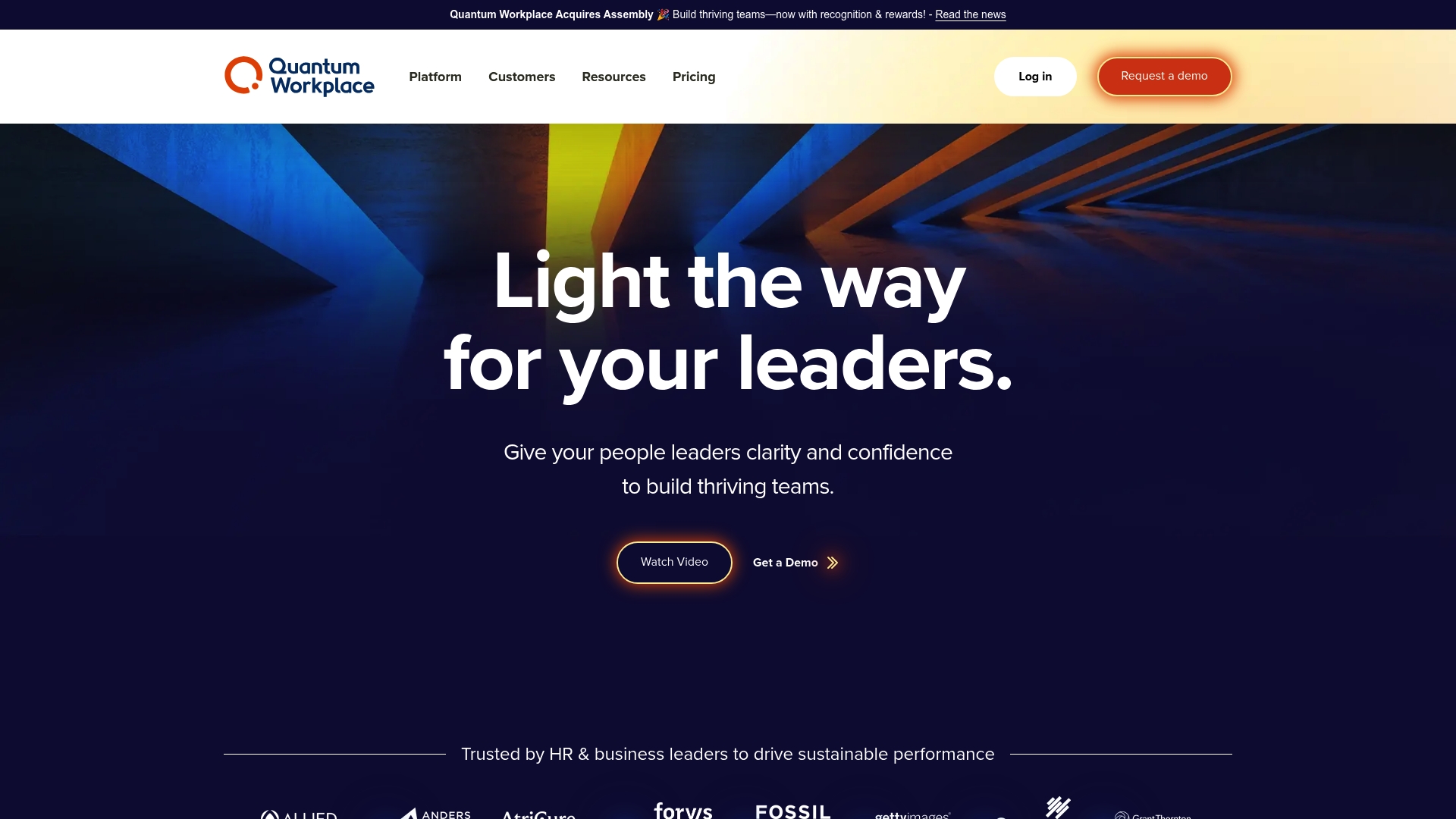
Quantum Workplace is an HR platform that connects employee engagement, performance, development, recognition, and analytics.
It is useful for organizations that want a broader talent platform with engagement insights and performance data in one system.
Its strength is consolidated HR insight. Its limitation is that it may require more budget, implementation support, and internal change management than a company needs if the main problem is earlier retention visibility.
Core Features
| Feature | What It Supports |
|---|---|
| Engagement surveys | Helps measure employee sentiment and engagement trends |
| Performance tools | Supports reviews, feedback, and goal alignment |
| Recognition | Helps companies reinforce contribution and culture |
| Development planning | Supports growth and employee development conversations |
| Predictive analytics | Helps identify patterns related to engagement and retention |
| Benchmarks and reporting | Gives HR leaders comparative insight across teams |
Pros
| Pro | Why It Matters |
|---|---|
| Broad HR platform | Combines several talent functions in one place |
| Strong analytics | Helps leaders see engagement and performance patterns |
| Recognition and development tools | Supports ongoing employee experience |
| Vendor support | Can help with implementation and adoption |
| Scalable | Better suited for growing and larger organizations |
Limitations
| Limitation | What to Know |
|---|---|
| Higher entry cost | May be expensive for smaller organizations |
| More complex rollout | Breadth of features requires onboarding and training |
| May be more than needed | Companies seeking simple retention visibility may not need the full platform |
| Customization can add cost | Deeper setup may increase total investment |
Who It’s For
Quantum Workplace is best for mid-sized and larger organizations that want an integrated engagement, performance, development, and recognition platform.
It is a better fit when the company wants a broader HR platform, not just a retention risk visibility layer.
Pricing
Pricing starts at a minimum package level and varies based on product mix, organization size, and implementation scope. Buyers should request a custom quote.
Website: https://quantumworkplace.com
WorkStep
At a Glance
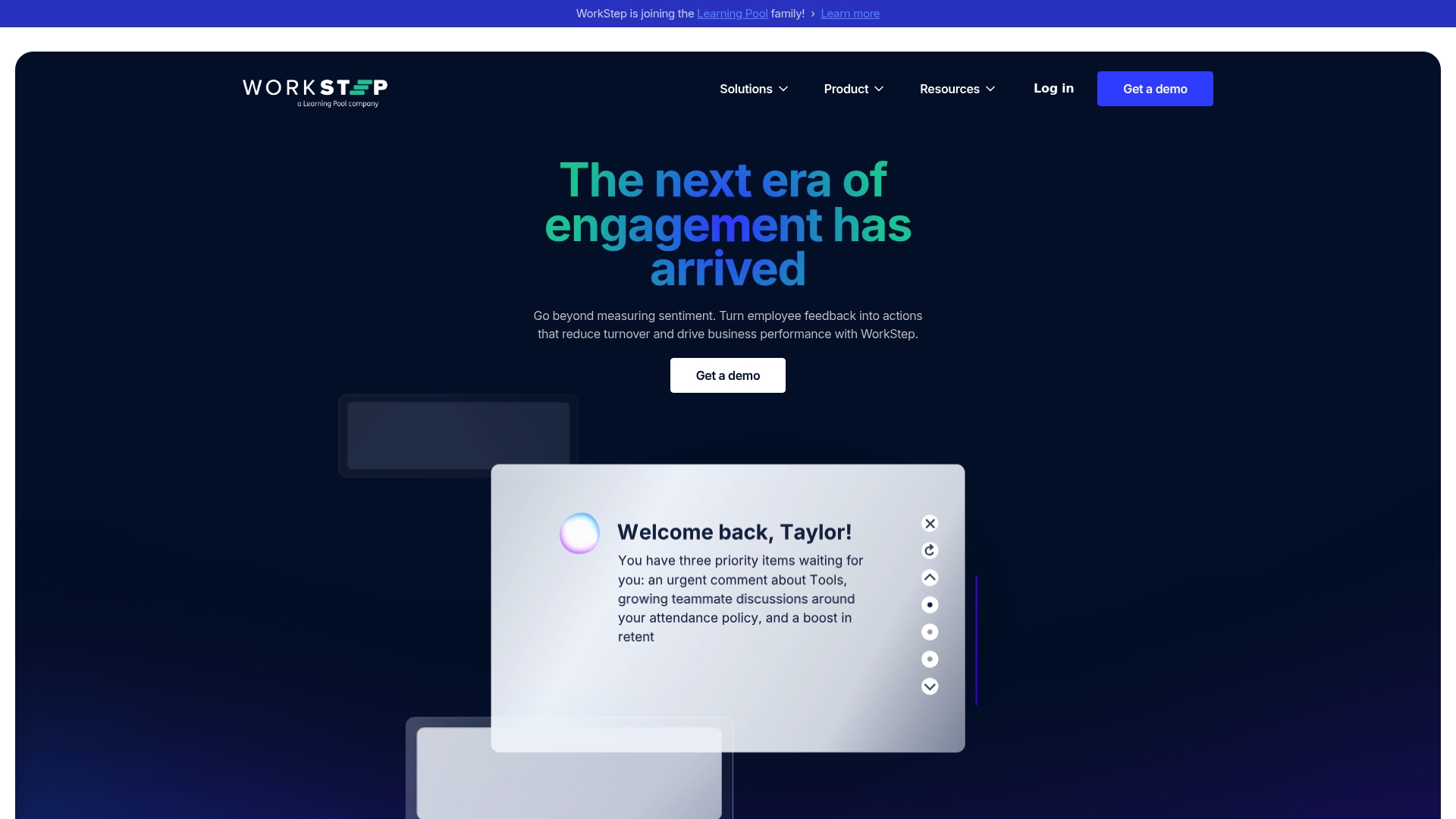
WorkStep is an employee engagement and retention platform designed for frontline organizations.
It helps companies collect feedback across distributed, shift-based, or non-desk workforces through multiple channels such as SMS, email, QR codes, and messaging tools.
Its strength is frontline listening and operational feedback. Its limitation is that it may be less relevant for office-based teams or companies that need deeper visibility into values alignment, interpersonal alignment, and leadership friction.
Core Features
| Feature | What It Supports |
|---|---|
| Multi-channel feedback | Helps reach frontline employees across shifts and locations |
| Lifecycle listening | Collects feedback across onboarding, employment, and exit stages |
| Sentiment analysis | Helps identify engagement concerns by location, role, or tenure |
| Predictive turnover analytics | Flags possible turnover risk patterns |
| Recommended actions | Suggests next steps based on employee feedback |
| Segmented communication | Helps leaders target follow-up by role, location, or sentiment |
Pros
| Pro | Why It Matters |
|---|---|
| Strong frontline fit | Designed for employees who may not use desktop systems regularly |
| Multi-channel reach | Helps collect feedback across locations and shifts |
| Useful operational insight | Can reveal site-specific issues affecting retention |
| AI-supported recommendations | Helps leaders move from survey results to action |
| Good for distributed teams | Supports organizations with multiple worksites |
Limitations
| Limitation | What to Know |
|---|---|
| Best for frontline workforces | May not be the strongest fit for office-based teams |
| Pricing is not transparent | Requires vendor contact for quotes |
| May require training | Advanced segmentation and analytics may need adoption support |
| More feedback-centered | May not fully reveal interpersonal alignment or values fit |
Who It’s For
WorkStep is best for HR and operations leaders in manufacturing, logistics, retail, hospitality, healthcare, and other frontline-heavy industries.
Pricing
Pricing is based on the number of employees and requires a custom quote.
Website: https://workstep.com
Betterteem AI
At a Glance
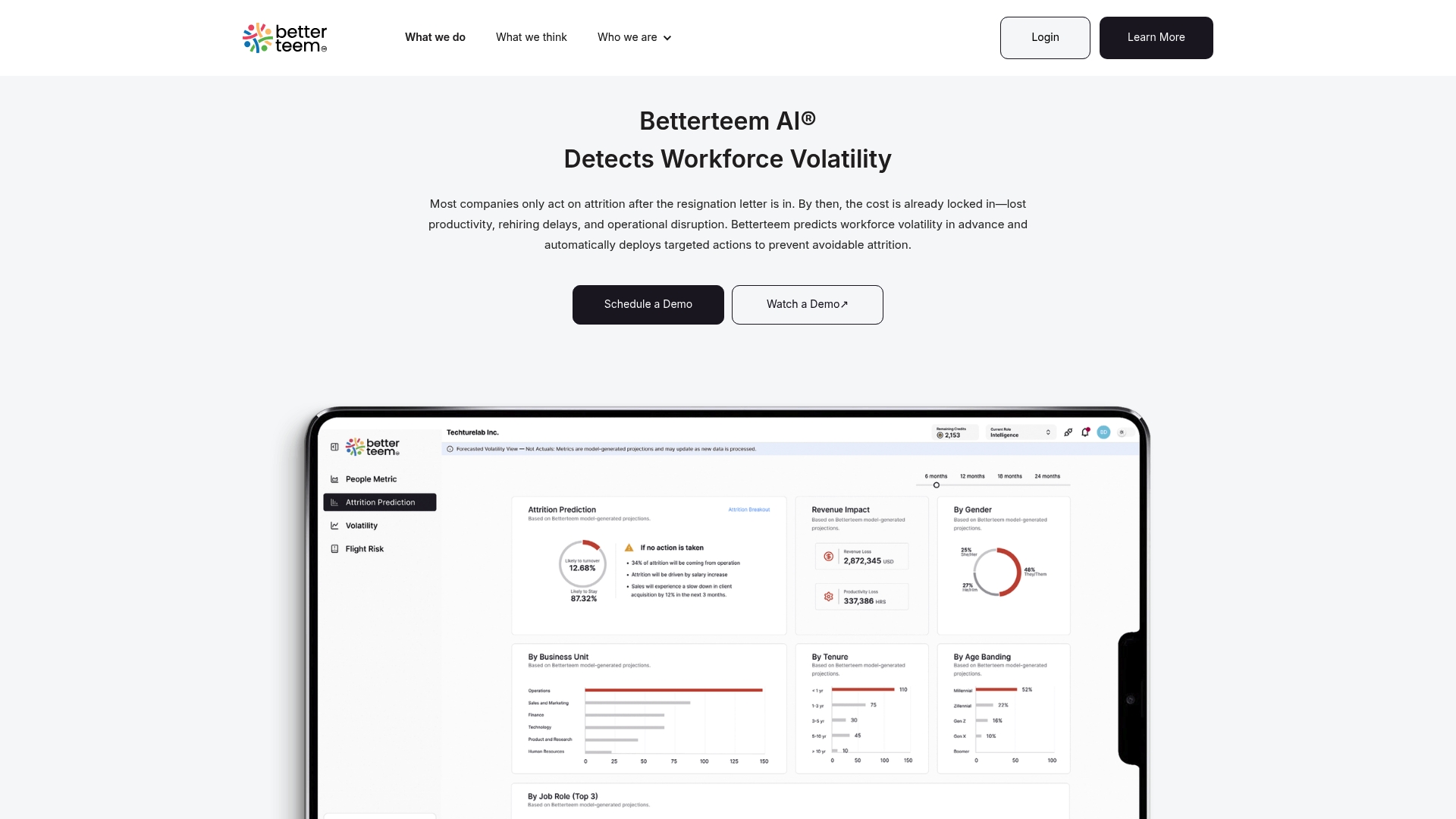
Betterteem AI is a workforce analytics platform that uses connected HR and operational data to identify attrition risk and workforce volatility.
It is useful for organizations with existing HR systems and enough data maturity to support predictive workforce analytics.
Its strength is predictive attrition modeling from connected data. Its limitation is that results depend heavily on data quality, integrations, and internal analytics readiness.
Core Features
| Feature | What It Supports |
|---|---|
| Attrition risk prediction | Helps identify employees or groups that may be more likely to leave |
| HRIS and payroll integration | Pulls data from existing workforce systems |
| Workforce volatility analysis | Helps leaders see risk across teams, roles, or departments |
| Financial exposure reporting | Connects turnover risk to possible business cost |
| Automated interventions | Supports targeted workflows when risk signals appear |
Pros
| Pro | Why It Matters |
|---|---|
| Predictive workforce analytics | Helps leaders detect possible turnover risk earlier |
| Uses existing systems | Can turn scattered HR data into workforce insight |
| Real-time visibility | Supports faster executive decision-making |
| Financial exposure view | Helps leaders connect retention risk to business cost |
| Automation support | Can reduce manual follow-up work for HR teams |
Limitations
| Limitation | What to Know |
|---|---|
| Depends on data quality | Weak or incomplete data can reduce usefulness |
| Integration work may be required | Setup may need IT and vendor coordination |
| Pricing is not transparent | Buyers need a custom quote |
| May require analytics maturity | Leaders need to understand and act on workforce risk signals |
Who It’s For
Betterteem AI is best for mid-sized and larger organizations with established HR systems, connected data sources, and leaders who want predictive attrition analytics.
Pricing
Pricing is not publicly listed. Buyers should contact Betterteem AI for a custom quote.
Website: https://betterteem.com
L10 AI
At a Glance
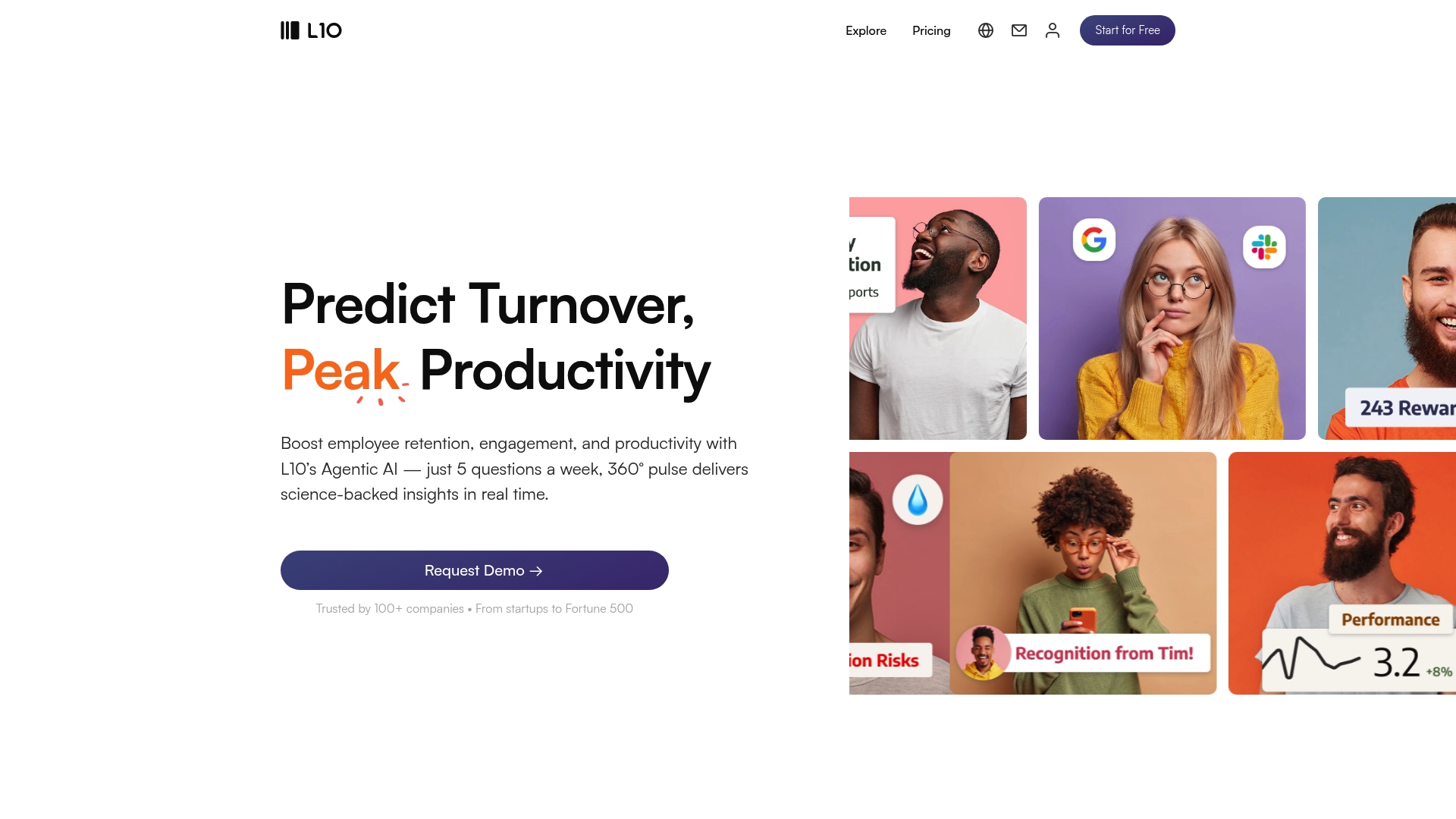
L10 AI is an employee engagement and people analytics platform that uses weekly pulse surveys and predictive risk scores to identify engagement and retention concerns.
It is useful for organizations that want frequent employee feedback and simple predictive engagement insight.
Its strength is continuous pulse feedback. Its limitation is that it may not replace deeper retention visibility into values alignment, interpersonal alignment, and hidden team friction.
Core Features
| Feature | What It Supports |
|---|---|
| Weekly pulse surveys | Collects frequent employee feedback |
| Predictive risk scores | Helps identify possible attrition or engagement concerns |
| Employee dashboards | Gives leaders individual and team-level insight |
| HRIS and messaging integrations | Connects to existing workplace systems |
| Team metrics | Shows engagement and productivity trends |
Pros
| Pro | Why It Matters |
|---|---|
| Frequent feedback | Helps leaders see engagement changes sooner |
| Quick onboarding | Easier setup than larger enterprise tools |
| Predictive risk scoring | Helps prioritize employee support |
| Scalable | Can support small to larger organizations |
| Free tier available | Useful for teams testing the platform |
Limitations
| Limitation | What to Know |
|---|---|
| Narrower functional scope | Focuses on engagement analytics rather than broader HR operations |
| Pricing details may require follow-up | Enterprise costs may need direct sales discussion |
| Relies on feedback participation | Value depends on employees continuing to respond |
| Less focused on team fit | May not fully reveal interpersonal alignment or hidden friction |
Who It’s For
L10 AI is best for people managers, HR leaders, and executives who want frequent engagement pulses and simple predictive risk insight.
Pricing
| Plan | Pricing |
|---|---|
| Free tier | Available for teams up to 10 members |
| Standard plans | Start at $15 per admin per month |
| Enterprise | Custom pricing available |
Website: https://l10.tech
Employee Engagement and Retention Tools Comparison
| Platform | Best For | Core Strength | Main Limitation | Pricing |
|---|---|---|---|---|
| OpenElevator | CEOs, founders, senior leaders, managers, and growing companies focused on retention visibility | Reveals retention risk, values alignment, interpersonal alignment, team dynamics, and hidden friction | Requires leaders to act on the insight | Free team scan available; broader pricing varies |
| 15Five | HR teams that need performance management, reviews, OKRs, and engagement surveys | Combines performance workflows with engagement and manager enablement | Can become complex and module-dependent | $4 to $16 per user per month, plus add-ons |
| Quantum Workplace | Growing and larger organizations wanting engagement, performance, recognition, and development in one platform | Broad HR insight with analytics and vendor support | Higher entry cost and implementation complexity | Custom packages, often starting around $15,000 |
| WorkStep | Frontline-heavy organizations | Multi-channel employee feedback and frontline retention insight | Less relevant for office-based teams or deeper alignment visibility | Custom pricing |
| Betterteem AI | Organizations with mature HR data infrastructure | Predictive attrition analytics using connected systems | Depends heavily on data quality and integrations | Custom pricing |
| L10 AI | Teams wanting frequent pulse surveys and predictive engagement scores | Weekly feedback and simple risk scoring | Less focused on values alignment, interpersonal fit, and hidden friction | Free tier; paid plans from $15 per admin per month |
How to Choose the Right Platform
The right platform depends on the problem leaders are trying to solve.
If the main need is performance management, reviews, OKRs, and manager enablement, 15Five may be a fit.
If the organization wants a broad HR platform with engagement, performance, development, and recognition, Quantum Workplace may be stronger.
If the workforce is mostly frontline, WorkStep may be more useful because it is built around multi-channel feedback and operational listening.
If the company has mature HR data systems and wants predictive attrition modeling, Betterteem AI may be worth evaluating.
If the company wants frequent pulse surveys and simple predictive engagement signals, L10 AI may be relevant.
If the core issue is that leaders cannot see retention risk, values misalignment, manager-employee friction, or hidden team tension early enough, OpenElevator is the clearest fit.
The mistake is choosing a tool because it has more features.
The better question is:
“Will this platform help leaders see what is happening beneath the surface and act before resignation becomes the signal?”
See Retention Risk Before Engagement Turns Into Turnover
Employee engagement can look stable while retention risk is already forming.
A team may still appear productive while values misalignment, manager-employee friction, hidden team tension, or disengagement is building beneath the surface.
OpenElevator helps CEOs, founders, senior leaders, and managers detect retention risk, values alignment, interpersonal alignment, and hidden friction before they become costly resignations.
The platform uses a short, bias-free team scan and a proprietary algorithm to reveal where leaders may need to act earlier.
Start with a free team scan for up to 10 team members and see what may be hidden inside your own team.
Ready to stop surprises and start leading with confidence Visit OpenElevator to learn more and get started today.
Frequently Asked Questions
What platforms predict employee engagement?
Platforms that help predict employee engagement include OpenElevator, 15Five, Quantum Workplace, WorkStep, Betterteem AI, and L10 AI. Each platform uses a different approach, including team scans, surveys, performance data, workforce analytics, or predictive risk scoring.
What is the best platform for predicting employee engagement?
The best platform depends on the problem leaders need to solve. OpenElevator is strongest for leaders who need visibility into retention risk, values alignment, interpersonal alignment, and hidden team friction.
How do platforms predict employee engagement?
Platforms may predict employee engagement by analyzing survey responses, performance trends, workforce data, communication patterns, team dynamics, sentiment, or retention risk signals.
Why is engagement prediction not enough?
Engagement prediction is not enough because a score may show risk without explaining the cause. Leaders still need to understand whether the issue is manager friction, values misalignment, workload pressure, lack of growth, or hidden team tension.
How can engagement platforms reduce turnover?
Engagement platforms can reduce turnover when they help leaders detect risk earlier, understand what is driving the risk, and act before employees decide to leave.
What should leaders look for in an engagement prediction platform?
Leaders should look for actionable insight, retention risk visibility, manager and team-level patterns, ease of use, clear reporting, and signals that help them intervene before resignation happens.
How does OpenElevator help predict engagement and retention risk?
OpenElevator helps leaders detect retention risk, values alignment, interpersonal alignment, and hidden team friction before they become costly resignations. It gives CEOs, founders, senior leaders, and managers clearer visibility into where risk may be forming.
Is there a free way to try OpenElevator?
Yes. OpenElevator offers a free team scan for up to 10 team members so leaders can see retention risk, alignment gaps, and hidden friction inside their own team.