
Turnover rarely starts on the day someone resigns. It starts earlier, when a strong employee becomes less connected, less motivated, less aligned with their manager, or less confident about their future inside the company.
That is why long-term retention is not just about keeping employees happy. It is about seeing the early signals that loyalty, trust, engagement, or alignment may be weakening.
For CEOs, founders, and senior leaders, the drivers of long-term retention are not abstract culture ideas. They are practical visibility points. Leaders need to know where employees feel aligned, where friction is building, where growth feels blocked, and where disengagement may already be forming.
This guide explains the key drivers of long-term retention, including motivation, leadership, culture, recognition, growth, compensation, analytics, and early risk detection.
Table of Contents
Key Takeaways
| Point | Details |
|---|---|
| Long-term retention starts before turnover risk is obvious | Employees often begin disconnecting before leaders see clear warning signs. |
| Alignment drives loyalty | Employees are more likely to stay when their values, role, manager, and team environment fit. |
| Leadership behavior matters | Trust, communication, recognition, and manager-employee fit strongly affect retention. |
| Earlier visibility improves retention | Leaders need to detect disengagement, misalignment, and team friction before employees leave. |
Defining Long-Term Retention in the Workplace
Long-term retention is a company’s ability to keep valuable employees engaged, aligned, productive, and committed over time.
It is not just the absence of resignations. A company can have low turnover for a period of time while hidden disengagement, manager friction, or team misalignment is already building underneath the surface.
In simple terms: long-term retention means the right people want to stay, contribute, and grow inside the business.
Strong long-term retention depends on several factors:
-
Values alignment
-
Manager-employee fit
-
Team trust and communication
-
Meaningful work
-
Career growth opportunities
-
Recognition and contribution
-
Fair compensation
-
Psychological safety
-
Earlier visibility into retention risk
For leaders, the goal is not only to prevent exits. The goal is to understand what makes people stay and what may already be causing them to pull away.
| Retention Driver | What It Shows Leaders | Why It Matters |
|---|---|---|
| Values alignment | Whether employees feel connected to how the company works | Misalignment can create quiet disengagement |
| Manager fit | Whether the employee-manager relationship supports performance | Poor fit can increase friction and resignation risk |
| Team alignment | Whether people work well together | Team friction can weaken morale and productivity |
| Growth clarity | Whether employees see a future inside the company | Lack of growth often leads to silent job searching |
| Recognition | Whether employees feel seen and valued | Low recognition can reduce motivation |
| Early visibility | Whether leaders can detect risk before resignation | Earlier action protects team stability |
Key Drivers of Employee Motivation and Loyalty
Employee loyalty is built through repeated experiences that tell people, “I belong here, I can grow here, and my work matters here.”
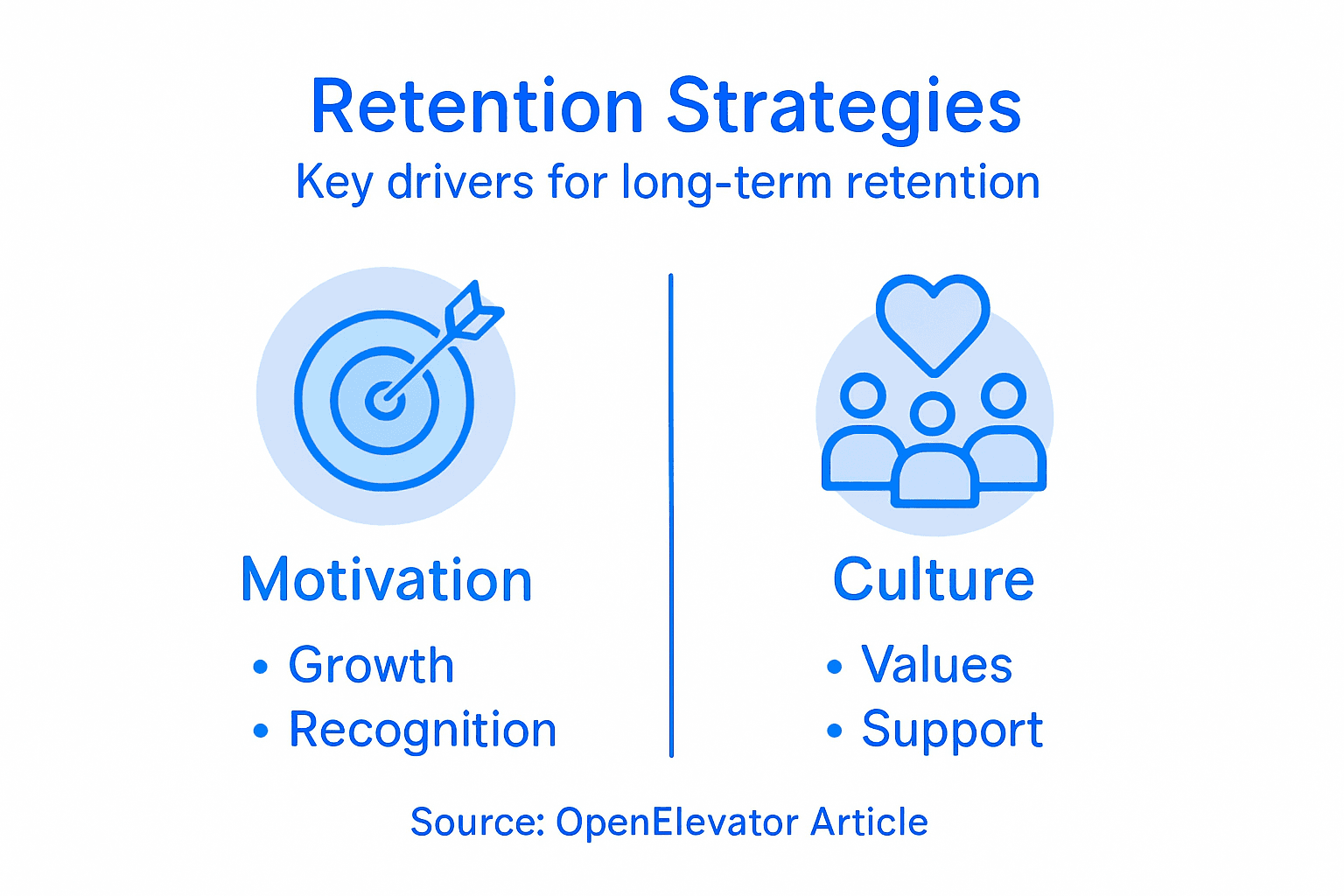
The strongest drivers of motivation and loyalty include:
-
Meaningful work with clear purpose
-
Strong manager-employee relationships
-
Values alignment with the company
-
Trust and psychological safety
-
Recognition for contribution
-
Clear career growth opportunities
-
Fair compensation
-
Autonomy and ownership
-
Healthy team dynamics
-
Confidence in leadership
The mistake many companies make is assuming loyalty is mostly about pay. Compensation matters, but employees often leave because they feel unseen, stuck, misaligned, poorly managed, or disconnected from the team.
Long-term retention improves when leaders can see which of these drivers are strong and which are weakening before employees mentally check out.
Impact of Company Culture and Leadership Behaviors
Company culture affects retention because it shapes how employees experience work every day.
A strong culture creates trust, clarity, connection, and shared expectations. A weak culture creates confusion, frustration, hidden friction, and quiet disengagement.
Leadership behavior is one of the biggest drivers of culture. Employees often experience the company through their direct manager, not through mission statements or values posters.
Leadership behaviors that support long-term retention include:
-
Clear communication
-
Consistent feedback
-
Active listening
-
Fair decision-making
-
Recognition of contribution
-
Follow-through on concerns
-
Support for career growth
-
Healthy conflict resolution
-
Awareness of team friction
-
Respect for individual work styles
Managers do not need to be perfect. But leaders do need visibility into where manager-employee relationships may be creating retention risk.
When a person’s interpersonal alignment with their manager is weak and the issues go unaddressed, the risk of disengagement and resignation increases.

Role of Recognition, Growth, and Compensation
Recognition, growth, and compensation all influence long-term retention, but they do not work equally for every employee.
Some employees leave because they are underpaid. Others leave because they feel invisible. Others leave because they no longer see a future inside the company. Others leave because they are misaligned with their manager or team.
Leaders need to understand which driver is creating the actual risk.
Effective retention practices include:
-
Recognizing specific contributions
-
Creating clear growth paths
-
Offering skill development opportunities
-
Giving employees meaningful ownership
-
Reviewing compensation fairness
-
Supporting internal mobility
-
Discussing career goals before employees disengage
-
Identifying whether lack of recognition, lack of growth, or misalignment is the real issue
Generic retention efforts waste time. Targeted retention efforts work better because they address the real reason an employee may be pulling away.
Leveraging Analytics and Technology for Retention
Retention analytics help leaders move from guessing to seeing.
Without data, leaders often rely on manager impressions, annual surveys, or exit interviews. Those inputs can be useful, but they often miss early signs of disengagement, values misalignment, manager friction, or team-level tension.
Retention technology can help leaders identify:
-
Employees who may be at higher risk of disengagement
-
Teams where friction may be building
-
Manager-employee relationships that may need support
-
Whether employees feel aligned with company values
-
Whether people are motivated by the current environment
-
Where retention conversations should happen earlier
The goal is not to replace leadership judgment. The goal is to give leaders better visibility so they can act before the problem becomes a resignation.
| Retention Tool | What It Helps Leaders See | Business Value |
|---|---|---|
| Engagement surveys | How employees feel about work | Shows broad morale patterns |
| Values alignment tools | Whether employees fit the company environment | Reveals hidden misalignment |
| Manager-employee fit analysis | Where relationship friction may exist | Helps reduce avoidable disengagement |
| Team alignment data | How well people work together | Detects collaboration problems earlier |
| Retention risk indicators | Where turnover risk may be forming | Supports earlier intervention |
Common Pitfalls and How to Avoid Turnover
Turnover often happens because leaders see the problem too late.
Employees may disengage quietly for weeks or months before they resign. They may stop contributing ideas, avoid difficult conversations, pull back from the team, or start believing the company is no longer the right place for them.
Common retention pitfalls include:
-
Waiting until resignation to ask what went wrong
-
Relying only on annual engagement surveys
-
Assuming high performers will speak up
-
Ignoring manager-employee friction
-
Treating compensation as the only retention issue
-
Missing signs of values misalignment
-
Allowing team friction to continue unaddressed
-
Offering generic perks instead of targeted support
-
Failing to give employees a visible future inside the company
To avoid turnover, leaders need earlier visibility into the conditions that make people stay or leave.
The question is not only, “Are employees happy?”
The better question is, “Where are engagement, alignment, trust, or team fit already weakening?”
See the Drivers of Long-Term Retention Before They Break Down
Long-term retention depends on more than compensation, benefits, or occasional check-ins.
Employees stay when they feel aligned, valued, connected, and able to grow. They leave when disengagement, manager friction, values misalignment, or team tension goes unseen for too long.
OpenElevator helps CEOs, founders, senior leaders, and managers detect the hidden drivers of retention risk earlier.
Through a simple five-minute, bias-free survey, OpenElevator gives leaders clearer visibility into values alignment, engagement risk, manager-employee fit, and team friction.
Want to see which drivers of long-term retention may be weakening inside your team? Start with OpenElevator’s free team scan.

Frequently Asked Questions
What are the key drivers of long-term retention?
The key drivers of long-term retention include values alignment, manager-employee fit, meaningful work, recognition, career growth, fair compensation, trust, team alignment, and earlier visibility into disengagement or turnover risk.
Why do employees stay long-term?
Employees are more likely to stay long-term when they feel valued, aligned with the company, supported by their manager, connected to their team, and able to grow inside the organization.
How does leadership affect long-term retention?
Leadership affects long-term retention through communication, trust, recognition, feedback, manager quality, and the ability to detect retention risk before employees disengage or leave.
What causes long-term retention to break down?
Long-term retention can break down when employees feel unseen, stuck, misaligned, poorly managed, disconnected from the team, or unsure about their future in the company.
How can leaders improve long-term retention?
Leaders can improve long-term retention by identifying disengagement earlier, strengthening manager-employee relationships, improving team alignment, supporting growth, recognizing contribution, and addressing hidden friction before it becomes turnover risk.
How does OpenElevator support long-term retention?
OpenElevator helps leaders see the hidden drivers of long-term retention, including values alignment, engagement risk, manager-employee fit, and team friction, through a five-minute, bias-free survey.