
More than 60 percent of american workers say that employee benefits play a major role in their decision to stay with an employer. In a job market where skilled talent holds greater power, the right benefits package can mean the difference between losing and keeping your best performers. Understanding which benefits truly matter and how they influence retention empowers organizations to build trust and long-lasting loyalty among their teams.
Table of Contents
- Defining Employee Benefits For Retention
- Types Of Benefits That Drive Loyalty
- How Benefits Influence Employee Engagement
- Best Practices For Implementing Benefits
- Common Pitfalls And How To Avoid Them
Key Takeaways
| Point | Details |
|---|---|
| Comprehensive Benefits | Effective employee benefits extend beyond traditional compensation, including health insurance, wellness programs, and retirement planning to enhance satisfaction and retention. |
| Loyalty Drivers | Employee loyalty is driven by recognition, professional growth opportunities, and a supportive company culture, in addition to financial incentives. |
| Engagement Strategies | Active employee engagement stems from benefits that promote personal growth and well-being, as well as recognition systems that acknowledge contributions. |
| Implementation Best Practices | A strategic approach to benefits design involves personalized options, regular assessments, and genuine organizational investment in employee development. |
Defining Employee Benefits for Retention
Employee benefits represent far more than just a standard compensation package – they are strategic tools designed to attract, engage, and retain top talent in an increasingly competitive job market. According to Emeritus, employee benefits encompass a wide range of offerings including retirement plans, supplemental compensation, insurance coverage, and paid time off, all strategically crafted to enhance overall employee satisfaction and organizational retention.
Modern organizations recognize that comprehensive benefits extend well beyond traditional monetary compensation. Jetir research highlights that critical components like financial wellness programs, robust healthcare coverage, and comprehensive mental health support are crucial in fostering long-term employee loyalty and holistic well-being. These benefits signal to employees that the organization values their total life experience, not just their professional output.
The most effective employee benefits packages are customized and dynamic, reflecting an understanding that different employees have diverse needs. Key benefits to consider include:
- Health Insurance: Comprehensive medical, dental, and vision coverage
- Retirement Planning: 401(k) matching and investment guidance
- Wellness Programs: Mental health resources, fitness memberships
- Professional Development: Training, certification support, career advancement opportunities
- Flexible Work Arrangements: Remote work options, flexible scheduling
By thoughtfully designing benefits that address both professional and personal employee needs, organizations can create a compelling value proposition that transforms benefits from mere transactions into meaningful connections.

Types of Benefits That Drive Loyalty
Employee loyalty is not just about salary – it’s about creating a holistic work environment that makes employees feel genuinely valued and supported. According to PPAI, the key drivers of employee loyalty extend far beyond traditional compensation, encompassing critical elements like recognition, appreciation, professional growth opportunities, supportive leadership, positive company culture, and comprehensive well-being initiatives.
Blog research reveals that organizations with the highest employee satisfaction strategically implement targeted benefits that address both professional and personal needs. These sophisticated benefit packages go well beyond basic health insurance, incorporating innovative offerings that demonstrate a genuine commitment to employee wellness and individual potential.
Effective loyalty-driving benefits can be categorized into several strategic domains:
- Professional Development Benefits
- Tuition reimbursement
- Leadership training programs
- Mentorship opportunities
- Conference and workshop sponsorships
- Wellness and Quality of Life Benefits
- Mental health resources
- Fitness and wellness stipends
- Stress management programs
- Work-life balance support
- Financial and Security Benefits
- Competitive retirement plans
- Performance-based bonuses
- Stock option programs
- Emergency financial assistance
By thoughtfully designing benefit packages that demonstrate genuine investment in employee growth, health, and future, organizations can transform traditional compensation into powerful retention strategies that create meaningful, long-term organizational commitment.
How Benefits Influence Employee Engagement
Employee engagement is not a passive outcome but an active result of strategic organizational investment. PMC research emphasizes that supporting employees in achieving a healthy work-life balance and providing meaningful advancement opportunities are foundational to creating a truly engaged workforce. This means benefits must transcend traditional monetary compensation and instead focus on holistic employee experience and personal growth.
Recognition plays a critical role in driving engagement. According to PMC research, establishing robust reward and commendation systems that authentically recognize employees who embody corporate values can dramatically stimulate work enthusiasm and creativity. When employees feel genuinely seen and appreciated, their emotional connection to the organization deepens, leading to higher levels of discretionary effort and commitment.
Effective engagement through benefits requires a multifaceted approach:
- Personal Development Benefits
- Career coaching
- Skills training programs
- Clear promotion pathways
- Individual growth plans
- Emotional Well-being Support
- Mental health counseling
- Stress management resources
- Work-life balance initiatives
- Peer support networks
- Performance Recognition
- Merit-based rewards
- Public acknowledgment programs
- Professional achievement celebrations
- Meaningful incentive structures
By transforming benefits from transactional interactions into genuine investments in employee potential, organizations can create a profound sense of belonging that naturally drives engagement, productivity, and long-term organizational commitment.
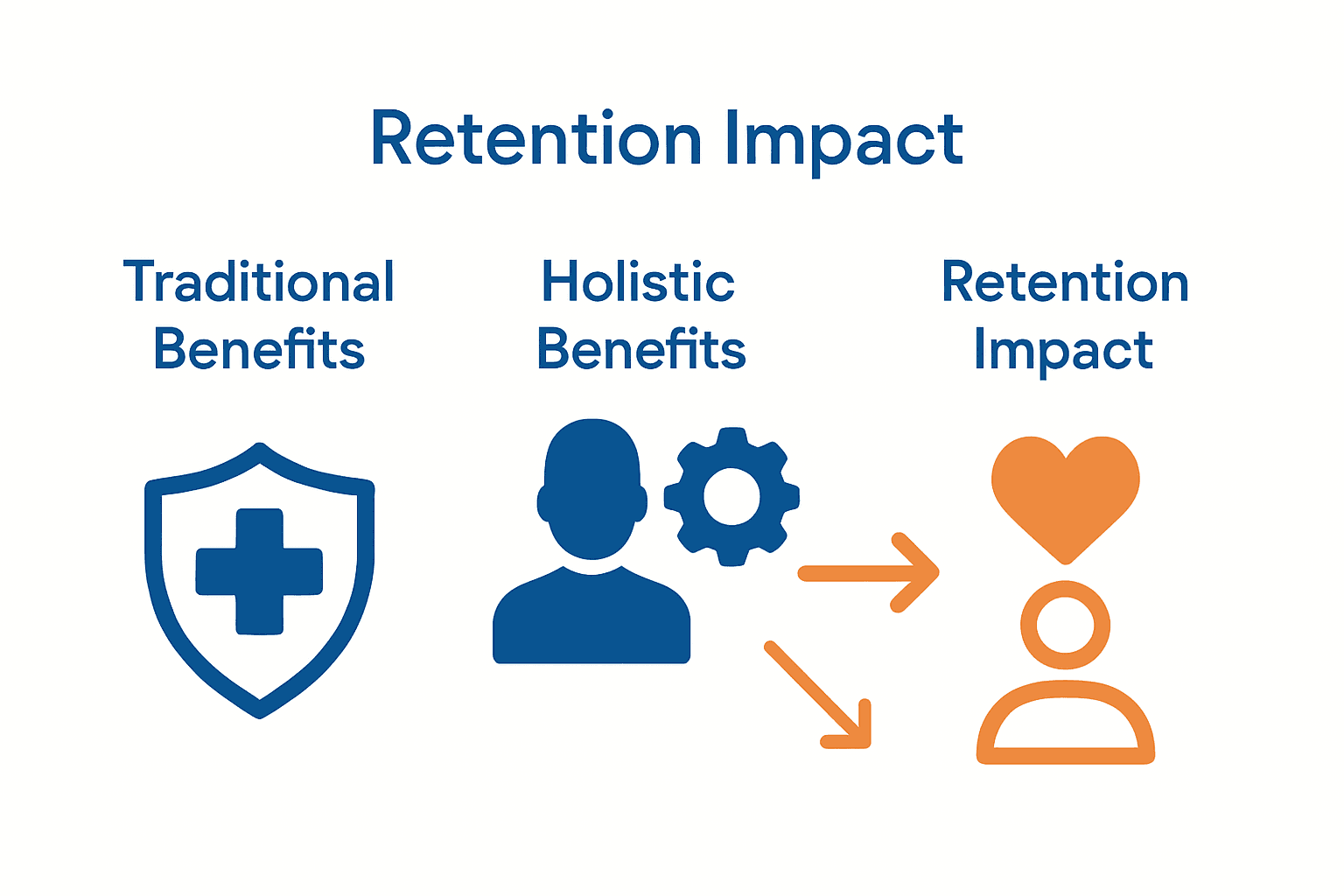
Best Practices for Implementing Benefits
Successful benefits implementation requires a strategic and nuanced approach that goes beyond standard template solutions. Moravian research highlights the importance of tailored programs that demonstrate genuine organizational investment in employee growth, such as collaborating with educational institutions to offer customized development opportunities and tuition discounts that directly address individual career aspirations.
According to RSIS International, implementing effective reward and recognition programs demands careful alignment with both business culture and specific employee needs. This means moving beyond one-size-fits-all approaches and designing benefit structures that reflect the unique dynamics of your workforce, organizational values, and strategic objectives.
Key best practices for implementing robust benefits packages include:
- Strategic Design Principles
- Conduct comprehensive workforce needs assessments
- Develop flexible, personalized benefit options
- Regularly review and update benefit structures
- Create transparent communication channels
- Implementation Strategies
- Pilot test new benefit programs
- Gather continuous employee feedback
- Benchmark against industry standards
- Ensure equitable access across organizational levels
- Continuous Improvement Approach
- Track key performance indicators
- Conduct annual benefit satisfaction surveys
- Maintain adaptable, responsive benefit frameworks
- Invest in data-driven program refinement
By treating benefits as a dynamic, strategic tool for talent engagement rather than a static checklist, organizations can create powerful retention mechanisms that demonstrate genuine commitment to employee well-being and professional growth.
Common Pitfalls and How to Avoid Them
Many organizations inadvertently sabotage their employee retention efforts through well-intentioned but misguided benefit strategies. Library research reveals that one of the most critical mistakes is failing to design work with sufficient variety and autonomy. Employees crave opportunities to take genuine ownership of projects, and when organizations restrict creative freedom, they quickly disengage and seek more empowering work environments.
Financial security represents another crucial area where companies frequently stumble. BJMAS research demonstrates that neglecting to offer defined benefit plans and strategic stock options can dramatically reduce employee motivation and long-term commitment. When employees do not feel financially supported or see a clear path to future economic stability, their loyalty inevitably diminishes.
Key pitfalls to recognize and proactively address include:
- Autonomy and Engagement Traps
- Micromanaging employee workflows
- Limiting creative problem-solving
- Restricting decision-making opportunities
- Implementing overly rigid hierarchical structures
- Financial Compensation Mistakes
- Offering below-market base salaries
- Inconsistent performance bonus structures
- Limited long-term financial incentives
- Lack of transparent compensation frameworks
- Communication and Perception Errors
- Insufficient benefits communication
- Complex, hard-to-understand benefit options
- Failing to personalize benefit packages
- Infrequent benefits review and adaptation
Successful organizations recognize that preventing employee turnover requires a holistic, dynamic approach that consistently demonstrates genuine investment in individual employee potential and organizational culture.
Unlock Employee Loyalty with Smarter Benefits and Targeted Retention Solutions
Understanding the critical role employee benefits play in retaining your top talent is just the first step. The challenge of identifying who is at risk of leaving and addressing their unique needs with personalized compensation, wellness, and growth opportunities can feel overwhelming. Common pain points include lack of autonomy, inadequate financial incentives, and insufficient communication about benefits — all leading to costly turnover and disengagement.
OpenElevator solves these issues by using a proprietary algorithm that detects employees likely to quit and offers actionable strategies tailored to your workforce. Our platform transforms benefits from static offerings into dynamic retention tools that create meaningful emotional connections and foster long-term loyalty.
Take control of your employee retention today. Visit OpenElevator to discover how our innovative solutions align with your retention goals and address key challenges like financial security and employee engagement. Learn how to implement flexible, effective benefits that keep your team motivated and committed. Don’t wait until valuable talent walks out the door. Explore OpenElevator’s retention strategies now and start building a workforce that stays.
Frequently Asked Questions
What are the key components of an effective employee benefits package for retention?
An effective employee benefits package should include health insurance, retirement planning, wellness programs, professional development opportunities, and flexible work arrangements. These components cater to both professional and personal employee needs, enhancing overall satisfaction and retention.
How do employee benefits influence employee loyalty?
Employee benefits drive loyalty by creating a supportive work environment that values recognition, professional growth, and well-being. Comprehensive benefits signal an organization’s commitment to the holistic health of its employees, fostering long-term loyalty and engagement.
What are some common pitfalls in designing employee benefits?
Common pitfalls include micromanaging workflows, offering below-market base salaries, and failing to communicate benefits effectively. These mistakes can lead to employee disengagement and diminish retention efforts, as employees feel undervalued and unsupported.
How can organizations measure the effectiveness of their employee benefits?
Organizations can measure effectiveness through key performance indicators (KPIs), annual benefit satisfaction surveys, and continuous employee feedback. This data helps refine benefit offerings and ensures they meet the evolving needs of the workforce.