
Nearly half of American businesses underestimate the true cost of employee turnover, missing hidden expenses that can drain profits and weaken teams. High turnover affects more than budgets, as lost knowledge and falling morale create lasting obstacles throughout an organization. By assessing turnover causes and using data-driven strategies, you gain the tools to reduce losses, keep top talent, and strengthen your company for long-term success.
Table of Contents
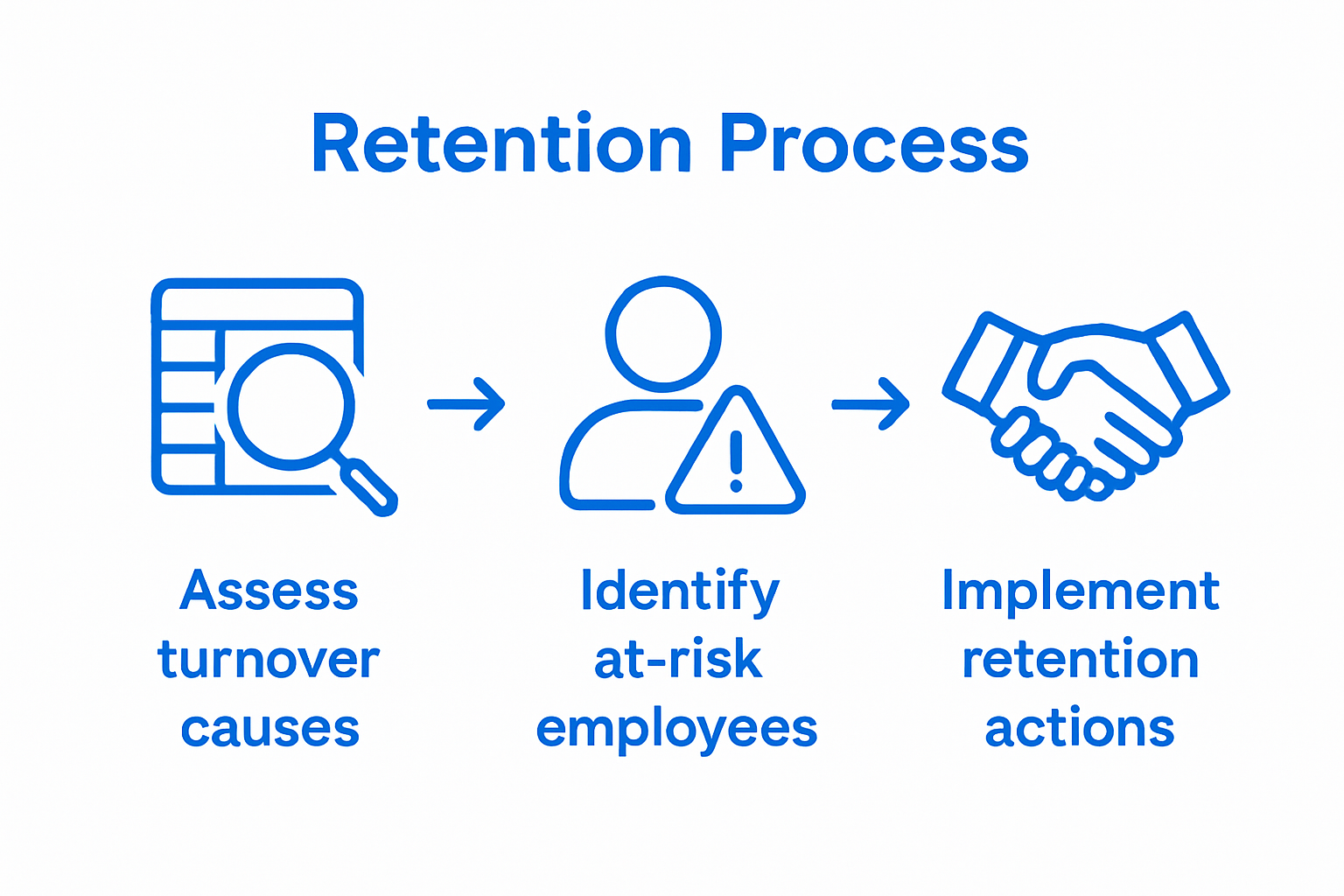
- Step 1: Assess Current Turnover Costs And Causes
- Step 2: Identify At-Risk Employees Using Data-Driven Insights
- Step 3: Implement Targeted Retention Strategies
- Step 4: Strengthen Values And Interpersonal Alignment
- Step 5: Verify Success And Optimize Ongoing Retention
Quick Summary
| Key Insight | Explanation |
|---|---|
| 1. Assess turnover costs comprehensively | Calculate both direct and indirect costs to understand the full impact of employee turnover on your organization. |
| 2. Identify at-risk employees early | Utilize data-driven insights to spot disengagement signals before employees decide to leave. |
| 3. Implement tailored retention strategies | Create customized plans addressing individual needs and motivations rather than just focusing on salary. |
| 4. Align employee values with organizational goals | Foster meaningful connections between individual aspirations and company missions to enhance workplace cohesion. |
| 5. Continuously verify retention effectiveness | Establish a monitoring framework to regularly evaluate and adapt your retention strategies for maximum impact. |
Step 1: Assess current turnover costs and causes
Understanding the true financial impact of employee turnover requires a systematic approach. When calculating these costs, businesses must look beyond simple replacement expenses and examine the broader organizational consequences. The Aspen Institute’s Cost of Turnover Tool provides an excellent framework for conducting a comprehensive analysis.
To accurately assess turnover costs, start by calculating direct expenses like recruitment, interviewing, hiring, and onboarding. These typically include job posting fees, recruiter salaries, time spent interviewing candidates, and initial training investments. Next, factor in indirect costs such as lost productivity, reduced team morale, and institutional knowledge gaps. Research from Midlands Technical College suggests that voluntary departures often stem from deeper issues beyond compensation, with less than 10% of turnover directly related to salary.
A practical strategy involves tracking key metrics like average time to fill positions, training expenses, and productivity dips during transition periods. Conduct exit interviews to understand underlying causes of employee departures. This data will help you pinpoint systemic problems and develop targeted retention strategies. By treating turnover assessment as an ongoing process, you can transform these insights into actionable improvements that reduce long-term organizational costs.
Step 2: Identify at-risk employees using data-driven insights
Successfully reducing employee turnover requires a proactive approach to identifying potential flight risks before they become actual departures. Modern organizations can leverage advanced analytics to spot early warning signs of disengagement and potential turnover. Predictive analytics in human resources provides powerful tools for understanding workforce dynamics and potential retention challenges.
Start by collecting comprehensive data across multiple dimensions: performance metrics, engagement survey results, communication patterns, professional development participation, and individual career trajectory indicators. Look for subtle signals like decreased collaboration, reduced meeting participation, minimal professional development requests, or inconsistent performance evaluations. Behavioral pattern recognition becomes crucial here many employees exhibit specific indicators before deciding to leave. Just like behavioral models used to assess insider risks, employee retention analytics track nuanced changes in workplace interactions and individual engagement levels.
Implement a systematic tracking mechanism that combines quantitative metrics with qualitative insights. Create a holistic scoring system that weights different risk factors and generates actionable intelligence about potential turnover. Regular analysis and intervention can transform these insights into targeted retention strategies proactively addressing employee needs before they consider exploring alternative career opportunities.
Step 3: Implement targeted retention strategies
Transforming employee insights into actionable retention strategies requires a nuanced approach that addresses individual and organizational needs. Big data and HR analytics have revolutionized how companies develop personalized workforce engagement plans that directly target specific retention challenges.
Begin by segmenting employees based on their unique risk profiles and motivational drivers. Create customized intervention strategies that might include personalized career development paths, mentorship programs, flexible work arrangements, or targeted compensation adjustments. HR analytics research reveals that retention strategies must go beyond monetary compensation and focus on holistic factors like work life balance, professional growth opportunities, and meaningful workplace connections.

Establish a continuous feedback loop that allows for real time strategy refinement. Develop key performance indicators to measure the effectiveness of your retention initiatives and be prepared to adapt quickly. Regular pulse surveys, one on one check ins, and transparent communication channels will help you stay ahead of potential turnover risks and demonstrate your commitment to employee satisfaction and organizational success.
Step 4: Strengthen values and interpersonal alignment
Building a cohesive workplace requires more than traditional management techniques strategic alignment of individual employee values with organizational goals is crucial. HR initiatives aligned with business objectives can transform workplace dynamics by creating meaningful connections between personal motivations and company mission.
Start by conducting comprehensive assessments that explore both professional and personal value systems. Implement collaborative workshops that encourage open dialogue about individual career aspirations and organizational expectations. Use data driven approaches to map interpersonal dynamics and identify potential communication gaps or collaboration challenges. Workforce analytics can help ensure employee readiness by creating targeted development programs that bridge individual and organizational needs.
Create mentorship programs and cross functional teams that intentionally mix employees with complementary skills and perspectives. Regular team building activities structured around shared values can help break down communication barriers and foster a sense of collective purpose. By investing in genuine understanding and alignment you transform workplace relationships from transactional interactions to meaningful collaborative partnerships.
Step 5: Verify success and optimize ongoing retention
Measuring the effectiveness of your retention strategies requires a comprehensive and systematic approach that goes beyond simple numeric tracking. Turnover cost evaluation tools can help organizations quantify the true financial impact of employee departures and validate the success of retention initiatives.
Develop a robust monitoring framework that tracks key performance indicators across multiple dimensions. This includes measuring employee engagement scores, retention rates, internal promotion percentages, and the financial implications of workforce stability. Detailed cost calculation methodologies can help you understand the nuanced economic impact of workforce changes beyond surface level metrics. Implement quarterly review sessions where leadership teams analyze these metrics and adjust strategies proactively.
Create a continuous improvement cycle that treats retention as an evolving organizational capability. Encourage transparent feedback mechanisms that allow employees to share insights about workplace dynamics anonymously. Use these insights to refine your approach regularly ensuring that your retention strategies remain adaptive responsive and aligned with emerging workforce expectations. The goal is not just to retain employees but to create an environment where top talent actively chooses to grow and thrive within your organization.
Take Control of Turnover Costs and Retain Your Best Talent Today
Employee turnover drains resources and disrupts team productivity. This article highlights how understanding turnover costs, identifying at-risk employees, and aligning values and interpersonal relationships are key to reducing costly departures. Achieving these goals demands data-driven insights and targeted actions to keep your workforce engaged and growing.
OpenElevator offers a revolutionary solution that puts these concepts into action. Using a proprietary algorithm, the platform quickly uncovers employees at risk of quitting by assessing values alignment and interpersonal fit with minimal effort. This approach goes beyond guesswork, delivering actionable insights based on a bias-free 5-minute survey. Explore how OpenElevator supports your retention strategy and helps create a workplace where employees feel safe, valued, and connected.
Do not let hidden turnover costs impact your bottom line any longer. Visit OpenElevator to learn how we help companies worldwide transform retention challenges into lasting success. Discover personalized retention strategies today by exploring OpenElevator’s platform and harness the power of predictive analytics for workforce stability.
Frequently Asked Questions
How can I assess current turnover costs in my organization?
Understanding your turnover costs involves assessing both direct and indirect expenses. Start by calculating recruitment, onboarding, and training costs, and then include lost productivity and morale impacts. Track these metrics over a few months to see patterns and identify areas for improvement.
What are effective ways to identify at-risk employees?
To identify employees who may be at risk of leaving, analyze data such as performance metrics and engagement survey results. Look for trends like decreased participation in team activities or declining performance scores. Implement regular check-ins to gather insight into their job satisfaction and career aspirations.
What targeted retention strategies can I implement for my team?
Develop customized retention strategies based on the unique needs of your employees. Consider offering flexible work arrangements, career development opportunities, and mentorship programs tailored to individual motivational drivers to engage employees meaningfully.
How can I measure the success of my retention strategies?
Measure retention success by tracking key performance indicators like employee engagement scores and retention rates over time. Conduct quarterly reviews to analyze these metrics and adjust your retention strategies based on employee feedback to ensure they remain effective.
What role do company values play in reducing turnover?
Strong alignment between employee values and company mission can significantly lower turnover costs. Foster open discussions about values and create programs that connect employees with the organization’s goals, enhancing engagement and loyalty.
How often should I conduct exit interviews to gather insights?
Conduct exit interviews consistently whenever an employee leaves your organization. These interviews provide valuable information about the underlying reasons for departures and should be analyzed regularly to inform your retention strategies and improve workplace culture.