
A retention program should not start after employees resign.
By then, the business has already paid for months of disengagement, manager friction, values misalignment, team tension, or blocked growth that may have been building underneath the surface.
A strong retention program workflow helps leaders see risk earlier, understand what is driving it, and take targeted action before employees mentally check out or leave.
For CEOs, founders, and senior leaders, retention is not a generic people initiative. It is a leadership visibility system.
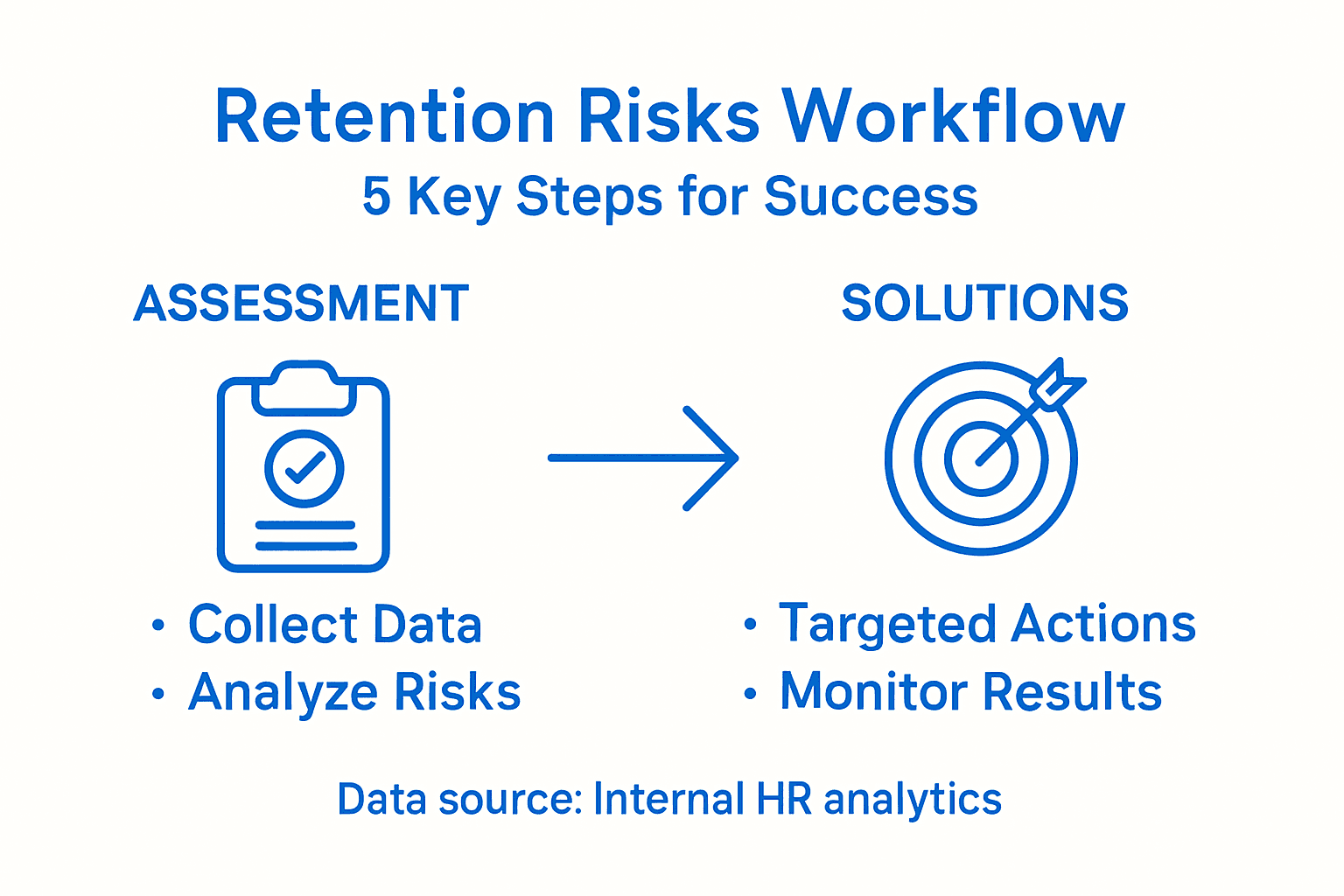
This guide walks through a practical retention program workflow: assess current risks, identify where retention risk is forming, develop targeted interventions, implement measurable actions, and adjust based on feedback.
Table of Contents
-
Step 3: Develop Targeted Retention Strategies For Key Segments
-
Step 4: Implement Workflow Solutions With Measurable Actions
Quick Summary
| Key Message | Explanation |
|---|---|
| Start with risk visibility | A retention program should identify where disengagement, misalignment, or team friction may already be forming. |
| Use the right signals | Manager-employee fit, values alignment, engagement risk, team trust, and growth confidence are critical indicators. |
| Target the real issue | Generic retention programs waste time if they do not address the actual risk driver. |
| Build measurable workflows | Leaders need clear actions, owners, timing, and follow-up for each retention intervention. |
| Adjust continuously | Retention risk changes over time, so the workflow must be reviewed and refined regularly. |
Step 1: Assess current retention risks and program gaps
Start by identifying where retention risk may already be forming.
Do not rely only on turnover rates or exit interviews. Those show what already happened. A useful retention program workflow starts with leading indicators that reveal where employees may be disengaging before they leave.
Assess risk across:
-
Engagement risk
-
Manager-employee fit
-
Values alignment
-
Team trust and communication
-
Growth confidence
-
Recognition and contribution
-
Workload pressure
-
Participation patterns
-
Collaboration quality
-
Early signs of disengagement
The goal is to understand which people, teams, or relationships may need attention before resignation becomes likely.
| Risk Factor | What It May Signal | Potential Business Impact |
|---|---|---|
| Low engagement | Employee may be emotionally disconnecting | Lower productivity and higher turnover risk |
| Weak manager-employee fit | Relationship friction or low trust | Reduced openness and disengagement |
| Values misalignment | Employee feels disconnected from how the company works | Quiet withdrawal or lower commitment |
| Low growth confidence | Employee does not see a future inside the company | Silent job searching |
| Team friction | Collaboration or trust is weakening | Slower execution and morale decline |
| Workload pressure | Burnout may be building | Reduced performance and resignation risk |
| Low recognition | Employee feels unseen | Lower motivation and contribution |
Step 2: Identify high-risk employees using actionable data
Next, identify where retention risk is highest.
This does not mean labeling employees as flight risks. It means giving leaders clearer visibility into where support, conversations, or intervention may be needed.
Actionable data should help leaders see:
-
Which employees may be disengaging
-
Which teams may have hidden friction
-
Where manager-employee fit may be weak
-
Where values alignment may be low
-
Where growth confidence may be declining
-
Where burnout or workload pressure may be increasing
-
Where stay conversations should happen sooner
The strongest retention program workflows do not wait for employees to resign before investigating risk. They create a way for leaders to see where commitment may already be weakening.
Step 3: Develop targeted retention strategies for key segments
Once leaders know where risk is forming, they need to match the intervention to the real issue.
Generic retention programs often fail because they treat every employee the same. But different risk drivers require different responses.
Use targeted strategies such as:
| Risk Driver | Targeted Retention Strategy |
|---|---|
| Weak manager-employee fit | Manager coaching, clearer communication norms, direct support conversations |
| Values misalignment | Clarify expectations, discuss working environment fit, address cultural friction |
| Low growth confidence | Build clearer development paths and internal opportunities |
| Team friction | Address collaboration issues and rebuild trust |
| Low recognition | Increase specific acknowledgment of contribution |
| Workload pressure | Review priorities, capacity, and availability expectations |
| Early disengagement | Hold stay conversations before the employee mentally checks out |
The point is not to offer more perks. The point is to address the specific condition that is making someone less likely to stay.
| Employee Segment | Risk to Watch | Retention Focus |
|---|---|---|
| New employees | Poor onboarding fit, weak team connection | Early manager support and role clarity |
| High performers | Low recognition, blocked growth, overload | Growth paths and visible appreciation |
| Managers | Burnout, unclear expectations, team pressure | Leadership support and workload review |
| Remote employees | Isolation, hidden disengagement | Stronger communication and connection |
| Long-tenured employees | Stagnation or values drift | Fresh growth opportunities and alignment checks |
Step 4: Implement workflow solutions with measurable actions
A retention program workflow needs clear action, not vague concern.
Once risk is identified, define who owns the next step, what action will be taken, and when follow-up will happen.
For each risk signal, document:
-
The employee, team, or relationship affected
-
The likely risk driver
-
The action owner
-
The retention action
-
The follow-up date
-
The success signal to watch
-
Whether the risk is improving, stable, or worsening
Example workflow:
| Risk Signal | Action Owner | Retention Action | Follow-Up |
|---|---|---|---|
| Weak manager-employee fit | Senior leader or manager | Direct conversation and communication reset | 30 days |
| Low growth confidence | Manager | Career path discussion | 30 days |
| Team friction | Team lead | Alignment conversation or team reset | 45 days |
| Workload pressure | Manager | Review priorities and capacity | 14 days |
| Low recognition | Manager | Specific contribution recognition | Ongoing |
A workflow only works if leaders act on the signal. Data without action is just reporting.

Step 5: Monitor progress and adjust based on feedback
Retention risk changes over time.
A strong retention program workflow should monitor whether risk is improving, stable, or getting worse after action is taken.
Track:
-
Engagement risk changes
-
Manager-employee fit changes
-
Team alignment changes
-
Growth confidence
-
Workload pressure
-
Participation patterns
-
Collaboration quality
-
Follow-through on retention actions
-
Feedback from stay conversations
The goal is not to create more administrative work. The goal is to know whether the intervention actually helped.
If risk does not improve, leaders need to adjust quickly. That may mean changing the manager approach, clarifying role expectations, addressing workload, resolving team friction, or opening a more direct conversation about fit.
Retention workflows fail when leaders collect feedback but do not act on it.
Build a Retention Workflow That Sees Risk Earlier
A retention program workflow should help leaders see risk before employees leave.
Employees may still be performing while disengagement, manager friction, values misalignment, team tension, or declining trust is already weakening commitment.
OpenElevator helps CEOs, founders, senior leaders, and managers identify retention risk earlier.
Through a simple five-minute, bias-free survey, OpenElevator gives leaders clearer visibility into values alignment, engagement risk, manager-employee fit, and hidden team friction.
Instead of reacting after resignations, leaders can see where risk may already be forming and build targeted retention workflows around the real issue.
Want to build a retention workflow around earlier visibility? Start with OpenElevator’s free team scan.

Frequently Asked Questions
What is a retention program workflow?
A retention program workflow is a structured process for identifying retention risk, understanding the cause, taking targeted action, and monitoring whether the risk improves.
What should a retention program workflow include?
A retention program workflow should include risk assessment, manager-employee fit insight, values alignment, engagement risk, team friction, targeted interventions, follow-up actions, and progress tracking.
How do leaders identify employees at risk of leaving?
Leaders can identify risk by looking at engagement risk, manager-employee fit, values alignment, growth confidence, workload pressure, team alignment, and early signs of disengagement.
Why do retention programs fail?
Retention programs fail when they rely on generic perks, lagging turnover data, annual surveys, or broad engagement initiatives without identifying the specific reason employees may leave.
How can leaders make retention workflows more effective?
Leaders can make retention workflows more effective by matching each intervention to the actual risk driver, assigning clear ownership, setting follow-up dates, and tracking whether risk improves.
How does OpenElevator support retention program workflows?
OpenElevator helps leaders identify retention risk, values alignment, engagement risk, manager-employee fit, and hidden team friction through a five-minute, bias-free survey.