
People analytics tools can help leaders see retention risk earlier, but not every platform solves the same problem.
Some tools focus on workforce analytics. Some focus on engagement feedback. Some are built for frontline teams. Some help large enterprises combine HR data across systems. Others help leaders understand where retention risk, team friction, and manager-employee misalignment may already be forming.
That difference matters.
A retention dashboard may show who is at risk, but leaders still need to understand why the risk exists and what action may actually reduce it. Without that visibility, companies can end up with more data but not better decisions.
This guide compares five people analytics tools for retention, including OpenElevator, Retensa, Betterteem AI, Visier Workforce AI, and WorkStep. It also explains the strengths and limitations of each platform so leaders can choose the right tool for their retention strategy.
Table of Contents
Key Takeaways
| Point | Details |
|---|---|
| People analytics tools are not interchangeable | Some focus on engagement, some on enterprise workforce planning, some on frontline feedback, and some on retention visibility. |
| Prediction alone is not enough | A tool may identify risk, but leaders still need to understand what is driving that risk. |
| OpenElevator focuses on visibility | OpenElevator helps leaders see retention risk, values alignment, interpersonal alignment, and hidden team friction earlier. |
| Large enterprise tools can be heavy | Platforms like Visier may be powerful, but implementation and data readiness can be barriers for smaller companies. |
| The best tool depends on actionability | Retention tools are only useful if they help leaders act before resignation becomes the signal. |
OpenElevator
At a Glance
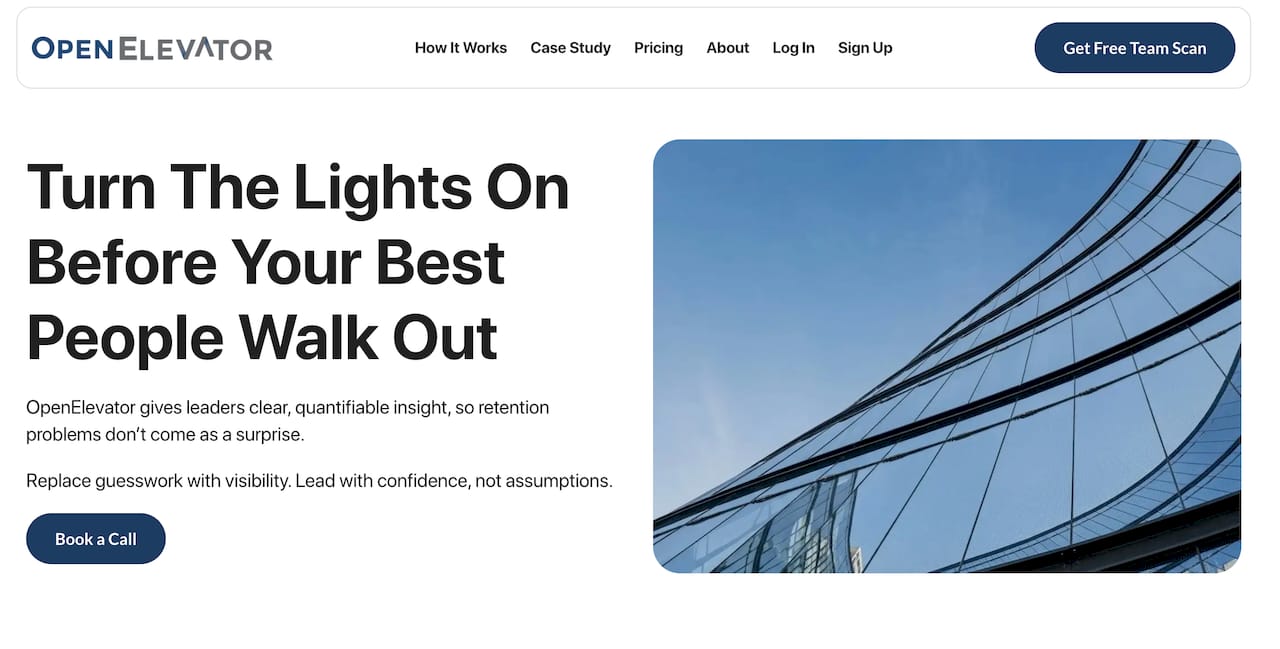
OpenElevator is a people analytics platform built to help leaders see retention risk, team misalignment, and hidden friction before they become costly resignations.
Many leaders sense when something is off inside a team, but they lack clear visibility into what is actually happening beneath the surface. Employees may still attend meetings, complete work, and avoid raising concerns while disengagement, manager friction, values misalignment, or team tension is already building.
OpenElevator helps turn those hidden signals into clearer leadership insight.
The platform uses a short, bias-free team scan and a proprietary algorithm to reveal values alignment, interpersonal alignment, retention risk, and team dynamics. This helps CEOs, founders, senior leaders, and managers understand where action may be needed earlier.
Core Features
| Feature | What It Helps Leaders See |
|---|---|
| Retention risk visibility | Which employees or teams may need earlier attention |
| Values alignment | Whether employees feel aligned with the company environment and direction |
| Interpersonal alignment | Where manager-employee or team fit may create friction |
| Team dynamics insight | Where hidden tension or misalignment may be forming |
| Hiring fit support | How well candidates may align with the manager, team, and company culture |
Pros
| Pro | Why It Matters |
|---|---|
| Focuses on hidden retention risk | Helps leaders see risk before resignation becomes the signal |
| Goes beyond generic engagement scores | Looks at alignment, team dynamics, and interpersonal fit |
| Built for leader action | Gives CEOs, founders, senior leaders, and managers clearer visibility into where to intervene |
| Supports retention and hiring | Helps reduce avoidable turnover and improve fit before people join the team |
| Practical for growing companies | Best suited for organizations that need insight without enterprise-level complexity |
Limitations
| Limitation | What to Know |
|---|---|
| Requires leadership willingness to act | Insight only matters if leaders follow through |
| Not a replacement for HR systems | OpenElevator adds a visibility layer rather than replacing payroll, HRIS, or ATS tools |
| Best fit for companies with people complexity | Very small teams may not need the same level of analytics yet |
Who It’s For
OpenElevator is best for CEOs, founders, senior leaders, managers, and growth-stage companies that want to reduce avoidable turnover by seeing retention risk earlier. It is especially relevant for companies where manager fit, team dynamics, values alignment, and hiring fit affect performance and retention.
Unique Value Proposition
OpenElevator’s strength is that it does not stop at predicting who might leave. It helps leaders understand where retention risk may be coming from: values misalignment, interpersonal friction, manager-employee fit, or hidden team tension.
That makes it useful for leaders who want to move from guessing to knowing where attention is needed.
Pricing
OpenElevator offers a free team scan for up to 10 team members. Broader pricing depends on company size and scope.
Website: https://www.openelevator.com
Retensa Employee Retention Strategies
At a Glance
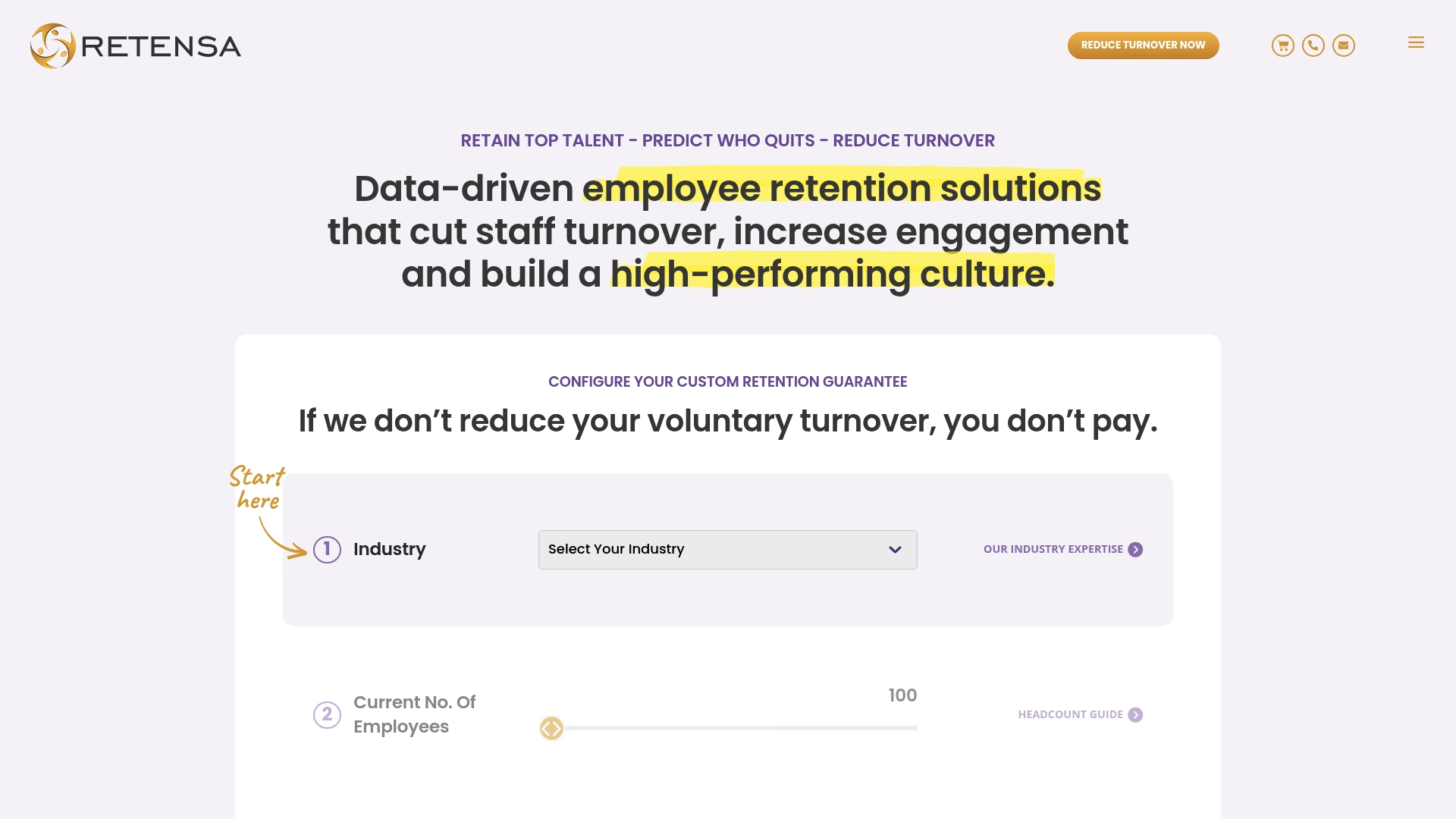
Retensa offers employee retention consulting, analytics, and tools designed to help organizations understand turnover patterns and improve retention strategy.
Retensa is more service-heavy than some analytics platforms, which can be valuable for organizations that want consulting support along with software. The tradeoff is that implementation may require more time, internal commitment, and budget.
Core Features
| Feature | What It Supports |
|---|---|
| Retention diagnostics | Helps organizations understand why people may be leaving |
| Exit and engagement tools | Supports data collection from employees |
| Custom retention planning | Provides advisory support for retention programs |
| Industry-specific support | Can tailor retention strategies to different workforce contexts |
Pros
| Pro | Why It Matters |
|---|---|
| Combines software and consulting | Useful for companies that need help interpreting and acting on retention data |
| Strong retention focus | More specialized than general HR platforms |
| Can support complex organizations | Better fit for companies ready to invest in structured retention programs |
Limitations
| Limitation | What to Know |
|---|---|
| May be more expensive than lighter tools | Consulting and custom programs can increase total cost |
| May require significant organizational change | Results depend on whether leaders act on the recommendations |
| Less self-service | Companies wanting a lightweight tool may find the model too involved |
Who It Is For
Retensa is best for mid-sized and larger organizations that want a combination of analytics and consulting support to diagnose turnover and build retention programs.
Pricing
Retensa does not publish fixed pricing. Buyers should expect custom pricing based on services, software, and implementation scope.
Website: https://www.retensa.com
Betterteem AI
At a Glance
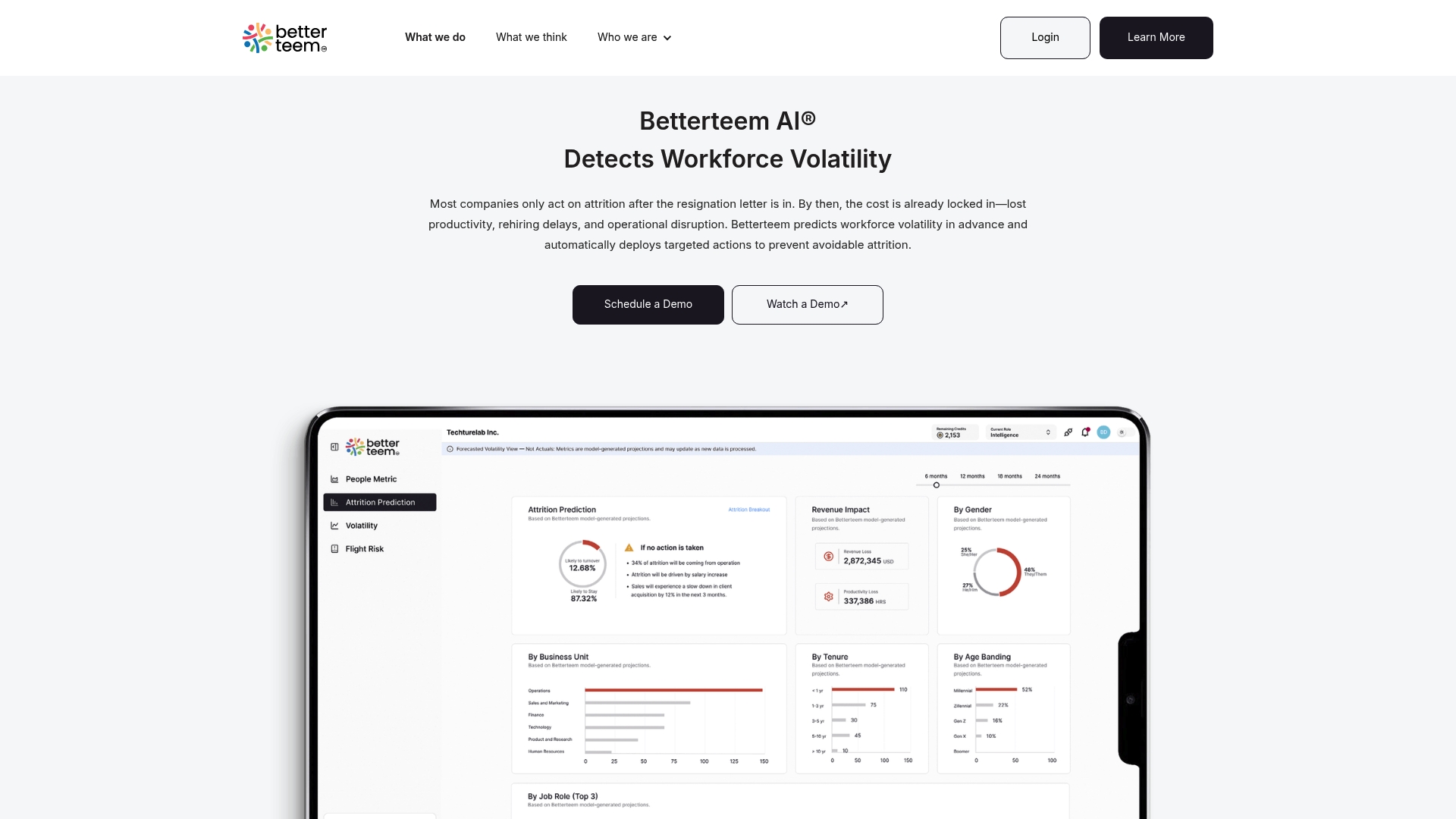
Betterteem AI is a workforce analytics platform that uses connected HR data to identify attrition risk and workforce volatility.
It is strongest for organizations with enough existing HR data to support predictive modeling. Companies with fragmented, incomplete, or inconsistent data may need cleanup before getting full value.
Core Features
| Feature | What It Supports |
|---|---|
| Turnover risk prediction | Helps identify employees or groups that may be at higher risk |
| HRIS and payroll integrations | Pulls from existing workforce systems |
| Workforce risk visibility | Helps leaders understand where attrition risk may be concentrated |
| Automated intervention workflows | Can trigger recommended actions based on risk signals |
Pros
| Pro | Why It Matters |
|---|---|
| Uses existing HR data | Can help companies turn scattered workforce data into retention insight |
| Predictive risk detection | Helps leaders spot possible attrition risk earlier |
| Automation support | Reduces manual follow-up for HR teams |
Limitations
| Limitation | What to Know |
|---|---|
| Depends heavily on data quality | Weak or incomplete HR data can reduce accuracy |
| Pricing is not transparent | Buyers need to schedule a demo for cost details |
| May require integration work | Companies without mature systems may face setup friction |
Who It’s For
Betterteem AI is best for organizations with established HR systems that want to use existing data to identify workforce risk and attrition patterns.
Pricing
Pricing is not publicly listed. Buyers should contact Betterteem for a custom quote.
Website: https://www.betterteem.com
Visier Workforce AI
At a Glance
Visier Workforce AI is an enterprise workforce analytics platform that helps HR and business leaders analyze workforce data, model scenarios, and make data-backed talent decisions.
Visier is powerful, but it is generally better suited for larger organizations with mature HR data, analytics teams, and implementation capacity.
Core Features
| Feature | What It Supports |
|---|---|
| Unified workforce data | Combines HR data from multiple systems |
| Predictive analytics | Helps forecast workforce trends and risk |
| Scenario planning | Supports planning around hiring, restructuring, and workforce changes |
| Workforce benchmarking | Helps compare internal data against broader patterns |
Pros
| Pro | Why It Matters |
|---|---|
| Strong enterprise analytics | Useful for complex organizations with large data sets |
| Scenario planning | Helps leaders model workforce decisions before acting |
| Broad workforce intelligence | Goes beyond retention into planning, mobility, and workforce strategy |
Limitations
| Limitation | What to Know |
|---|---|
| Can be too heavy for smaller companies | Implementation and administration may be more than a growing company needs |
| Requires strong data infrastructure | Value depends on clean, connected workforce data |
| Pricing is enterprise-oriented | May be cost-prohibitive for smaller teams |
Who It’s For
Visier is best for medium to large enterprises that need broad workforce analytics, scenario modeling, and executive-level workforce planning.
Pricing
Visier does not publish standard pricing. Buyers should expect custom enterprise pricing.
Website: https://www.visier.com
WorkStep
At a Glance
WorkStep is an employee engagement and retention platform focused on frontline workforces. It helps companies collect employee feedback, identify operational issues, and respond to engagement concerns across distributed or shift-based teams.
It is especially relevant for industries such as manufacturing, logistics, retail, and other frontline-heavy environments.
Core Features
| Feature | What It Supports |
|---|---|
| Lifecycle feedback | Collects employee input across onboarding, employment, and exit stages |
| Multi-channel surveys | Reaches employees through channels such as SMS, email, QR codes, and messaging tools |
| Frontline engagement insights | Helps identify local or operational issues affecting retention |
| AI-supported recommendations | Suggests actions based on employee feedback patterns |
Pros
| Pro | Why It Matters |
|---|---|
| Strong frontline fit | Designed for workers who may not sit at desks or use email regularly |
| Multi-channel feedback | Improves reach across shifts, locations, and roles |
| Useful for operational issues | Helps leaders spot site-specific problems affecting retention |
Limitations
| Limitation | What to Know |
|---|---|
| Less focused on executive visibility | More centered on feedback collection and frontline engagement |
| Pricing is not transparent | Requires vendor contact |
| May not fit office-based teams as well | Best value is in frontline-heavy environments |
Who It’s For
WorkStep is best for HR and operations leaders managing large frontline workforces where feedback access, shift patterns, and location-specific issues affect retention.
Pricing
Pricing is not publicly listed. Buyers should contact WorkStep for a custom quote.
Website: https://www.workstep.com
Workforce Retention Analytics Platforms Comparison
| Platform | Best For | Strength | Main Limitation | Pricing |
|---|---|---|---|---|
| OpenElevator | CEOs, founders, senior leaders, managers, and growing companies focused on retention visibility | Reveals retention risk, values alignment, interpersonal alignment, and hidden team friction | Requires leaders to act on the insight | Free team scan available; broader pricing varies |
| Retensa | Organizations wanting retention consulting plus software | Combines diagnostics, analytics, and advisory support | Can be service-heavy and more expensive | Custom pricing |
| Betterteem AI | Companies with existing HR data infrastructure | Predictive workforce risk analytics using connected systems | Depends heavily on data quality and integrations | Custom pricing |
| Visier Workforce AI | Larger enterprises needing workforce analytics and planning | Broad enterprise analytics and scenario modeling | Can be too heavy or costly for smaller companies | Custom enterprise pricing |
| WorkStep | Frontline-heavy organizations | Multi-channel employee feedback and frontline engagement insight | Less focused on leadership visibility and office-based teams | Custom pricing |
How to Choose the Right People Analytics Tool for Retention
The right tool depends on what problem you are trying to solve.
If you need broad enterprise workforce planning, Visier may be a better fit.
If you need consulting support around retention strategy, Retensa may be worth evaluating.
If you have strong HR data infrastructure and want predictive workforce risk analytics, Betterteem AI may be relevant.
If your workforce is mostly frontline, WorkStep may be stronger because it is built around employee feedback access across locations and shifts.
If your core problem is that leaders cannot see retention risk, manager-employee misalignment, values disconnect, or hidden team friction early enough, OpenElevator is the clearest fit.
The mistake is choosing a tool because it has more dashboards.
Retention improves when leaders get better visibility into what is happening beneath the surface and can act before resignation becomes the first clear signal.
See Retention Risk Before It Becomes Turnover
People analytics tools should not just produce more data. They should help leaders see what they need to act on.
A team can look stable while disengagement, values misalignment, manager-employee friction, or hidden team tension is already forming beneath the surface.
OpenElevator helps CEOs, founders, senior leaders, and managers detect retention risk, values alignment, interpersonal alignment, and hidden team friction before they become costly resignations.
Start with a free team scan for up to 10 team members and see what may be hidden inside your own team.
Frequently Asked Questions
What are people analytics tools for retention?
People analytics tools for retention help leaders understand workforce signals that may affect employee retention, such as engagement, turnover risk, manager alignment, team friction, values alignment, and employee feedback.
What is the best people analytics tool for retention?
The best tool depends on the problem you need to solve. OpenElevator is strongest for leaders who need earlier visibility into retention risk, values alignment, interpersonal alignment, and hidden team friction.
How do people analytics tools help reduce turnover?
People analytics tools can help reduce turnover by showing where retention risk may be forming before employees resign. The best tools help leaders understand why the risk exists and what action may be needed.
What are the limitations of people analytics tools?
Common limitations include poor data quality, lack of context, overreliance on risk scores, implementation complexity, and insights that do not clearly translate into leadership action.
How is OpenElevator different from traditional people analytics tools?
OpenElevator focuses on retention visibility, values alignment, interpersonal alignment, and team dynamics. It helps leaders understand where hidden risk and friction may already be forming.
Do people analytics tools replace managers?
No. People analytics tools should not replace managers. They should help managers and leaders see patterns earlier, ask better questions, and act with better information.
Is there a free way to try OpenElevator?
Yes. OpenElevator offers a free team scan for up to 10 team members so leaders can see retention risk, alignment gaps, and hidden friction inside their own team.