
Most difficult leadership conversations do not become difficult overnight.
They usually start with something leaders cannot clearly see: shifting sentiment, weakening values alignment, strained manager-employee fit, or team friction building below the surface.
A leader may hold regular one-on-ones and still miss what is changing. The employee may still show up, complete work, and say things are fine while connection, trust, or long-term engagement is already weakening.
That is why better conversations start with better visibility.
This guide explains how earlier visibility helps leaders move from guessing to knowing, start the right conversations sooner, and prevent hidden retention risk from becoming surprise resignations or performance disruption.
Table of Contents
Key Takeaways
| Key point | What leaders should know |
|---|---|
| Visibility changes timing | Leaders can have better conversations when they see risk before it becomes visible turnover. |
| Surface behavior can hide risk | Employees may still perform while values alignment, connection, or manager-employee fit is weakening. |
| Fit matters | Difficult conversations often reflect strained alignment, not bad managers or bad employees. |
| Lagging indicators arrive too late | Engagement surveys, turnover data, and exit interviews explain problems after risk has already formed. |
| Data should guide conversations | The goal is not more dashboards; it is knowing where to focus attention before issues escalate. |
Why do conversations become difficult? The role of hidden dynamics
Here is something most leaders do not want to admit: difficult conversations are rarely about the moment they happen. They are about everything that went unsaid in the weeks and months before. By the time a team member is sitting across from you looking disengaged or defensive, the real issue has usually been quietly compounding for a while.
Retention risk does not always announce itself. It can build through shifting sentiment, weakening values alignment, strained manager-employee fit, or team friction that is hard to see from the surface. Leaders who lack regular visibility into team sentiment miss these early signals entirely. And then one day, the music stops, and they are left scrambling to understand what happened.
When visibility is lacking, issues go unnoticed until they escalate into something much harder to address. That is not a personal failure. It is a structural one.
Some of the most common hidden dynamics that turn routine conversations into tense interventions include:
-
Unrecognized effort: Employees who feel their contributions go unnoticed quietly disengage long before they say anything.
-
Unclear expectations: When role boundaries blur, frustration builds, but rarely surfaces until a conflict forces it into the open.
-
Stalled growth: People stop asking about development opportunities when they stop believing those conversations will lead anywhere.
-
Relationship friction: Low-grade tension between team members festers beneath the surface until it becomes a performance issue.
The best employee retention strategies are not reactive rescue plans. They are the result of leaders who spotted the drift early and course-corrected before anyone felt the need to look for the exit.
Understanding these hidden dynamics is the first step. But understanding them requires visibility, not guesswork.
How visibility transforms leadership conversations
Think about what changes when you actually know what is happening inside your team before a problem becomes a crisis. Conversations shift from damage control to genuine support. That is the real power of visibility.
Visibility into values alignment, manager-employee fit, interpersonal alignment, and team friction helps leaders see where retention risk may be forming before issues escalate into resignations or conflict. It is the difference between a leader who reacts and one who leads.
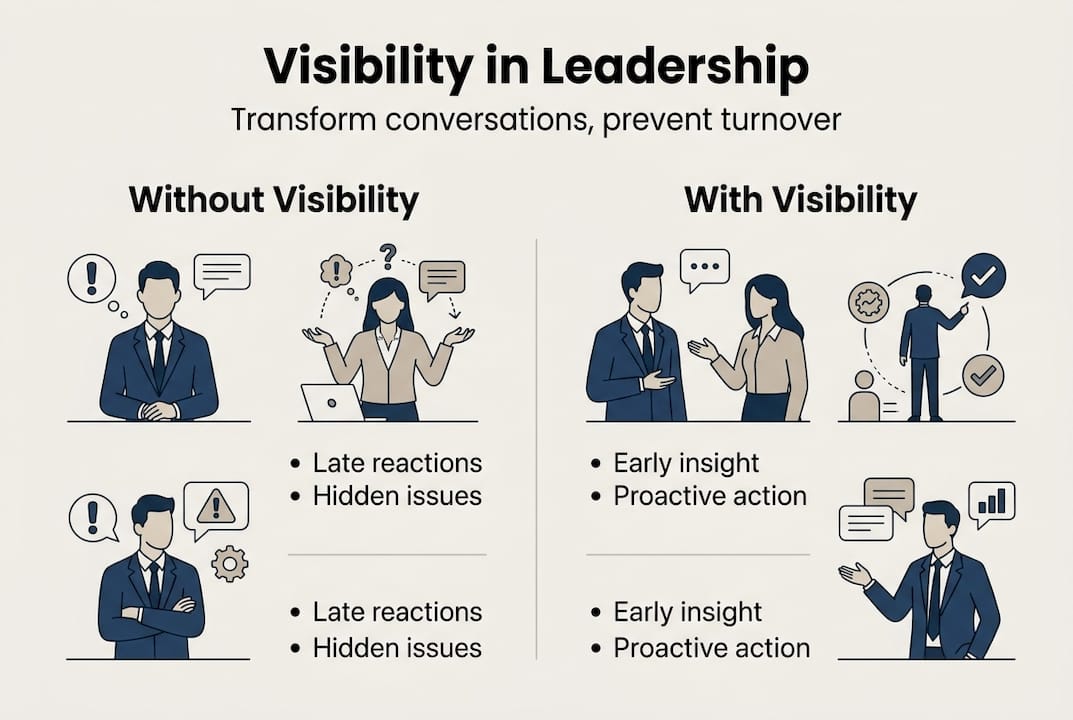
Here is how visibility actually changes the mechanics of leadership conversations:
| Without visibility | With visibility |
|---|---|
| Conversations triggered by problems | Conversations triggered by patterns |
| Reactive and often tense | Proactive and supportive |
| Leader feels blindsided | Leader feels prepared |
| Employee feels unheard | Employee feels seen |
| High stakes, low trust | Lower stakes, building trust |
The right visibility helps leaders stop relying only on gut feel, broad survey scores, or delayed feedback. It shows where to focus attention so conversations can be more specific, timely, and useful.

The key is that visibility does not replace the human conversation. It informs it. A signal does not explain the whole story. But it can show leaders where to ask better questions before the issue becomes harder to address. Early detection of turnover risks gives leaders the gift of timing.
Combine data insights with consistent personal check-ins for deeper context. Numbers tell you where to look. People tell you what you are actually seeing.
What visibility helps leaders talk about
Better visibility does not replace leadership conversations. It makes them more useful.
When leaders understand what may be changing below the surface, they can stop having generic check-ins and start asking better questions.
Visibility helps leaders explore:
-
What each person values most
-
Whether those needs are still being met
-
Where manager-employee fit feels strong or strained
-
Whether interpersonal alignment is helping or hurting collaboration
-
Where team friction may be forming
-
Whether a high performer still sees a future in the organization
-
Whether a team that looks stable is quietly losing connection
The best leadership conversations are not interrogations. They are focused, human conversations guided by insight.
Instead of asking only, “How are things going?” leaders can ask, “What has changed for you recently?” “Where does the work still feel aligned?” “What is making collaboration easier or harder?” and “What would make staying here feel like the right long-term choice?”
How to use visibility without creating mistrust
Visibility should help leaders support people, not label them.
The goal is not to turn employee data into surveillance, public scores, or a reason to blame managers or employees. The goal is to see where fit, alignment, connection, or collaboration may be weakening so leaders can respond earlier and more thoughtfully.
Use visibility to guide conversations, not replace them.
Leaders should avoid:
-
Sharing raw individual scores broadly
-
Treating data as a verdict
-
Assuming one signal explains the whole story
-
Turning insights into blame
-
Ignoring context
-
Waiting until the issue becomes a resignation
The best use of visibility is private, practical, and action-oriented. It helps leaders ask better questions while there is still time to act.
Why earlier visibility matters for retention
Retention risk is expensive when leaders see it too late.
By the time turnover data rises or an exit interview explains the issue, the damage has already started. The team may have lost institutional knowledge, momentum, customer continuity, or trust.
Earlier visibility helps leaders act while the relationship can still be strengthened.
It helps identify:
-
Who may be least satisfied and at higher risk of leaving
-
Which values are no longer being met
-
Where manager-employee fit may be strained
-
Which team relationships are creating friction
-
Where collaboration is becoming harder
-
Which internal moves, promotions, or hiring decisions may improve or weaken fit
The business value is not just better conversations. It is fewer surprises.
Why visibility is only useful when leaders act
Visibility is not the outcome. It is the starting point.
A leader can have the best data available and still fail to act. The value comes from using insight to focus attention where it matters most.
When leaders see where values alignment, manager-employee fit, interpersonal alignment, or team friction is changing, they can have better conversations before the issue becomes a resignation.
The shift is simple:
Stop asking, “Why did they leave?”
Start asking, “What is changing now, and what can we do before it becomes turnover?”
How OpenElevator helps leaders see retention risk earlier
Leadership conversations improve when leaders know what is changing before issues escalate.
OpenElevator helps CEOs, founders, senior leaders, and managers see what is happening now: shifting sentiment, hidden disengagement, manager-employee misalignment, values misalignment, interpersonal alignment, and team friction before those issues become surprise resignations or disrupt performance.
Engagement surveys, turnover data, and exit interviews are lagging indicators. OpenElevator gives leaders earlier visibility into the risks forming below the surface.
Get your free OpenElevator team scan to experience the platform, gain real retention-risk visibility, and see what may be hidden below the surface — with zero cost and zero risk.
Frequently asked questions
How does visibility improve leadership conversations?
Visibility helps leaders see where sentiment, values alignment, manager-employee fit, interpersonal alignment, or team friction may be changing. That lets them have more focused conversations before issues become resignations or performance problems.
Why do leadership conversations become difficult?
Leadership conversations often become difficult when risk has been building below the surface for too long. By the time the issue is visible, trust, connection, or alignment may already be strained.
Are engagement surveys enough to guide leadership conversations?
No. Engagement surveys are lagging indicators. They show how employees felt at a point in time, but they may miss whether values alignment, manager-employee fit, or team dynamics are already changing.
What should leaders look for before turnover risk grows?
Leaders should look for hidden disengagement, shifting sentiment, strained manager-employee fit, values misalignment, interpersonal friction, and team dynamics that may not show up in performance metrics.
How does OpenElevator help leaders have better conversations?
OpenElevator helps leaders see what is happening below the surface before turnover data, exit interviews, or engagement surveys reveal the problem too late. The free team scan lets leaders experience the platform with zero cost and zero risk while gaining real visibility into hidden team risk.