
Over one third of American employers report that high employee turnover disrupts productivity and culture. Businesses lose much more than just staff when turnover climbs. For every departure, there are ripple effects that drain resources, dampen morale, and hinder long-term growth. Understanding what drives these exits can help organizations address the root causes before they face costly retention challenges.
Table of Contents
- Defining High Employee Turnover And Its Effects
- Organizational Factors Driving Turnover
- Impact Of Values And Interpersonal Misalignment
- How Leadership And Workplace Culture Contribute
- Practical Solutions To Reduce Employee Turnover
Key Takeaways
| Point | Details |
|---|---|
| High Employee Turnover | High turnover rates indicate significant operational challenges, leading to increased recruitment costs and decreased productivity. |
| Organizational Factors | Key factors influencing retention include job satisfaction, compensation, career development, and workplace culture. |
| Leadership and Culture | Effective leadership and a positive workplace culture are crucial for retaining employees and fostering engagement. |
| Retention Strategies | Implementing comprehensive retention strategies that address compensation, professional development, and workplace flexibility can significantly reduce turnover. |
Defining High Employee Turnover and Its Effects
Employee turnover represents the frequency with which workers exit an organization and are subsequently replaced. High turnover rates signal significant workplace challenges that extend far beyond simple staffing metrics. Companies experiencing substantial workforce churn often encounter complex operational and cultural disruptions.
At its core, employee turnover describes the percentage of workers who leave an organization within a specific timeframe. According to research from leading workforce experts, this phenomenon can dramatically impact organizational health. Industries like healthcare, hospitality, and manufacturing frequently experience higher turnover rates compared to national averages.
The consequences of high turnover are multifaceted and profound. Organizations face increased recruitment expenses, reduced productivity, and potential erosion of institutional knowledge. When talented employees depart, remaining staff often experience heightened workload pressures and potential burnout. These cascading effects can create a negative feedback loop where mounting stress accelerates additional employee departures.
Critical turnover metrics typically include voluntary resignations, terminations, and retirement. Understanding these nuanced workforce dynamics requires comprehensive analysis of underlying factors driving employee mobility. By recognizing early warning signs and implementing strategic retention initiatives, businesses can mitigate the substantial financial and cultural risks associated with excessive workforce turnover.
Organizational Factors Driving Turnover
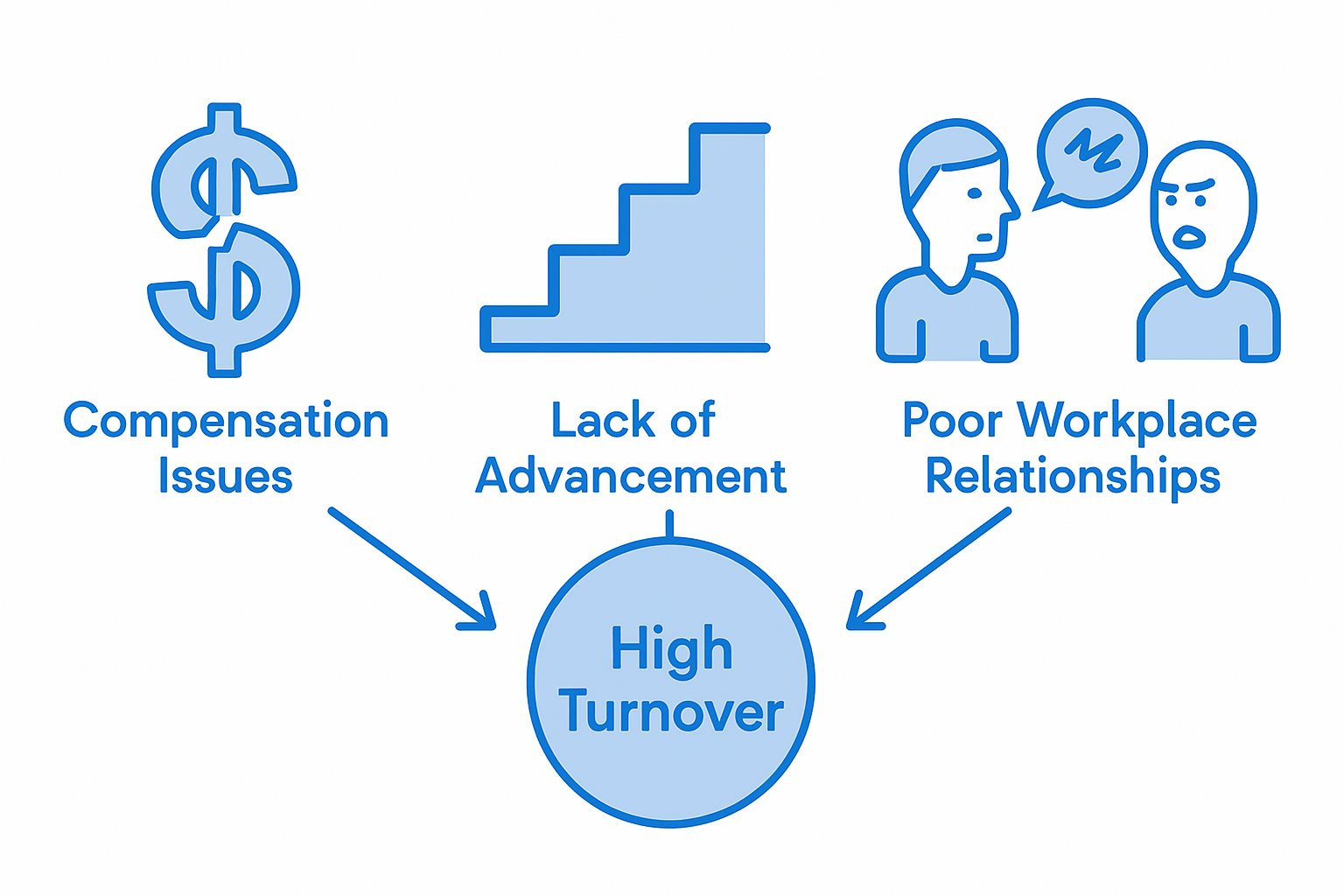
Multiple interconnected organizational factors contribute to employee turnover, creating complex workplace dynamics that challenge business leaders. Comprehensive workforce studies reveal that job satisfaction, compensation, career development, and workplace environment are critical determinants of employee retention.
Compensation remains a primary driver of workforce mobility. Research indicates that salary disparities can prompt talented professionals to seek opportunities elsewhere, especially when employees perceive their current compensation as misaligned with their skills and market value. Beyond monetary considerations, interpersonal relationships and organizational culture play significant roles in an employee’s decision to stay or leave.
Career advancement opportunities represent another crucial factor in retention strategies. Employees who perceive limited professional growth potential are more likely to explore external job markets. This phenomenon creates a cyclical challenge where top performers become increasingly disengaged, leading to potential talent exodus. Organizations must design clear professional development pathways, mentorship programs, and transparent promotion criteria to mitigate these risks.
Workplace environment and organizational culture significantly impact employee retention. Toxic work environments characterized by poor management, insufficient communication, and lack of recognition can accelerate turnover rates. Successful companies invest in creating supportive, inclusive cultures that prioritize employee well-being, foster open communication, and demonstrate genuine commitment to their workforce’s professional and personal growth.

Impact of Values and Interpersonal Misalignment
Values alignment represents a critical yet often overlooked dimension of employee retention. Research demonstrates that when an employee’s personal values fundamentally diverge from their organization’s core principles, job satisfaction plummets and turnover becomes increasingly probable. This misalignment creates a profound psychological disconnect that extends far beyond simple workplace disagreements.
Professional identity plays a pivotal role in determining an employee’s long-term commitment. Empirical studies reveal that individuals with strong professional identities are more likely to remain engaged when organizational incentives resonate with their personal career aspirations. Conversely, when employees feel their professional growth and core values are not genuinely supported, they begin exploring alternative employment opportunities.
Interpersonal dynamics, particularly relationships with managers and team members, significantly influence an employee’s sense of belonging. Misalignment can manifest through communication styles, leadership approaches, and fundamental workplace expectations. A team member who feels chronically misunderstood or undervalued will inevitably become disconnected, regardless of compensation or job title. Strategic organizations recognize that cultural fit and interpersonal chemistry are as crucial as technical skills in maintaining a stable workforce.
Addressing values and interpersonal misalignment requires a multifaceted approach. Companies must invest in robust onboarding processes, continuous feedback mechanisms, and cultural assessment tools that identify potential disconnects early. By creating transparent environments that encourage authentic dialogue and mutual understanding, organizations can transform potential sources of friction into opportunities for genuine professional connection and shared purpose.
How Leadership and Workplace Culture Contribute
Leadership quality represents a fundamental driver of employee retention and organizational success. Effective leadership practices demonstrate that consistent feedback, genuine support, and transparent communication are critical in creating an environment where employees feel genuinely valued and deeply engaged.
Workplace culture emerges as a powerful predictor of workforce stability. Leaders who cultivate an environment of psychological safety enable employees to express ideas, take calculated risks, and contribute meaningfully beyond their immediate job descriptions. This approach transforms traditional hierarchical structures into collaborative ecosystems where individual contributions are recognized and professional growth is actively encouraged.
The relationship between management style and employee retention is intricate and multidimensional. Toxic leadership characterized by micromanagement, inconsistent communication, and lack of recognition can rapidly erode employee morale. Conversely, transformational leaders who invest in understanding individual team members’ aspirations, provide clear career pathways, and demonstrate authentic commitment to professional development can significantly reduce turnover rates.
Strategic organizations recognize that workplace culture is not a static concept but a dynamic, continuously evolving system. By implementing robust feedback mechanisms, transparent performance evaluation processes, and meaningful professional development opportunities, companies can create environments that attract and retain top talent. The most successful leaders understand that cultural excellence requires ongoing commitment, empathy, and a genuine desire to create workplaces where employees feel empowered, respected, and intrinsically motivated to contribute their best work.
Practical Solutions to Reduce Employee Turnover
Strategic retention strategies represent a comprehensive approach to addressing workforce stability. Compensation packages are just the beginning. Organizations must develop multifaceted approaches that address employees’ holistic professional needs, including career development, workplace flexibility, and meaningful recognition.
Career development emerges as a critical retention lever. Companies can implement targeted programs that provide clear professional advancement pathways, including mentorship initiatives, skill development workshops, and transparent promotion criteria. Engagement surveys and exit interviews offer invaluable insights into potential retention gaps, allowing organizations to proactively address workforce concerns before talented employees consider alternative opportunities.
Workplace flexibility has transformed from a nice-to-have to a fundamental expectation for modern professionals. Organizations that offer adaptive work arrangements, including remote work options, flexible scheduling, and personalized benefit packages, demonstrate a genuine commitment to employee quality of life. This approach goes beyond traditional perks, creating an environment where employees feel valued as whole individuals rather than simply as workforce resources.
Successful retention strategies require continuous refinement and genuine organizational commitment. By combining competitive compensation, meaningful professional development, workplace flexibility, and authentic cultural support, companies can create environments that not only retain top talent but also foster genuine employee engagement. The most effective approaches recognize that retention is not about preventing departure, but about creating workplaces where employees genuinely want to invest their professional energy and passion.
Stop Guessing What Drives Your High Employee Turnover and Get Real Answers Today
High employee turnover often stems from unseen challenges like values misalignment and interpersonal disconnects driving talent away. Your organization can quickly feel the costly effects of lost productivity, recruitment expenses, and cultural disruption. This article highlights how critical it is to understand these hidden drivers rather than just addressing surface issues like compensation or vague job satisfaction.
OpenElevator offers a proven solution to these problems by using a proprietary algorithm that reveals who is truly at risk of quitting based on values alignment and interpersonal fit. This goes far beyond traditional surveys to provide leaders with clear, actionable insights that transform retention strategies. Companies from startups to Fortune 500s rely on OpenElevator to stop costly turnover before it starts. Don’t let guesswork undermine your workforce stability. Visit OpenElevator now to discover how to retain your top talent by aligning core needs, values, and team dynamics. Learn more about how OpenElevator identifies turnover risks and enhances employee engagement here and start making informed decisions that keep your employees engaged and committed.
Frequently Asked Questions
What are the main factors contributing to high employee turnover?
High employee turnover can be influenced by factors such as compensation disparities, lack of career development opportunities, poor workplace culture, and misalignment of personal and organizational values.
How does high turnover affect an organization?
High turnover can lead to increased recruitment costs, reduced productivity, loss of institutional knowledge, and heightened stress among remaining employees, which may create a negative feedback loop.
How can organizations improve employee retention?
Organizations can improve retention through comprehensive strategies that include competitive compensation, clear career development pathways, flexible work arrangements, and fostering a positive workplace culture that values open communication and recognition.
What role does leadership play in employee turnover?
Effective leadership plays a crucial role in employee retention by fostering an environment of support, transparency, and career growth, while toxic leadership can significantly contribute to higher turnover rates.