
Every year, companies in the United States lose up to $1 trillion due to employee turnover. The reasons behind these numbers go far beyond resignations or terminations. Understanding what truly drives employees to leave or stay shapes everything from workplace morale to financial stability. This guide breaks down the real meaning of turnover, shatters common myths, and reveals why addressing the root causes matters more than ever for leaders who want to build healthy, resilient organizations.
Table of Contents
- Defining Employee Turnover And Common Myths
- Types Of Employee Turnover And Their Drivers
- How Low Engagement Fuels Turnover
- Financial And Operational Impacts Of Turnover
- Retention Strategies For Sustainable Growth
Key Takeaways
| Point | Details |
|---|---|
| Understanding Turnover | Employee turnover is a complex phenomenon that reflects organizational health, not just a number. Some turnover can be beneficial, but excessive rates signal deeper issues. |
| Types of Turnover | Recognizing the distinctions between voluntary, involuntary, functional, and dysfunctional turnover helps organizations develop targeted retention strategies. |
| Engagement as a Key Factor | Low employee engagement drives turnover, leading to reduced productivity and potential team dissatisfaction, making engagement a strategic priority. |
| Effective Retention Strategies | Successful retention goes beyond compensation, focusing on meaningful development, clear progression, and fostering a supportive culture to ensure employee commitment. |
Defining Employee Turnover and Common Myths
Employee turnover represents the rate at which workers leave an organization and are subsequently replaced by new personnel. According to CIPD, this metric is a critical indicator of organizational health and workforce dynamics. Turnover isn’t just a number on a spreadsheet – it’s a complex reflection of workplace satisfaction, engagement, and systemic organizational challenges.
Contrary to popular belief, not all employee turnover is detrimental. As Ask A Manager highlights, some turnover can actually be beneficial. Strategic departures can help organizations:
- Replace underperforming staff
- Introduce fresh perspectives and talent
- Create opportunities for internal promotions
- Prevent organizational stagnation
However, excessive turnover signals deeper problems. High turnover rates typically indicate underlying issues such as:
- Poor management practices
- Inadequate compensation
- Limited career development opportunities
- Weak company culture
- Misalignment between employee expectations and organizational reality
Leaders who recognize turnover as a nuanced phenomenon – rather than a simple metric to minimize – can develop more sophisticated workforce strategies. Understanding that some employee movement is natural and potentially constructive allows for a more proactive and strategic approach to talent management.

Types of Employee Turnover and Their Drivers
Employee turnover is far from a monolithic concept. SHRM explains that turnover can be categorized into distinct types, each with unique characteristics and implications for organizations. Understanding these variations is crucial for developing targeted retention strategies.
Voluntary vs. Involuntary Turnover
Voluntary turnover occurs when employees choose to leave an organization by their own volition. According to QIC-WD, this type of departure can be driven by several factors:
- Better career opportunities elsewhere
- Dissatisfaction with current work environment
- Compensation and benefits concerns
- Personal life changes
Involuntary turnover, conversely, happens when the organization initiates the separation through:
- Performance-related terminations
- Organizational restructuring
- Reduction in workforce
- Disciplinary actions
Functional vs. Dysfunctional Turnover
Not all employee departures carry the same organizational impact. Functional turnover represents the exit of low-performing or disengaged employees, potentially creating opportunities for improvement. These transitions can actually benefit the organization by:
- Removing underperforming team members
- Creating space for more aligned talent
- Introducing fresh perspectives
In contrast, dysfunctional turnover involves losing high-performing, skilled employees critical to organizational success. This type of turnover is particularly damaging, potentially leading to:
- Loss of institutional knowledge
- Decreased team productivity
- Higher recruitment and training costs
- Potential negative impact on team morale
Recognizing the nuanced nature of turnover allows leaders to develop more sophisticated workforce management strategies. By understanding the drivers and implications of different turnover types, organizations can create targeted interventions that minimize negative impacts while maintaining a dynamic, engaged workforce.
How Low Engagement Fuels Turnover
Employee engagement is the critical heartbeat of organizational health. Trident reveals that low engagement doesn’t just create a subtle workplace malaise – it actively drives employees toward the exit. Disengagement is a silent organizational destroyer that gradually erodes workplace productivity, commitment, and ultimately, retention.
The Engagement-Turnover Connection
When employees feel disconnected from their work, their colleagues, and the broader organizational mission, turnover becomes almost inevitable. According to Oreed, several key factors contribute to this disengagement:
- Lack of meaningful recognition
- Absence of clear career progression
- Poor communication from leadership
- Limited autonomy and decision-making opportunities
- Misalignment between personal and organizational values
The Cascading Impact of Disengagement
Disengagement doesn’t just prompt individual departures – it creates a destructive cycle. Employees experiencing low motivation often:
- Reduce their discretionary effort
- Spread negative sentiment among teammates
- Become less productive
- Actively seek opportunities elsewhere
This domino effect means that a single disengaged employee can potentially trigger widespread organizational instability. The financial implications are substantial – replacing a departing employee can cost between 50-200% of their annual salary, making engagement a critical financial strategy.
Leaders who recognize engagement as a strategic imperative – not just a HR checkbox – can transform workplace dynamics. By creating environments of genuine connection, meaningful work, and continuous growth, organizations can short-circuit the engagement-turnover cycle and build resilient, committed teams.
Financial and Operational Impacts of Turnover
Employee turnover is far more than a simple human resources metric – it’s a complex, multifaceted challenge with profound financial and operational consequences. WisdomLib underscores that the ripple effects of workforce disruption extend far beyond immediate replacement costs, impacting an organization’s entire operational ecosystem.
Direct Financial Costs
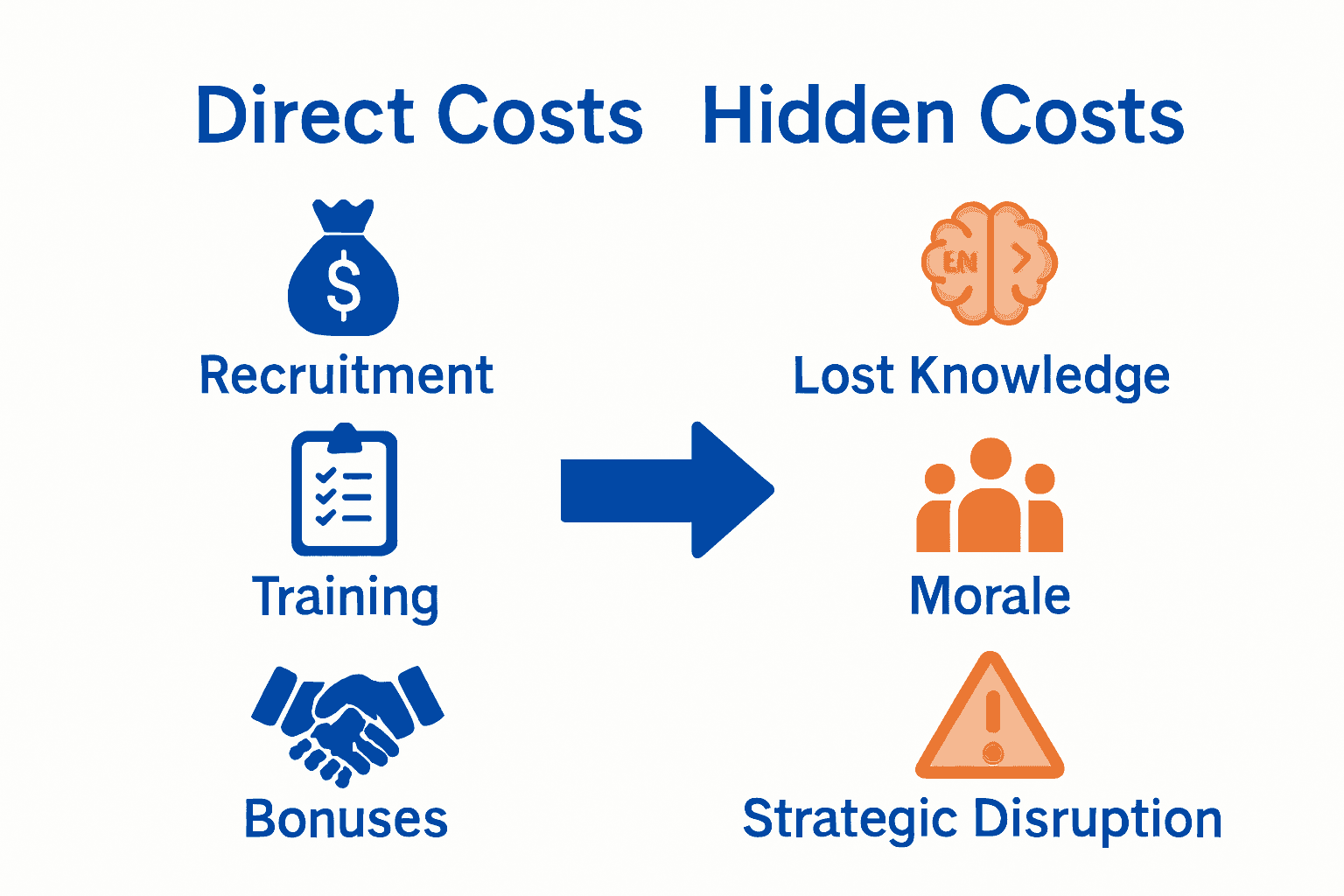
The financial burden of turnover is surprisingly comprehensive. Organizations face a multilayered expense structure that includes:
- Recruitment advertising and marketing
- External hiring consultant fees
- Background check and screening expenses
- Onboarding and initial training investments
- Potential signing bonuses or relocation packages
Productivity and Performance Implications
Beyond direct monetary expenses, turnover creates significant productivity disruptions. New employees require substantial time to reach full operational effectiveness, typically experiencing a productivity gap during their initial months. This transition period can result in:
- Reduced team output
- Increased workload for remaining team members
- Potential quality control challenges
- Temporary knowledge deficit
Hidden Operational Costs
The most insidious impacts of turnover are often the least visible. Continuous personnel changes can:
- Erode institutional knowledge
- Destabilize team dynamics
- Create uncertainty and potential anxiety among remaining employees
- Interrupt long-term strategic initiatives
Companies that view turnover as a mere transactional process miss the deeper strategic implications. By understanding turnover as a complex organizational challenge, leaders can develop more holistic, proactive workforce management strategies that mitigate both financial and operational risks.
Retention Strategies for Sustainable Growth
Retention is not just about keeping employees – it’s about creating an environment where talent wants to stay and grow. Psychological Science emphasizes that successful retention strategies go far beyond traditional compensation models, focusing instead on holistic workplace experiences.
Understanding Employee Motivations
Modern employees seek more than just a paycheck. According to Coursera, successful retention hinges on understanding and addressing deeper workplace needs:
- Meaningful professional development
- Clear career progression pathways
- Authentic leadership and communication
- Work-life balance and flexibility
- Sense of purpose and organizational alignment
Proactive Retention Frameworks
Effective retention requires a strategic, multidimensional approach. Organizations can implement targeted strategies such as:
- Regular engagement surveys
- Personalized career development plans
- Competitive compensation benchmarking
- Mental health and wellness support
- Recognition and rewards programs
Cultural and Structural Investments
Retention is fundamentally about creating an organizational ecosystem where employees feel valued, challenged, and connected. This means:
- Fostering a culture of continuous learning
- Providing transparent communication channels
- Offering meaningful mentorship opportunities
- Creating inclusive and supportive team environments
- Aligning individual goals with organizational missions
Leaders who view retention as a strategic investment – rather than a reactive HR function – can transform their workforce from a revolving door into a sustainable competitive advantage.
Take Control of Employee Turnover Before It Impacts Your Business
High employee turnover can drain your company’s resources and disrupt team productivity. If you are facing challenges like low engagement, dysfunctional turnover, or costly recruitment cycles described in the “What Is Employee Turnover? Complete Executive Guide,” you are not alone. Recognizing these pain points is the first step to creating a sustainable workforce where talent thrives and stays.
Discover how OpenElevator uses a powerful algorithm to identify employees at risk of leaving before it happens. Our platform delivers targeted retention strategies tailored to your needs, helping you reduce costly turnover and build a loyal, motivated team. Start transforming your employee retention today by visiting OpenElevator and see why companies worldwide rely on us for a permanent solution to turnover.
Explore the full range of employee retention solutions designed to address your workforce challenges and secure your company’s future now.
Frequently Asked Questions
What is employee turnover?
Employee turnover refers to the rate at which employees leave an organization and are replaced by new employees. It serves as a key indicator of workplace satisfaction and organizational health.
What are the primary types of employee turnover?
Employee turnover can be categorized into voluntary (employees choose to leave) and involuntary (employees are let go by the organization), as well as functional (removal of underperformers) and dysfunctional (loss of high performers).
How can low employee engagement contribute to turnover?
Low employee engagement can lead to disconnection from work and the organization, fostering a negative workplace environment and prompting individuals to seek employment elsewhere.
What are effective retention strategies for reducing turnover?
Effective retention strategies include implementing regular engagement surveys, creating personalized career development plans, fostering a supportive work culture, and offering competitive compensation and benefits.