
Gut feel matters in leadership. But gut feel alone is not enough when retention risk, team friction, disengagement, and hiring fit are hard to see clearly.
A leader may sense that something is off. A manager may feel that an employee is pulling away. A founder may notice that a team is not working the way it should. But without defensible insight, those concerns stay vague.
That creates risk.
When leaders rely only on instinct, they may act too late, misread the real issue, or explain turnover after the damage is done. The stronger move is to combine leadership judgment with clear signals that show where risk may already be forming.
This article explains how leaders can move from gut feel to defensible insight, identify early warning signs, quantify retention risk, improve employee experience, strengthen hiring fit, and avoid the traps of instinct-only decision-making.
Table of Contents
Key Takeaways
| Point | Details |
|---|---|
| Gut feel is useful but incomplete | Leadership instinct can detect concern, but it needs evidence to become actionable. |
| Defensible insight improves decisions | Clear data helps leaders understand retention risk, team dynamics, and hiring fit. |
| Early warning signs matter | Disengagement, manager friction, and team tension often appear before turnover. |
| Better visibility builds confidence | Leaders make stronger decisions when they can see what is happening beneath the surface. |
Moving From Intuition to Measurable Insight
Leadership often starts with instinct.
A leader senses that someone is disengaging. A manager notices that communication has changed. A founder feels that a team dynamic is not working. These instincts can be useful, but they are not enough on their own.
The problem is that gut feel is hard to defend, hard to compare, and easy to misread.
Defensible insight turns vague concern into clearer evidence. It helps leaders understand whether the issue is disengagement, manager-employee friction, values misalignment, team tension, lack of growth, or poor hiring fit.
Moving from intuition to measurable insight means leaders can:
-
Validate concerns before they become bigger problems
-
See patterns across teams and relationships
-
Identify retention risk earlier
-
Understand whether manager-employee fit may be weak
-
Detect hidden team friction
-
Make better hiring decisions
-
Take targeted action instead of guessing
The goal is not to remove human judgment. The goal is to give leadership judgment better evidence.
| Leadership Mode | What It Provides | Risk |
|---|---|---|
| Gut feel only | Fast instinct based on experience | Easy to misread, hard to defend |
| Data only | Clearer patterns and measurements | Can miss context if used mechanically |
| Defensible insight | Judgment supported by meaningful evidence | Stronger decisions and better follow-through |
Identifying Early Warning Signs in Teams
Team problems usually show signs before they become obvious.
The challenge is that early warning signs are often subtle. A team member may become quieter. A manager may notice less initiative. Collaboration may feel slower. Friction may show up in small moments before it becomes open conflict.
Early warning signs include:
-
Reduced communication
-
Lower meeting participation
-
Less initiative
-
Fewer ideas or suggestions
-
More visible frustration
-
Slower response times
-
Increased absenteeism or lateness
-
Lower collaboration
-
Less openness with a manager
-
Team tension or avoidance
-
Emotional withdrawal
-
A shift from ownership to basic task completion
Gut feel may notice that something has changed. Defensible insight helps leaders understand what changed, where it is happening, and whether it may signal retention risk.

Quantifying Retention Risk and Disengagement
Retention risk is difficult to manage when leaders cannot see it clearly.
An employee may still be doing the work while engagement, trust, alignment, or motivation is already weakening. By the time turnover becomes visible, the risk may have been building for months.
Quantifying retention risk helps leaders see:
-
Who may be disengaging
-
Where manager-employee fit may be weak
-
Whether values alignment is strong or weak
-
Which teams may have hidden friction
-
Whether employees feel connected to the company
-
Whether employees see a future inside the organization
-
Where stay conversations may be needed
This does not mean reducing people to scores. It means giving leaders earlier visibility into risk signals they might otherwise miss.
The strongest retention decisions happen when leaders can connect what they sense with what the data shows.
Transforming Employee Experience Into Predictable Outcomes
Employee experience affects whether people stay, contribute, disengage, or leave.
But employee experience is not one thing. It includes the employee’s relationship with their manager, connection to the team, values alignment, growth opportunities, recognition, workload, and trust in leadership.
To create more predictable outcomes, leaders need to understand which parts of the employee experience are helping retention and which are creating risk.
Important employee experience signals include:
-
Values alignment
-
Manager-employee fit
-
Team trust and communication
-
Recognition and contribution
-
Career growth confidence
-
Workload and burnout risk
-
Psychological safety
-
Sense of belonging
-
Engagement level
When leaders can see these signals earlier, they can take targeted action before employee experience turns into turnover.
Leveraging Predictive Analytics for Hiring Fit
Hiring mistakes create retention problems later.
A candidate may have the skills for the role but still be a poor fit for the manager, team, company values, or working environment. When that fit is weak, the risk of disengagement and turnover increases.
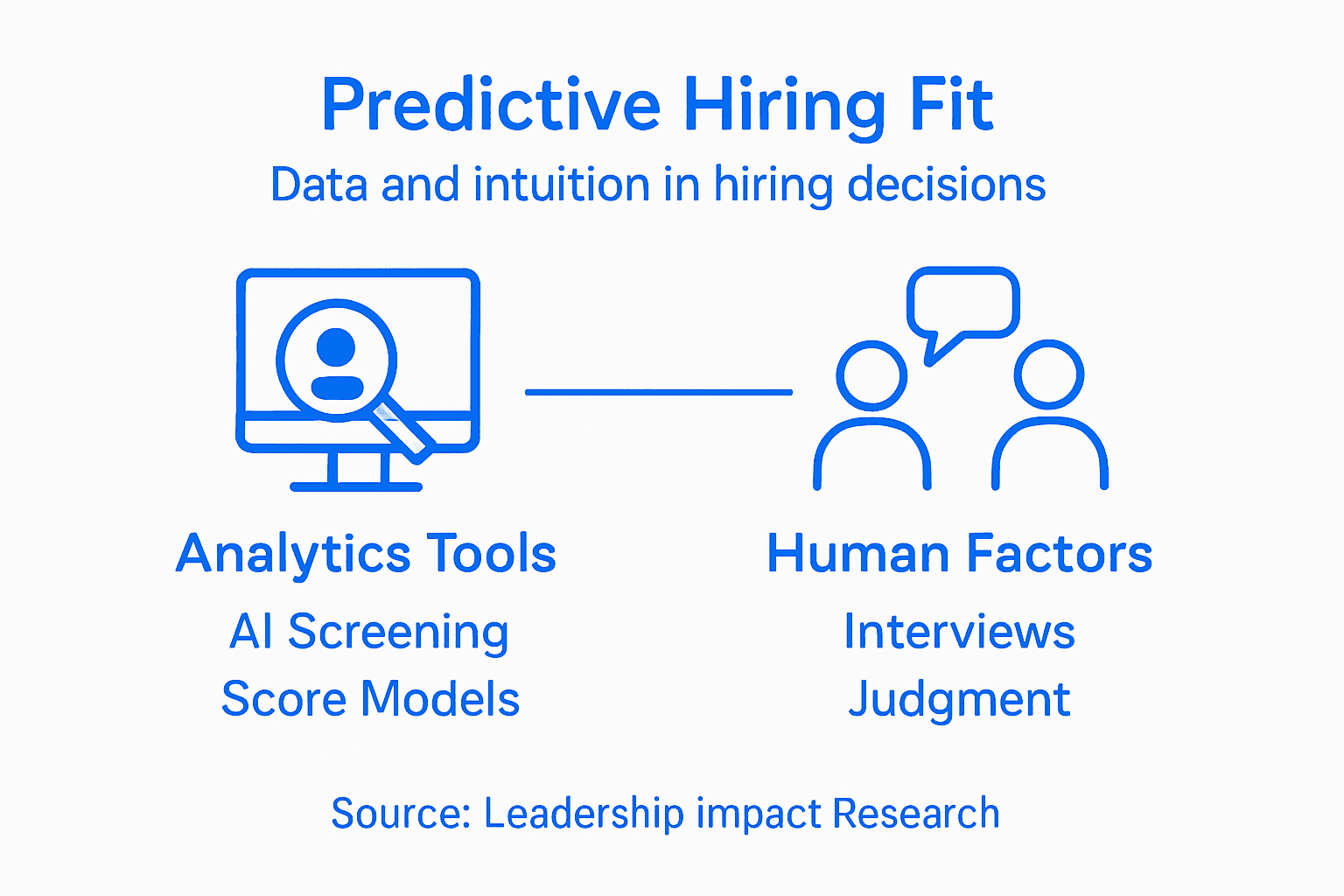
Predictive analytics can help leaders assess hiring fit more clearly by looking beyond resumes and interviews.
Hiring fit insight can help leaders understand:
-
Whether a candidate aligns with the company’s values
-
Whether the candidate may work well with the manager
-
Whether the candidate may fit the team environment
-
What work styles may create friction or strength
-
Whether the candidate’s motivations match the role
-
Where onboarding support may be needed
Predictive hiring is not about replacing human judgment. It is about reducing avoidable hiring mistakes by giving leaders clearer evidence before they make the decision.
| Hiring Fit Signal | What It Helps Leaders See | Business Value |
|---|---|---|
| Values alignment | Whether the candidate fits the company environment | Lower risk of cultural misalignment |
| Manager fit | Whether the candidate may work well with the direct manager | Fewer relationship-based issues |
| Team fit | How the candidate may interact with the team | Better collaboration and stability |
| Work style insight | How the candidate prefers to operate | Stronger onboarding and communication |
| Retention risk indicators | Where future disengagement may appear | More informed hiring decisions |
Common Pitfalls When Relying on Instinct
Instinct can help leaders notice that something feels off. But instinct alone can also create blind spots.
Common pitfalls include:
-
Assuming the loudest issue is the real issue
-
Mistaking personality differences for performance problems
-
Missing quiet disengagement
-
Overlooking manager-employee friction
-
Treating compensation as the only retention driver
-
Hiring for resume strength without checking fit
-
Waiting for turnover before investigating risk
-
Confirming existing beliefs instead of testing them
-
Acting on incomplete information
-
Failing to see patterns across teams
The problem is not gut feel. The problem is gut feel without evidence.
Leaders make better decisions when they combine experience, observation, and defensible insight.
Turn Gut Feel Into Defensible Leadership Insight
Gut feel can tell leaders that something may be wrong. But it cannot always show where the risk is forming, why it is happening, or what action to take.
OpenElevator helps CEOs, founders, senior leaders, and managers turn vague people concerns into clearer, more defensible insight.
Through a simple five-minute, bias-free survey, OpenElevator gives leaders visibility into values alignment, engagement risk, manager-employee fit, hidden team friction, and hiring fit.
Instead of guessing who may be disengaged, which teams may be strained, or whether a candidate is likely to fit, leaders can act with clearer evidence.
Want to move from gut feel to defensible insight? Start with OpenElevator’s free team scan.
Frequently Asked Questions
What does defensible insight mean in leadership?
Defensible insight means leadership decisions are supported by clear evidence, not only gut feel. It helps leaders understand retention risk, team dynamics, manager-employee fit, and hiring fit more clearly.
Why is gut feel not enough for leadership decisions?
Gut feel can be useful, but it can also be biased, incomplete, or difficult to defend. Leaders need clearer signals to understand whether disengagement, misalignment, or team friction is actually forming.
How can leaders identify early warning signs in teams?
Leaders can identify early warning signs by watching for reduced communication, lower participation, less initiative, emotional withdrawal, manager friction, and weaker collaboration.
How can retention risk be measured?
Retention risk can be measured by looking at engagement risk, values alignment, manager-employee fit, team friction, career growth confidence, and signs of disengagement.
How does hiring fit affect retention?
Hiring fit affects retention because a candidate may have the right skills but still be misaligned with the manager, team, company values, or role environment. Poor fit can increase disengagement and turnover risk.
How does OpenElevator help leaders move from gut feel to defensible insight?
OpenElevator helps leaders see values alignment, engagement risk, manager-employee fit, team friction, and hiring fit through a five-minute, bias-free survey.