
Over 50 percent of American organizations report losing high performing employees due to preventable factors. Attracting and retaining top talent is more challenging than ever, especially when subtle signs of disengagement can easily go unnoticed. Understanding what drives these professionals to consider leaving is crucial for maintaining a strong, agile workforce. This guide reveals smart strategies that help identify risk factors early and build an environment where your best American talent thrives.
Table of Contents
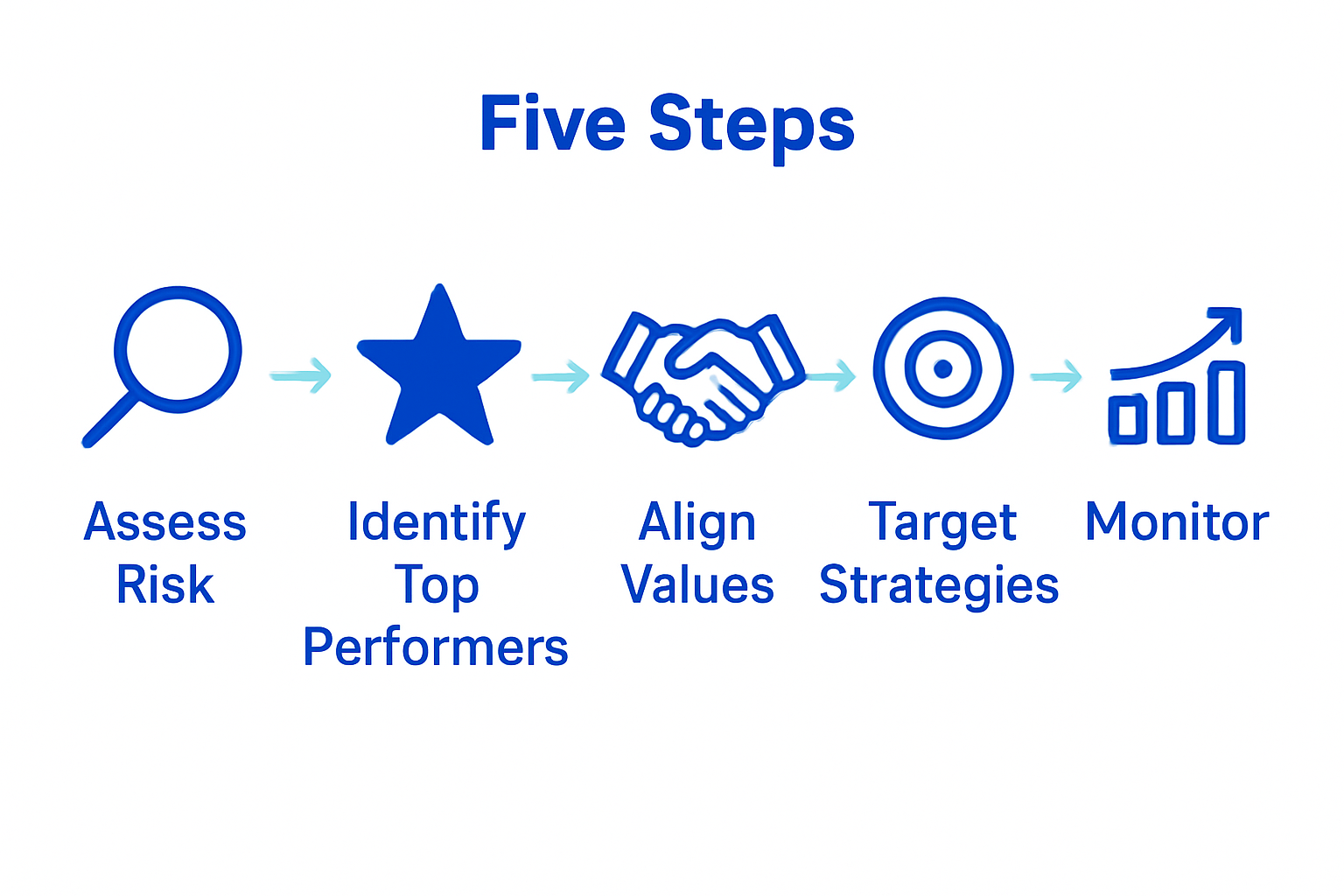
Step 1: Assess Key Attrition Risk Factors
Step 2: Identify Top Performers At Risk
Step 3: Align Employee Values And Team Dynamics
Step 4: Implement Targeted Retention Strategies
Step 5: Monitor Outcomes And Adjust Plans
Quick Summary
| Important Takeaway | Explanation |
|---|---|
| 1. Identify attrition risk factors early | Regularly assess employee satisfaction to uncover dissatisfaction and prevent turnover before it escalates. |
| 2. Monitor pre-quitting behaviors of top performers | Watch for signs like reduced engagement and productivity to identify high performers who may be at risk of leaving. |
| 3. Align values with team dynamics | Understand and integrate individual employee values into team goals to foster satisfaction and commitment. |
| 4. Create personalized retention strategies | Develop customized plans addressing unique needs of top performers to enhance their engagement and loyalty. |
| 5. Continuously track and adjust strategies | Use data-driven feedback mechanisms to refine retention efforts regularly and ensure they meet evolving employee needs. |
Step 1: Assess key attrition risk factors
Understanding why your top performers might be considering leaving requires a strategic and nuanced approach. In this critical first step, you’ll learn how to proactively identify potential flight risks before they become costly turnover events.
Effective attrition risk assessment starts with recognizing the core factors that drive employee dissatisfaction. Research from leading HR organizations reveals several key indicators of potential employee disengagement. These include persistent work-life imbalance, compensation that does not match market rates, inadequate performance feedback, management challenges, and limited professional growth opportunities.
To systematically assess these risk factors, implement a comprehensive evaluation process. Begin by conducting confidential surveys that allow employees to share candid insights about their workplace experience. Develop targeted questions exploring job satisfaction, career progression, compensation perception, team dynamics, and overall organizational alignment. Look for patterns in responses that might signal underlying retention challenges. Pay special attention to high-performing teams and individual contributors who demonstrate exceptional skills but show subtle signs of potential disengagement.
A critical warning: do not rely solely on exit interviews to understand attrition risks. By the time an employee reaches that stage, the decision to leave has often already been made. Proactive, continuous feedback mechanisms are far more effective in identifying and addressing potential retention issues before they escalate.
In the next step, we’ll dive into translating these assessment insights into actionable retention strategies that keep your top talent engaged and committed to your organization.
Step 2: Identify top performers at risk
In this critical stage, you will develop a precise approach to recognizing which of your most valuable employees might be considering leaving your organization. Your goal is to proactively detect potential flight risks among your highest performers before they make the decision to exit.
Research from Cornell University reveals specific pre-quitting behaviors that signal potential employee departure. These indicators include subtle yet significant changes like decreased productivity, reduced organizational engagement, and gradual withdrawal from team activities. High-performing employees often display unique signals that require nuanced observation and interpretation.
To effectively identify at-risk top performers, implement a multifaceted assessment strategy. Start by analyzing performance metrics, looking beyond traditional evaluation frameworks. Cornell research highlights that restrictive ranking systems can inadvertently trigger talented employees to seek opportunities elsewhere. Pay special attention to employees who consistently deliver exceptional results but show signs of disengagement.

Develop a comprehensive tracking mechanism that monitors key performance indicators, communication patterns, and professional development trajectories. This might include regular one-on-one conversations, anonymous feedback channels, and data-driven performance analytics. Look for patterns such as reduced collaboration, decreased innovation, or minimal participation in strategic initiatives.
Warning: Avoid using punitive or invasive monitoring techniques that could further alienate your top talent. The goal is understanding and support, not surveillance. Your approach should feel supportive and developmental, not threatening or controlling.
In the next step, we will translate these insights into targeted retention strategies that address the unique needs of your most valuable team members.
Step 3: Align employee values and team dynamics
In this critical step, you will learn how to create a cohesive work environment that resonates with your top performers individual values and team collaboration expectations. Your objective is to build organizational alignment that keeps your most talented employees engaged and committed.
Comprehensive research highlights the profound impact of value alignment on employee satisfaction and retention. When organizational culture fails to match individual employee expectations, job dissatisfaction becomes inevitable and turnover risks increase dramatically. Understanding this nuanced connection requires a strategic approach that goes beyond surface level interactions.
To effectively align values and team dynamics, start by conducting comprehensive individual assessments. Develop in depth conversations and anonymous surveys that explore each team members core professional values professional growth aspirations and interpersonal collaboration preferences. Pay close attention to how individual motivations intersect with team goals and organizational mission.
Research published in management studies confirms that organizational environments must proactively create cohesive work settings that authentically reflect employee expectations. This means designing team structures flexible enough to accommodate diverse working styles while maintaining clear performance standards and collaborative frameworks.
Warning: Avoid implementing generic team building exercises or one size fits all alignment strategies. Each team represents a unique ecosystem requiring customized approaches that respect individual differences while fostering collective momentum.
In the next step, we will translate these alignment insights into actionable strategies that transform potential disconnection into powerful collaborative opportunities.
Step 4: Implement targeted retention strategies
In this crucial stage, you will transform your insights into precise, personalized interventions designed to keep your top performers deeply engaged and committed to your organization. Your goal is to move beyond generic retention approaches and create targeted strategies that speak directly to individual employee needs.
Advanced machine learning techniques now enable organizations to predict and prevent employee attrition with unprecedented accuracy. By leveraging data driven insights, you can develop nuanced retention strategies that address specific risk factors for each high performing team member.
To implement effective targeted retention strategies, begin by segmenting your top performers based on their unique motivational profiles. Develop customized intervention plans that might include personalized career development pathways, tailored compensation adjustments, flexible work arrangements, or specialized professional growth opportunities. Research from management studies highlights the importance of comprehensive retention approaches that go beyond traditional monetary incentives and focus on holistic employee experience.
Consider creating individual retention roadmaps that outline specific milestones, growth opportunities, and meaningful recognition mechanisms. These plans should be dynamic living documents that evolve with the employees changing professional aspirations and organizational needs. Engage in frequent dialogue to validate and refine these strategies ensuring they remain relevant and motivating.
Warning: Avoid a one size fits all approach. What motivates one top performer might completely disengage another. Customization and ongoing communication are key to successful retention strategies.
In the next step, we will explore how to continuously monitor and adapt your retention efforts to maintain a high performance organizational culture.
Step 5: Monitor outcomes and adjust plans
In this final stage, you will develop a systematic approach to tracking the effectiveness of your retention strategies and making data driven adjustments that ensure continuous improvement. Your goal is to transform retention from a static process into a dynamic adaptive organizational capability.
Comprehensive research underscores the critical importance of continuous monitoring in retention efforts by highlighting how regular analysis of attrition indicators can dramatically improve organizational responsiveness. This means creating robust feedback mechanisms that go beyond traditional performance metrics and capture the nuanced signals of employee engagement and potential flight risks.
To effectively monitor and adjust your retention plans, implement a multidimensional tracking system that integrates quantitative and qualitative data points. This should include regular pulse surveys, one on one check ins, performance trend analysis, and comparative assessments of individual and team productivity. Research from international business studies emphasizes the need for adaptive strategies that can quickly respond to emerging workforce dynamics.
Develop a quarterly review process where you systematically evaluate the outcomes of your targeted retention interventions. Look for patterns in employee feedback, track key performance indicators, and assess the tangible and intangible impacts of your strategies. Be prepared to make swift adjustments based on these insights creating a culture of continuous learning and proactive talent management.
Warning: Avoid becoming overly mechanical in your monitoring. Remember that behind every data point is a human being with complex motivations and aspirations. Your tracking should feel supportive not surveillance oriented.
With these strategies in place, you are now equipped to build a resilient organizational culture that not only retains top talent but continuously evolves to meet their changing professional needs.
Take Control of Retaining Your Top Performers Today
The challenge of identifying who is truly at risk of leaving and crafting targeted retention strategies is at the heart of your workforce success. This article highlights the critical importance of assessing key attrition risk factors, aligning employee values and team dynamics, and implementing personalized retention plans that adapt over time. Without clear insights, guessing who might quit can lead to costly turnover and lost productivity.
OpenElevator provides a powerful, data-driven solution to these very challenges. Our proprietary algorithm uses a quick and bias-free 5-minute survey to reveal values alignment and interpersonal fit, two key predictors of employee engagement and retention. With OpenElevator, you can move from uncertainty to clarity, knowing exactly who is at risk and how to keep them motivated. Whether you are a small startup or a Fortune 500 company, our platform delivers actionable insights that help you create personalized retention strategies that truly work.
Ready to stop losing your top talent and start building a resilient, high-performing team? Explore how OpenElevator’s employee retention strategies transform your approach from reactive to proactive. Discover the difference that knowing your employees’ fit and needs makes by visiting OpenElevator now and take the first step toward lasting retention success.
Frequently Asked Questions
How can I assess attrition risk factors for my top performers?
Effective assessment starts with conducting anonymous surveys that allow employees to share their workplace experiences. Focus on measuring job satisfaction, career progression, compensation perception, and team dynamics. Aim to gather insights within 30 days to identify any potential disengagement early.
What are some pre-quitting behaviors to look out for in high performers?
Pre-quitting behaviors may include decreased productivity, reduced engagement in team activities, and withdrawal from collaborative projects. Track these changes regularly through performance metrics and one-on-one check-ins to spot at-risk employees early.
How can I align employee values with team dynamics?
To align values, conduct individual assessments through in-depth conversations or anonymous surveys exploring professional values and collaboration preferences. This will help you create a work environment that resonates with your most talented employees, leading to higher satisfaction and retention.
What targeted retention strategies can I implement for high performers?
Develop personalized intervention plans based on individual motivations, which might include tailored career development opportunities or flexible work arrangements. Engage with top performers in regular discussions to ensure that their unique needs are addressed regularly, ideally every quarter.
How should I monitor the effectiveness of my retention strategies?
Implement a multidimensional tracking system that includes regular surveys, performance trend analysis, and one-on-one check-ins. Conduct quarterly reviews to assess outcomes and make necessary adjustments based on employee feedback to foster a culture of continuous improvement.
Why shouldn’t I rely solely on exit interviews for attrition insights?
Exit interviews occur after the decision to leave has often been made, limiting their effectiveness in preventing turnover. Focus on proactive feedback mechanisms to detect early signs of disengagement and address potential issues before they escalate.