
Hiring top talent is only half the battle for American SME leaders—the real challenge is ensuring those employees actually stay. High turnover undercuts stability and growth, but the right onboarding strategy is the secret weapon many overlook. When new hires feel truly connected to your company culture and supported by managers and coworkers, retention rates rise significantly. This introduction unpacks how structured onboarding and intentional engagement build a foundation that lowers turnover and drives long-term commitment.
Table of Contents
- Defining Employee Onboarding And Retention
- Key Types And Stages Of Onboarding Programs
- How Onboarding Fosters Values And Interpersonal Alignment
- Impact On Productivity, Engagement, And Turnover
- Risks Of Poor Onboarding And Frequent Mistakes
- Actionable Solutions To Boost Retention Through Onboarding
Key Takeaways
| Point | Details |
|---|---|
| Effective Onboarding is Crucial for Retention | A structured onboarding process greatly influences whether new hires will stay long-term, making early support a priority. |
| Tailor Onboarding to Fit Your Organization | Different roles and company structures require unique onboarding strategies to ensure successful integration and productivity. |
| Foster Social Connections | Building genuine relationships through intentional interactions during onboarding can significantly improve engagement and retention. |
| Continuous Support is Essential | Onboarding should not end after a couple of weeks; ongoing feedback and mentorship are key to long-term employee success. |
Defining Employee Onboarding and Retention
When you hire someone new, onboarding is far more than a half-day orientation session where HR covers benefits and IT sets up their computer. Real onboarding is the structured process that helps new employees acclimate to company culture, understand their role expectations, and feel genuinely connected to both their team and the organization itself. This foundational period shapes everything that comes after, influencing whether someone becomes a committed long-term contributor or starts looking for the exit within their first six months.
Employee retention, by contrast, is your ability to keep people working for you over time. It’s measured by how many employees stay with your company versus how many leave. But here’s what most leaders miss: retention isn’t something that happens once someone’s been with you for a year or two. The real battle for retention begins on day one. Research shows that onboarding significantly influences retention intentions, with the quality of that early experience directly correlating to how long people stay. When employees feel supported during their early weeks, when they understand how their work contributes to something meaningful, and when they develop genuine connections with their manager and peers, they’re exponentially more likely to stick around.
What makes this even more critical for small to mid-sized companies is that onboarding goes beyond corporate welcome programs. Effective onboarding involves continuous support mechanisms through your managers and team members who actively integrate newcomers into the organization. Supervisor support and workplace attachment serve as the bridges between how well you onboard someone and whether they actually stay. Think of it this way: you can have the fanciest orientation program on paper, but if a new hire’s manager is too busy to check in with them or their team treats them like an outsider for their first month, that program becomes worthless. The people factor matters infinitely more than the process.
Pro tip: Start measuring your onboarding effectiveness not at the 30-day mark, but at the 90-day point when new hires have actually experienced your culture firsthand and formed real relationships with their team.
Key Types and Stages of Onboarding Programs
Onboarding isn’t one-size-fits-all, and pretending it is will cost you. Different organizations need different approaches depending on their size, industry, work structure, and the complexity of the roles they’re filling. A startup onboarding a new software engineer remotely requires a completely different strategy than a manufacturing company onboarding someone for the factory floor. The key is understanding which type of onboarding fits your situation and then executing it with precision.
There are several distinct types of onboarding you should know about. Basic onboarding covers the essentials: paperwork, benefits enrollment, IT setup, and initial orientation. This is what most companies think they’re doing when they say “onboarding,” but it’s really just the foundation. Advanced onboarding goes deeper, introducing role-specific knowledge, technical training, and deeper cultural immersion. Newcomer integration focuses specifically on helping people build relationships and feel part of the team. And then there’s remote onboarding, which has become critical as hybrid and distributed work models have become standard. Each type addresses different needs, and many organizations use multiple types simultaneously depending on the employee’s situation.
To better understand the differences among core onboarding program types, review the table below:
| Onboarding Type | Focus Area | Best Fit For | Main Benefit |
|---|---|---|---|
| Basic | Compliance and admin setup | All organizations | Ensures new hires are processed smoothly |
| Advanced | Role-specific training & culture | Technical or complex roles | Accelerates productivity and engagement |
| Newcomer Integration | Relationship building | Teams valuing collaboration | Strengthens team bonds, reduces isolation |
| Remote Onboarding | Digital tools & virtual support | Distributed/hybrid teams | Enables smooth integration from afar |
The onboarding journey itself moves through distinct stages that span from preboarding through ongoing mentoring. Think of this as a progression rather than a checkbox exercise. Preboarding happens before someone’s first day, sending welcome materials, answering questions, and building excitement. Orientation introduces company policies, benefits, and general structure. Foundation building is where culture and mission come alive through intentional exposure and conversation. Role-specific training teaches the actual skills and knowledge someone needs to perform their job. Finally, ongoing mentoring extends support far beyond the first week, embedding new hires deeper into your organization’s fabric. The most successful SME leaders build systems that move through all these stages deliberately rather than skipping from orientation straight to “you’re on your own.”
What makes this real for you is that every stage needs ownership. Preboarding can’t just be handled by HR sending a welcome email. Orientation requires your manager to actually be present, not delegated to a third-party. Foundation building happens through team interactions and stories from leadership. Role-specific training should come from people who actually do the work. And ongoing mentoring needs to be part of your manager’s actual job description, not something that happens if they have time. The structure matters, but the people who execute it matter exponentially more.
Pro tip: Map out your current onboarding journey and identify which stage is weakest for your organization, then assign one leader to own improving that single stage before expanding improvements elsewhere.
How Onboarding Fosters Values and Interpersonal Alignment
Here’s a hard truth: hiring someone with great technical skills who doesn’t align with your company’s values or fit your team’s dynamic is hiring a time bomb. They might look perfect on paper, but if their priorities don’t match what your organization actually stands for, or if they can’t work well with their manager and peers, they’ll be gone within months. This is where onboarding becomes strategic rather than administrative. Done right, onboarding actively strengthens the bonds between new employees and existing team members while simultaneously reinforcing whether someone’s values align with the organization’s actual culture. It’s your chance to make these critical alignments explicit and real.
Values alignment happens when employees see their own priorities reflected in how the company operates. When someone values growth but your onboarding program treats them like they’ll never be promoted, there’s a mismatch. When someone craves meaningful contribution but spends their first month watching training videos instead of solving real problems, they feel the disconnect. Effective onboarding weaves your company’s values throughout every interaction. It shows, not tells. When you have someone meet the team member who got promoted from within during their first week, that demonstrates commitment to growth. When you involve new hires in solving an actual customer problem in week two, that demonstrates belief in contribution. The research is clear: values alignment with the organization significantly improves retention, making it one of the most predictive factors in whether someone stays long-term.
Interpersonal alignment is equally critical but often overlooked. This is whether someone naturally collaborates well with their specific manager and team members. A brilliant engineer who can’t communicate effectively with their manager or whose work style clashes with the team creates friction, even if they’re talented. Smart onboarding creates multiple opportunities for these interpersonal connections to form. Team lunches, pair programming sessions, casual check-ins with the manager, group problem-solving activities, and intentional introductions to key people all serve a purpose beyond logistics. They’re where real relationships form. When interpersonal engagement strengthens through purposeful onboarding activities, people develop genuine connections to their coworkers and supervisor, which directly translates to higher engagement and retention.
The magic happens when both alignments occur together. A new hire who sees their values reflected in how the company operates and feels genuine connection to their team becomes invested in success. They stop thinking about their next job and start thinking about their next project. For SME leaders, this means your onboarding can’t be a template. You need to assess early whether there’s real values and interpersonal alignment, then double down on strengthening those connections if they exist.
Pro tip: During onboarding, have the new hire’s manager ask directly about their top three values and priorities, then explicitly show how the role and team align with those priorities within their first week.
Impact on Productivity, Engagement, and Turnover
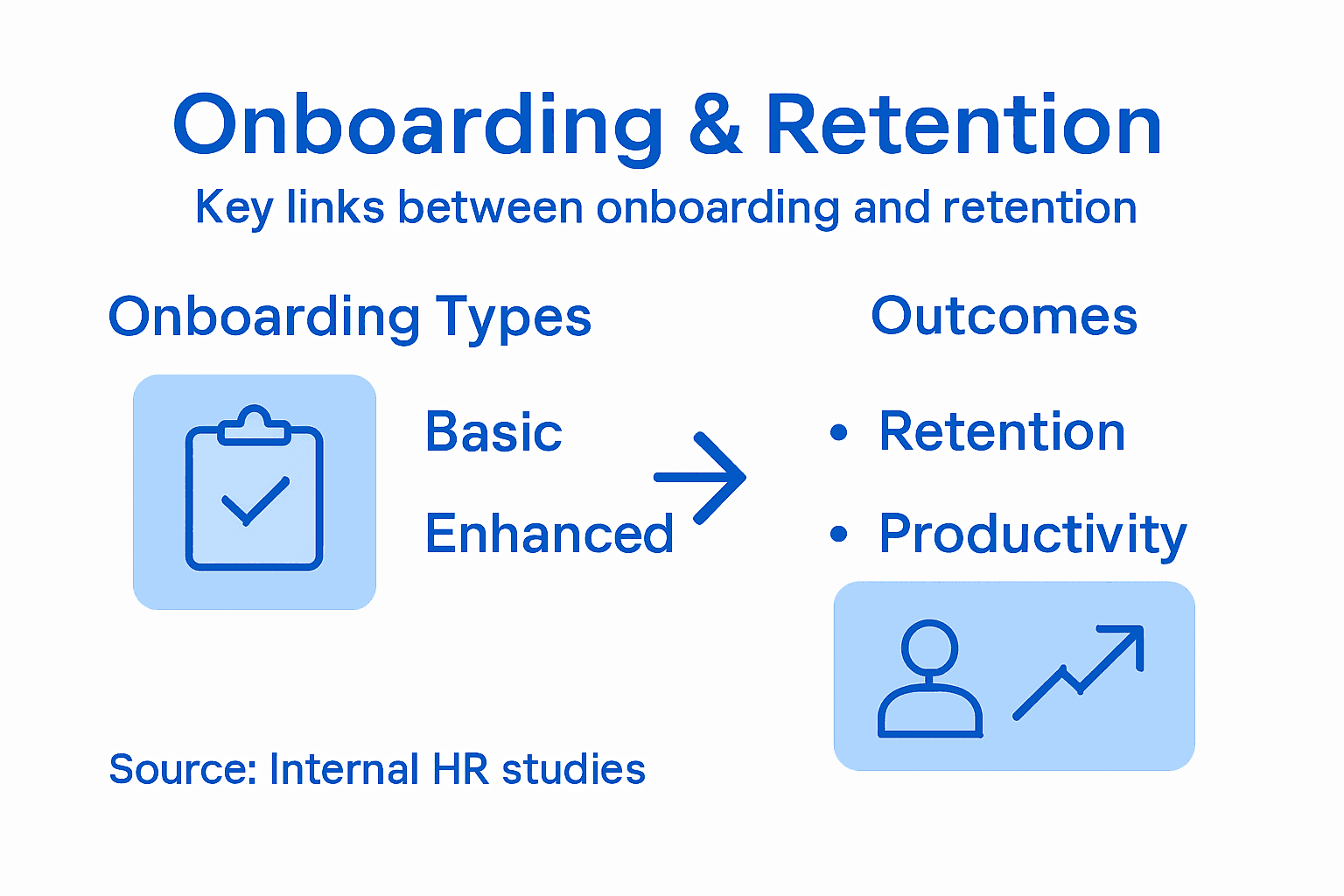
Let’s talk numbers because this is where onboarding stops being theoretical and becomes a business imperative. A new hire who goes through a rushed, disorganized onboarding takes significantly longer to reach full productivity. They make more mistakes. They feel disconnected from the organization. And statistically, they’re more likely to quit. Meanwhile, a new hire who experiences structured, thoughtful onboarding ramps up faster, feels engaged from day one, and stays longer. The financial difference between these two scenarios is staggering, especially when you’re running a lean SME operation where turnover costs can eat 50 to 200 percent of an employee’s annual salary.

Productivity gains from proper onboarding are immediate and measurable. When someone understands their role clearly, knows how to access information and tools, and has genuine relationships with their team, they start contributing within days rather than weeks or months. Well-structured onboarding programs help employees transition from outsiders to insiders faster, boosting their skills and knowledge in ways that directly translate to higher output. A software developer who knows the codebase, has met the team, and understands the project priorities can start writing meaningful code immediately. A sales representative who has practiced the pitch with mentors and met existing customers can start closing deals faster. This isn’t soft value. This is revenue impact.
Engagement and retention are inseparable from productivity. When employees feel connected to their work and their team, they perform better and stay longer. Comprehensive onboarding programs facilitate quicker productivity gains while fostering satisfaction and organizational commitment, which directly lowers turnover costs. Think about the math: replacing an employee costs your company money through recruitment, training, and lost productivity. If you’re losing 20 percent of new hires in their first year because of poor onboarding, and each replacement costs 100,000 dollars for a mid-level position, that’s a preventable expense. But beyond the financial calculation, there’s the human element. Employees who feel genuinely valued and integrated into their organization show up differently. They take initiative. They solve problems without waiting for permission. They become advocates for your company rather than job searchers.
The compounding effect is real. A team with low turnover builds institutional knowledge, stronger relationships, and better systems. A team constantly cycling through new people is always starting from zero. That’s why onboarding isn’t just about getting someone productive in week one. It’s about whether they’re still there in month six, month twelve, and year two. And whether they’re engaged enough to do their best work during that entire tenure.
Pro tip: Track your new hire productivity benchmarks and retention rates by onboarding quality, then calculate your actual cost savings from improved onboarding to justify additional investment in the program.
Risks of Poor Onboarding and Frequent Mistakes
Poor onboarding isn’t just uncomfortable for new hires. It’s a retention killer that compounds problems the longer you ignore it. When someone’s first experience with your company is chaotic, disorganized, or lonely, they start job hunting before their probation period ends. The research is unambiguous: turnover risk is highest in the first 45 days, which means the window to get onboarding right is narrow and non-negotiable. Miss it, and you’ve already lost them mentally even if they’re still physically at their desk.
The most common mistakes cluster around a few patterns. Lack of preparation is first on the list. You hire someone, then on day one, their laptop isn’t set up, their workspace isn’t ready, their manager is too busy to meet them, and HR forgot to schedule their orientation. The message is clear: we didn’t plan for you. Unclear job roles and expectations compound the problem. A new hire doesn’t understand what success looks like, what their actual responsibilities are, or how their work connects to larger goals. They spend weeks guessing rather than contributing. Information overload is another classic mistake. Some companies dump an entire handbook on someone on day one, then wonder why they’re overwhelmed. And perhaps the most damaging mistake is failure to build social connections. A new hire sits at their desk working in isolation because nobody intentionally introduced them to their team, invited them to lunch, or made them feel like part of the group. Poor onboarding that lacks preparation, clarity, and social integration leads to employees feeling ignored and disconnected, directly driving disengagement and high turnover.
The consequences are brutal. New hires without proper onboarding lack clear expectations and support, leaving them questioning their job fit and feeling unmotivated about their work. This isn’t a morale problem that resolves itself over time. Ineffective onboarding directly lowers productivity and increases early turnover, costing organizations both financially and operationally. You lose the investment you made hiring them. You lose momentum on projects they were supposed to accelerate. You lose other team members’ productivity as they cover the gap. And you damage your employer brand because that person tells everyone they know about their terrible first experience.
The hidden cost is opportunity. When you get onboarding right, that first 45 days becomes your competitive advantage. A company that onboards well attracts better talent because people hear about it. Existing employees stay longer because they see the organization actually caring about how people integrate. And new hires become your best advocates because someone made them feel valued from day one. Get it wrong, and you’re constantly fighting an uphill battle against preventable turnover.
Pro tip: Audit your last five new hire departures within the first 90 days and ask specifically about their first week experience, then fix the gaps they identify before they happen to the next person.
Actionable Solutions to Boost Retention Through Onboarding
Knowing what doesn’t work is half the battle. The other half is implementing solutions that actually move the needle on retention. The good news is that effective onboarding doesn’t require reinventing your entire HR operation. It requires intentional design, consistent execution, and commitment from leadership. Start by building the structural foundation that makes everything else possible.
Create Clear Role Clarity and Expectations
Before day one, your new hire should know exactly what success looks like. Not vague corporate speak. Specific, measurable outcomes. What are the three things they need to accomplish in their first 30 days? What does a good day at work look like? How does their role contribute to the team’s goals? Write this down and review it together on their first day. This single step eliminates the guessing game that derails so many new hires. Pair this with regular check-ins where their manager explicitly provides feedback and adjusts expectations if needed. Structured onboarding processes that include clear communication and role clarity improve workplace attachment and reduce turnover intentions, making this foundation non-negotiable.
Build Genuine Social Integration
Your new hire needs to feel like part of the team, not an outsider. This doesn’t mean forced happy hours. It means intentional relationship building. Have their manager introduce them to key people one on one rather than in a massive group meeting. Assign a peer mentor who checks in regularly. Create opportunities for collaborative work in their first two weeks so they’re solving real problems with their team. Schedule lunch with different team members each week for the first month. These interactions feel natural but require deliberate planning. When people have genuine connections to their coworkers and supervisors from the start, they’re exponentially more likely to stay.
Implement Continuous Support and Feedback
Onboarding isn’t a two-week event. It’s a continuous process. Effective onboarding strategies incorporating personalized support, continuous learning opportunities, and strong supervisor relationships promote employee satisfaction and strengthen organizational commitment, directly enhancing retention outcomes. This means your manager doesn’t disappear after orientation. They maintain regular one-on-ones, provide real-time feedback, and adjust support based on how the person is actually doing. Create formal check-ins at 30, 60, and 90 days where you explicitly discuss how things are going, what’s working, and what needs to change. Include feedback from their team. Use this data to refine your onboarding process for the next hire.
Personalize the Experience
Not every new hire is the same. Someone coming from a competitor needs different onboarding than someone entering the industry for the first time. A remote hire needs different social integration than someone in your office. Ask in advance about their learning preferences, their background, their concerns about the role. Then design their onboarding experience around those realities. This personalization signals that you see them as an individual, not just a body to fill a role.
Pro tip: Assign your best performer as a peer mentor to each new hire for their first 90 days, and measure your retention rates by mentor quality to identify which managers create the strongest onboarding experiences.
Here is a summary of onboarding success factors and their direct impact on employee outcomes:
| Success Factor | Business Impact | Example Practice |
|---|---|---|
| Role Clarity | Faster productivity | Written goals, first day review |
| Social Integration | Higher engagement | Peer mentoring, team lunches |
| Continuous Feedback | Increased retention | 30/60/90-day check-ins |
| Personalization | Lower turnover | Tailored onboarding plans |
Unlock True Employee Retention by Enhancing Onboarding with Data-Driven Insights
The challenge of creating onboarding experiences that genuinely build role clarity, foster values alignment, and deepen interpersonal connections is central to long-term employee retention. As this article highlights, early-stage support, social integration, and personalized role-fit are critical components that often get overlooked, leading to costly turnover and disengagement. You want to move beyond guesswork and ineffective onboarding checklists to truly understand which employees are at risk and why.
OpenElevator offers a groundbreaking solution that aligns perfectly with these onboarding success factors. Using a proprietary algorithm paired with a quick, bias-free survey, OpenElevator reveals your new hires’ values alignment and interpersonal fit within your teams. This lets you identify high-risk employees early, customize support tailored to their core needs, and empower managers with actionable insights to accelerate engagement and productivity. Companies worldwide trust OpenElevator to convert onboarding efforts into lasting retention wins.
Start transforming your employee onboarding and retention today by exploring how our platform clarifies role fit and builds genuine connections. Take the first step now by visiting OpenElevator for a demo and see how you can reduce turnover and boost engagement from day one.
Frequently Asked Questions
What is the importance of onboarding in employee retention?
Onboarding significantly influences employee retention by helping new hires acclimate to the company culture, understand their role, and build connections with their team, leading to higher engagement and commitment.
How can effective onboarding programs improve productivity?
Effective onboarding programs accelerate productivity by providing new employees with role-specific training, clear expectations, and opportunities for social connections, enabling them to contribute to their teams more quickly.
What are common mistakes that undermine onboarding success?
Common mistakes include lack of preparation, unclear job roles, information overload, and failure to foster social connections, all of which can lead to disengagement and higher turnover rates.
How can businesses personalize the onboarding experience for new hires?
Businesses can personalize onboarding by assessing new hires’ backgrounds, learning preferences, and concerns, then tailoring the onboarding process to ensure that it meets individual needs and expectations.