
Most American companies know that employee turnover comes with a high price. Replacing a single employee can cost up to 33 percent of that worker’s annual salary, making retention a critical priority for organizations across every industry. In a rapidly changing workforce, understanding what truly keeps employees committed matters more than ever. This article breaks down how American businesses can adapt to new employee expectations, harness predictive analytics, and build meaningful connections to shape the future of retention.
Table of Contents
- Defining The Future Of Employee Retention
- Predictive Analytics And Employee Turnover
- Values And Interpersonal Alignment In Retention
- Actionable Strategies For Reducing Attrition
- Risks, Challenges, And Measuring Retention Success
Key Takeaways
| Point | Details |
|---|---|
| Holistic Understanding of Retention | Employee retention requires a comprehensive approach that addresses individual employee needs and workforce dynamics. Traditional compensation methods alone are insufficient for keeping top talent engaged and committed. |
| Personalization and Predictive Analytics | Organizations should leverage predictive analytics to anticipate employee departures and create customized retention strategies that cater to unique professional journeys. This proactive stance helps intervening before disconnection occurs. |
| Interpersonal Alignment and Shared Values | Successful retention strategies depend on fostering genuine interpersonal connections and aligning organizational values with employee aspirations, particularly among Gen Z and Millennials. |
| Multi-Faceted Attrition Reduction Strategies | Effective approaches to reduce attrition include flexible work models, professional development opportunities, and personalized engagement plans that focus on employees’ well-being and growth. |
Defining the Future of Employee Retention
Employee retention has transformed from a human resources transaction to a strategic imperative that directly impacts organizational success. Modern businesses recognize that retaining top talent requires more than traditional compensation strategies — it demands a holistic understanding of workforce dynamics and individual employee needs.
The concept of job embeddedness provides critical insights into this evolving landscape. Job embeddedness represents the complex network of psychological and professional connections that keep employees committed to their organizations. These connections extend beyond simple job satisfaction, encompassing an employee’s links to their workplace, community, and personal aspirations. By understanding these multifaceted connections, companies can develop more nuanced retention strategies that address both professional and personal dimensions of employee experience.
Understanding employee turnover trends reveals a critical narrative for business leaders. Turnover isn’t just about replacing personnel — it’s about comprehending the underlying factors that drive talented professionals to seek new opportunities. Successful retention strategies must move beyond reactive measures and instead anticipate potential disconnections before they emerge. This proactive approach requires sophisticated predictive tools that can identify early warning signs of potential departures, allowing organizations to intervene strategically and preserve their most valuable human capital.

The future of employee retention hinges on three fundamental principles: personalization, predictive analytics, and holistic engagement. Organizations must transition from generic retention approaches to highly individualized strategies that recognize each employee’s unique professional journey. This means developing adaptive frameworks that can dynamically respond to changing workforce expectations and individual motivational triggers.
Predictive Analytics and Employee Turnover
Predictive analytics has emerged as a transformative approach for understanding and mitigating employee turnover, offering organizations unprecedented insights into workforce dynamics. By leveraging advanced data analysis techniques, businesses can now anticipate potential employee departures with remarkable precision, shifting from reactive to proactive talent management strategies.
Reducing voluntary turnover through predictive analytics represents a sophisticated strategy that goes beyond traditional retention methods. These advanced analytical approaches integrate multiple data sources, including performance metrics, engagement surveys, compensation records, and behavioral patterns to create comprehensive employee risk profiles. By identifying subtle indicators of potential disengagement, organizations can develop targeted interventions before valuable talent considers leaving.
The machine learning frameworks for predicting employee attrition demonstrate the power of data-driven workforce management. These sophisticated models can analyze complex interactions between professional and personal factors that influence an employee’s likelihood of departure. Key predictive indicators might include changes in performance metrics, shifts in communication patterns, reduced collaboration, or emerging skill misalignments that signal potential disconnection from organizational goals.
Successful predictive analytics in employee retention requires more than sophisticated algorithms. It demands a holistic approach that combines technological insights with human-centered strategies. Organizations must create adaptive frameworks that not only predict potential turnover but also provide meaningful, personalized engagement strategies. This means transforming raw data into actionable intelligence that supports individual employee development, addresses potential friction points, and creates more responsive, empathetic workplace environments.
Values and Interpersonal Alignment in Retention
Employee retention has evolved from a transactional relationship to a nuanced dialogue about shared values, purpose, and meaningful professional connections. Modern organizations recognize that sustainable talent strategies must go beyond traditional compensation models and address the deeper psychological needs of their workforce.
The war for talent reveals critical insights into how leadership behaviors and organizational values directly impact employee engagement and retention. Successful companies are now understanding that acknowledging individual employee backgrounds, providing intellectual stimulation, and creating environments of genuine personal and professional growth are paramount to keeping top talent committed.
Employee retention strategies for emerging workforce generations highlight the critical importance of values alignment, particularly with Gen Z and Millennial professionals. These generations seek more than just a paycheck — they want meaningful work, transparent corporate cultures, and organizations that demonstrate authentic commitment to social responsibility and individual development.
Interpersonal alignment represents the intricate web of human connections that transform workplace interactions from transactional to transformational. This goes beyond simple team compatibility, encompassing deeper elements of mutual understanding, shared goals, and reciprocal respect. Organizations that invest in creating robust interpersonal frameworks — where communication is transparent, feedback is constructive, and individual contributions are genuinely valued — will naturally cultivate more resilient, engaged, and loyal workforce ecosystems.
Actionable Strategies for Reducing Attrition
Reducing employee attrition requires a multifaceted approach that addresses the complex psychological and professional needs of modern workforces. Organizations must move beyond traditional retention tactics and develop comprehensive strategies that recognize the evolving expectations of today’s professionals.
Employee retention strategies reveal critical insights into combating workplace turnover. Key actionable approaches include implementing flexible hybrid work models, leveraging advanced predictive technologies, and understanding generational workforce dynamics. Successful organizations are now creating adaptive environments that prioritize employee well-being, professional growth, and meaningful workplace connections.
The most effective attrition reduction strategies focus on four fundamental pillars: professional development, cultural alignment, technological empowerment, and personalized engagement. This means creating clear career progression pathways, fostering inclusive workplace cultures, providing cutting-edge tools that streamline work processes, and developing individualized engagement approaches that recognize each employee’s unique motivational triggers.
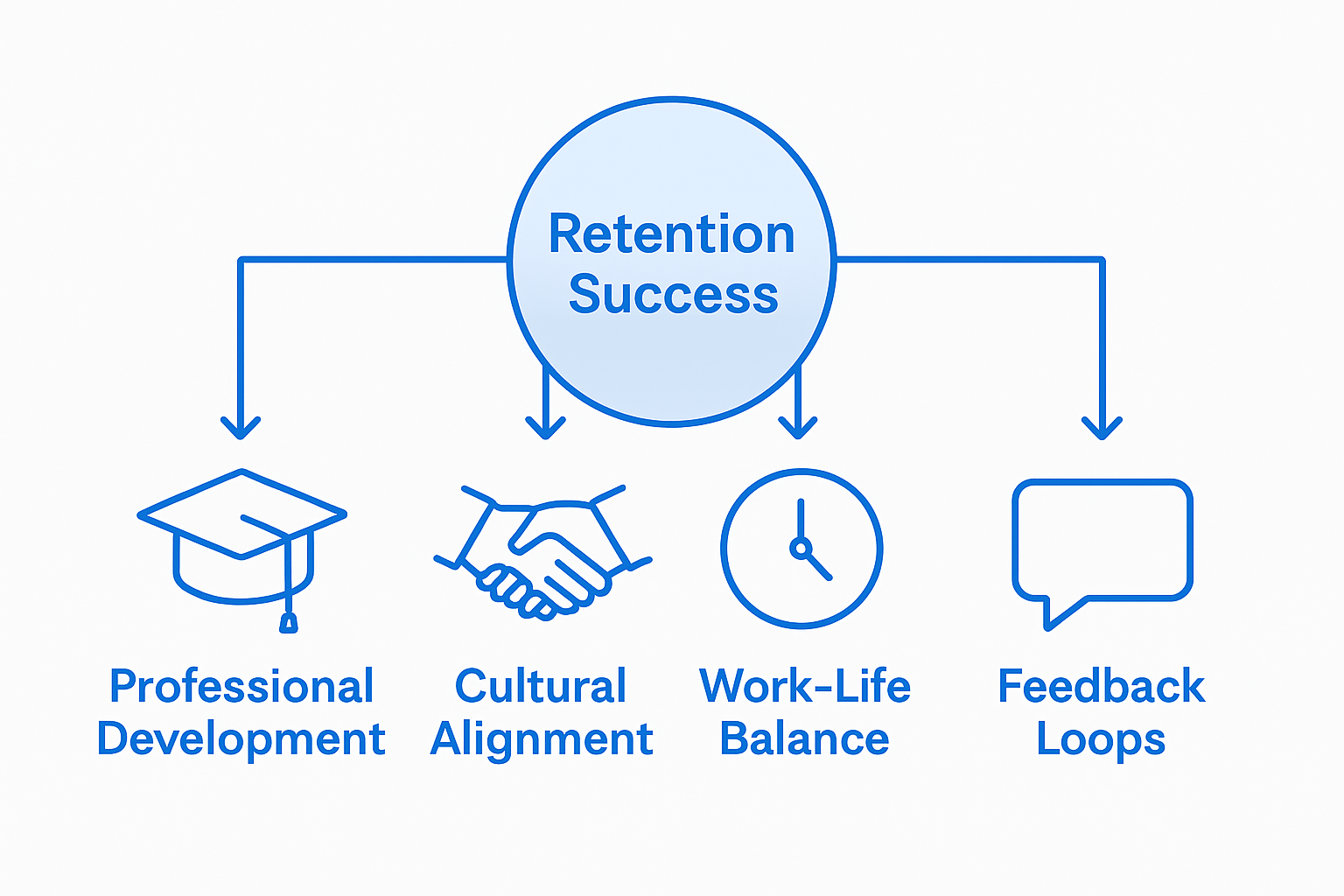
Technology plays a transformative role in modern retention strategies. Advanced predictive analytics, real-time feedback mechanisms, and sophisticated talent management platforms enable organizations to identify potential retention risks proactively. By combining data-driven insights with human-centered approaches, companies can create responsive workplace ecosystems that anticipate and address employee needs before disconnection becomes inevitable.
Risks, Challenges, and Measuring Retention Success
Employee retention represents a complex strategic challenge that demands sophisticated, nuanced approaches beyond traditional human resources metrics. Organizations must recognize that measuring retention success involves understanding both quantitative performance indicators and qualitative human experience factors.
Predictive analytics approaches to understanding employee turnover reveal critical insights into the multifaceted risks associated with workforce attrition. These advanced analytical methodologies allow companies to move from reactive problem-solving to proactive talent management strategies, identifying potential retention risks before they become systemic organizational challenges.
Successful retention measurement requires a comprehensive framework that integrates multiple performance indicators. Key metrics should include voluntary and involuntary turnover rates, employee engagement scores, performance trajectory analysis, compensation competitiveness, career progression opportunities, and cultural alignment assessments. Organizations must develop holistic scorecards that capture both numerical data and deeper contextual insights about workforce dynamics.
The most advanced retention strategies recognize that measurement is not just about tracking numbers, but understanding the underlying human narratives. This means creating feedback loops that continuously capture employee sentiment, professional aspirations, and potential friction points. By developing adaptive measurement systems that can quickly interpret complex workforce signals, companies can create responsive environments that proactively address potential disengagement before it transforms into irreversible talent loss.
Unlock the Future of Employee Retention with Proven Predictive Strategies
The article highlights the urgent challenge of accurately identifying employees at risk of leaving and the need for personalized, data-driven retention strategies like predictive analytics. Pain points such as understanding values alignment and interpersonal fit are key factors that businesses must address to reduce costly turnover and boost engagement. With turnover shifting from a reactive issue to a strategic priority, organizations need tools that deliver actionable insights beyond guesswork.
OpenElevator is uniquely designed to solve these challenges. Our proprietary algorithm evaluates how well employee values align with your company culture and the quality of interpersonal collaboration in your teams—all within a quick, bias-free 5-minute survey. This allows leaders to pinpoint who may be disengaged or at risk of quitting with a high degree of accuracy. From startups to Fortune 500s, OpenElevator transforms retention approaches, enabling organizations to create personalized, predictive interventions that foster stability and growth.
Take control of your employee retention strategy today
Discover how employee retention strategies can become your competitive advantage. Visit OpenElevator to experience a platform that moves you from guessing to knowing who will stay and who needs support. Don’t wait until your top talent walks away—step into the future of retention now.
Frequently Asked Questions
What is job embeddedness and why is it important for employee retention?
Job embeddedness refers to the psychological and professional connections that keep employees committed to their organizations. It’s important because it goes beyond job satisfaction, encompassing links to the workplace, community, and personal aspirations, helping companies form effective retention strategies.
How can predictive analytics be used to reduce employee turnover?
Predictive analytics can identify subtle indicators of potential employee disengagement by analyzing various data sources, including performance metrics and engagement surveys. This allows organizations to develop targeted interventions before valuable talent considers leaving.
What are effective strategies for reducing employee attrition?
Effective strategies include implementing flexible hybrid work models, leveraging predictive technologies, promoting professional development, fostering cultural alignment, and developing personalized engagement approaches tailored to individual employees’ needs.
What metrics should organizations use to measure retention success?
Organizations should use a comprehensive framework that includes quantitative indicators like turnover rates and employee engagement scores, alongside qualitative insights such as cultural alignment and employee sentiment to understand workforce dynamics better.